- Six Bills propose sweeping changes to school governance, curriculum, teacher training, assessments and tertiary financing.
- The reforms could restructure key institutions overseeing learners from basic education through universities and colleges.
- All six Bills were listed for First Reading in the National Assembly on August 11
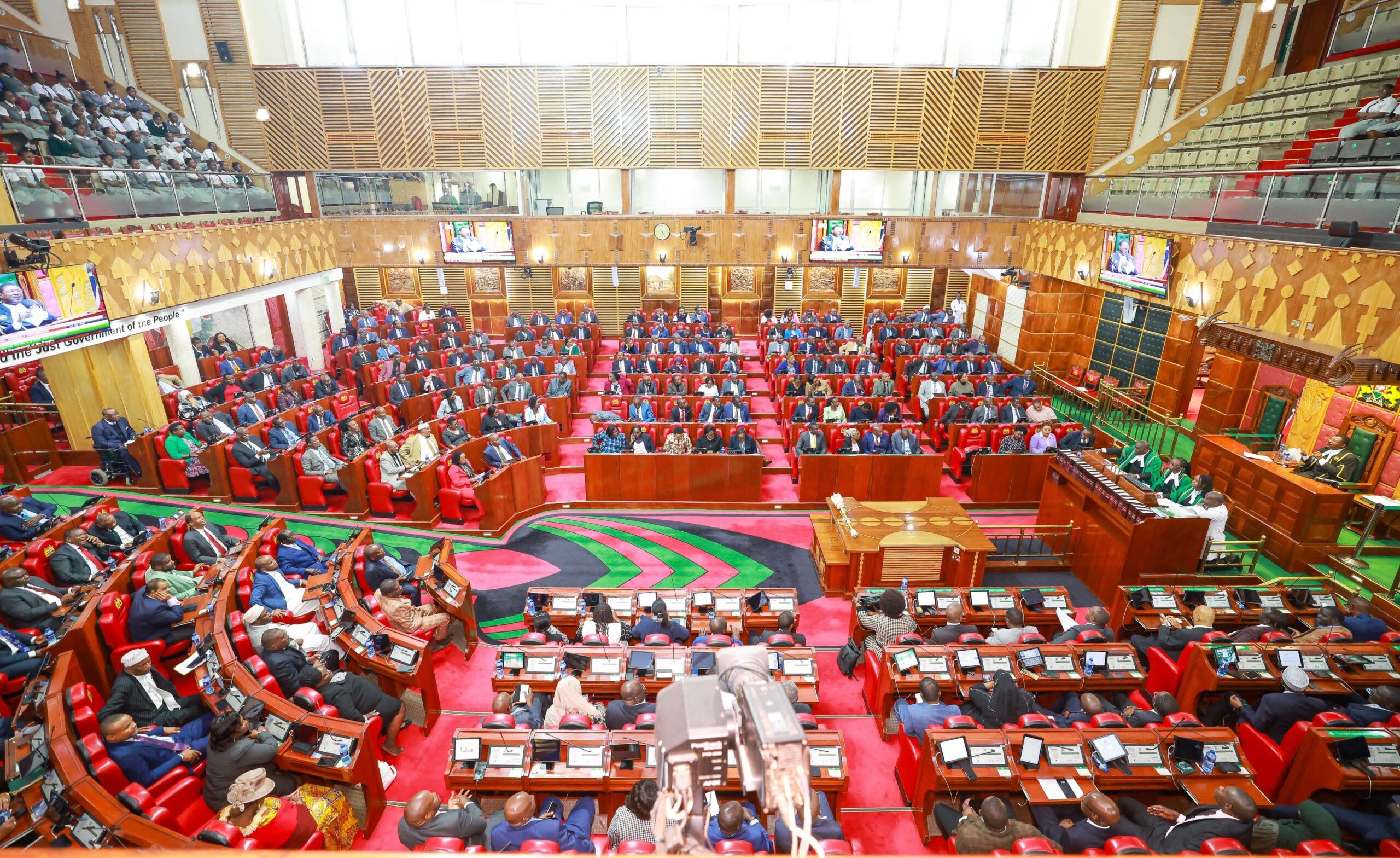
Kenya’s education sector is facing a sweeping legislative overhaul after six Bills seeking major changes to school governance, university and college funding, teacher training, national assessments, curriculum development and recognition of qualifications were tabled for First Reading in the National Assembly.
The package of reforms could significantly reshape the country’s education architecture from basic schooling through teacher preparation and national assessments to tertiary placement and financing.
The six are the Tertiary Education, Placement and Funding Bill, 2026; Basic Education Bill, 2026; Kenya National Educational Assessments Council Bill, 2026; Pre-Service Education and In-Service Training Bill, 2026; Kenya National Qualifications Framework (Amendment) Bill, 2026; and Kenya Institute of Curriculum Development (Amendment) Bill, 2026.
The National Assembly Order Paper shows the six Bills, numbered 49 to 54 respectively, were scheduled consecutively for First Reading on Tuesday, August 11, 2026.
The Bills follow recommendations of the Presidential Working Party on Education Reform and seek to restructure several institutions and systems that have governed Kenyan education for years.
If enacted, the reforms would affect millions of learners, teachers, parents and students as well as universities, TVET institutions, teacher training colleges and education agencies.
Basic Education Bill proposes far-reaching changes
The Basic Education Bill, 2026 — National Assembly Bill No. 50 — is among the most extensive of the six.
According to its memorandum, its principal object includes providing for the “system and structure of basic education” as well as administration of primary and secondary education.
It also seeks to provide for the “registration, governance and management” of basic education institutions.
The Bill covers free and compulsory basic education, admissions, discipline, school governance, special needs education, quality assurance, scholarships and bursaries, education data and the responsibilities of parents and heads of institutions.
Part I establishes guiding principles including “equity in access”, “quality and relevance” and “accountability, transparency, rule of law and democratic decision making”.
Other principles include non-discrimination, integrity, participation, inclusivity and intergovernmental cooperation.
Part III provides for the “right of child to free and compulsory basic education” and deals with free tuition, admission to schools and restrictions on admission tests.
The proposed legislation also addresses circumstances where learners drop out, providing for their re-entry into school and transition to subsequent levels of education.
School heads, boards and parents
The Basic Education Bill could also have significant implications for how schools are governed.
Part VI, comprising Clauses 29 to 46, deals with governance and management of basic education, including establishment and functions of County Education Boards and Boards of Management for public schools.
It further provides for the “establishment of parents teachers association for public and private schools” and appointment of heads of institutions.
The provisions could therefore affect principals, headteachers, Boards of Management and parents across the country.
Special needs education receives a separate part of the proposed law, covering responsibilities of national and county governments as well as establishment and management of special schools.
The Bill would also establish the Kenya Institute of Special Education, which would undertake functions including advising the government, capacity building, functional assessment and rehabilitation.
It would further be responsible for “conducting teacher training courses” in various areas of special needs education.
New Directorate of Schools Inspection
The Bill proposes another potentially significant change through establishment of a Directorate of Schools Inspection.
Part IX provides for quality assurance and standards and gives school inspectors specified powers.
The Directorate would be involved in the development and implementation of national and international standards as well as ensuring quality and relevance in curriculum development and assessment.
Scholarships and bursaries would also receive a more structured national framework.
Part X deals with coordination, databases, determination of needy status, award criteria, monitoring beneficiaries and information sharing.
The Bill additionally proposes the establishment of the Kenya Education Management Information System, which would maintain education registers and records.
New authority to finance university and college students
The Tertiary Education, Placement and Funding Bill, 2026 — National Assembly Bill No. 49 — could fundamentally change how students enter and finance university and college education.
Its memorandum says its principal object is to provide for the “placement of students and trainees to tertiary institutions”.
Crucially, the Bill proposes the establishment of two bodies — the Kenya Universities and Colleges Central Placement Service and the Tertiary Education Funding Authority.
The proposed law identifies its objects as placement of students and trainees, financing tertiary education and providing coordinated career guidance.
Among its guiding principles are “universal access to tertiary education” and “equal access to government funding”.
The proposals effectively seek to separate placement from financing, with the placement service handling admission and placement functions while the funding authority takes responsibility for financing.
This could have major consequences for the existing higher education funding architecture and the relationship between placement, scholarships and student loans.
Teacher training system faces restructuring
Teachers would also be directly affected by the Pre-Service Education and In-Service Training Bill, 2026 — National Assembly Bill No. 52.
The Bill seeks to provide a comprehensive framework for “pre-service education and in-service training in basic education”.
Part II covers pre-service teacher education, including admission qualifications, curriculum, assessment and awards.
Part III provides specifically for “in-service training of teachers and education managers”.
The legislation also introduces a regulatory framework for registration of teacher training colleges and provides mechanisms for review and appeal against decisions concerning their registration.
But perhaps its most significant institutional proposal is establishment of the Kenya Teachers Training College.
Part V provides for the College, its board, management, staff and campuses.
The proposed law does not stop there.
It also provides for the “establishment of the Kenya School of Education”, complete with its own governance framework, board, chief executive officer and staff.
The proposals could consequently reshape both initial teacher preparation and continuing professional development.
KNEC could be replaced by new assessment council
The Kenya National Educational Assessments Council Bill, 2026 — National Assembly Bill No. 51 — proposes another major institutional change.
Its stated principal object is to establish the Kenya National Educational Assessments Council and provide for the conduct of assessments.
Significantly, the proposed legislation provides for repeal of the Kenya National Examinations Council Act.
The new Council would assume extensive responsibilities covering national assessments.
Part III addresses registration and assessment centres, candidates with special needs, transfers and withdrawals, administration of assessments, marking, processing and release of results and certification.
It also specifically provides for “E-Assessment”, pointing towards a stronger legal foundation for technology-supported national assessments.
The same section provides for the “recovery of results in disaster situation” and dissemination of performance reports.
Tough provisions on exam malpractice
The assessment Bill contains substantial provisions dealing with examination and assessment malpractice.
Part IV covers offences including “collusion; impersonation; possession of offensive material” and causing disturbances at assessment or marking centres.
One of the provisions likely to attract particularly close scrutiny, however, concerns industrial action during national assessments.
Clause 60 would restrict a person involved in management, organisation or administration of national assessments from striking during an assessment period where the Council considers the action capable of compromising assessment integrity or security.
The provision is significant because it brings education policy into direct contact with labour rights and could consequently attract debate from teachers’ unions and other education-sector workers.
Another potentially contentious provision concerns access to information.
Clause 61 provides that the Council would not be obliged to disclose information, data, scripts or other material where it considers disclosure capable of compromising the integrity of an assessment.
National database to track qualifications
The Kenya National Qualifications Framework (Amendment) Bill, 2026 — National Assembly Bill No. 53 — proposes changes intended to strengthen regulation and tracking of qualifications.
Its principal objective includes providing for development of the National Qualifications Framework, registration of institutions that award qualifications and establishment of a national qualifications database.
Clause 2 introduces a new definition of “qualification awarding institution”.
The Bill also proposes expanding the functions of the Kenya National Qualifications Authority to include development of the framework and registration of qualification-awarding institutions.
The Director-General would additionally become the registrar of such institutions.
Clause 6 proposes a new part dealing with development of the National Qualifications Framework, registration of qualification-awarding institutions and establishment of the database.
The provisions also require notification of the Authority when awards are issued.
If effectively implemented, the system could strengthen the government’s ability to track qualifications, awarding institutions and credentials issued within the country.
KICD becomes sixth pillar of reform package
The sixth measure is the Kenya Institute of Curriculum Development (Amendment) Bill, 2026 — National Assembly Bill No. 54.
This was the Bill omitted from the earlier account of the reforms.
The official National Assembly Bills page lists it alongside the other five education Bills, while the August 11 Order Paper confirms that it was scheduled for First Reading immediately after the Kenya National Qualifications Framework (Amendment) Bill.
The proposed amendments target the institutional framework governing curriculum development and therefore complete a reform package that stretches from curriculum and basic education through teacher training and assessment to tertiary education and qualifications.
Its inclusion is particularly significant because curriculum development sits at the heart of the Competency-Based Education reforms currently being implemented across the education system.
Reform package touches entire learner journey
Viewed collectively, the six Bills represent much more than isolated amendments to education laws.
They potentially reorganise almost every stage of a learner’s journey.
The Basic Education Bill deals with access, school governance, special needs education, scholarships, bursaries and quality assurance.
The KICD amendment addresses the institution responsible for curriculum development.
The teacher education Bill deals with the people responsible for delivering that curriculum.
The National Educational Assessments Council Bill deals with assessment and certification.
The tertiary placement and funding legislation addresses what happens when learners leave basic education for universities, TVET institutions and other colleges.
Finally, the National Qualifications Framework amendment addresses how qualifications and qualification-awarding institutions are registered and tracked.
That makes the six Bills a potentially far-reaching restructuring of Kenya’s education system rather than simply another round of amendments to existing legislation.
But the proposals are not yet law.
Their listing for First Reading marks an early stage in the parliamentary legislative process. The Bills remain subject to parliamentary scrutiny, public participation, committee consideration, amendments and subsequent stages before they can become law.
READ ALSO: TSC CEO attends Kenya Music Festival as teachers raise arrears, transfer concerns
The focus will consequently shift to what Parliament retains, changes or rejects as stakeholders interrogate the implications for learners, parents, teachers, universities, colleges and education agencies.
By Joseph Mambili
You can also follow our social media pages on Twitter: Education News KE and Facebook: Education News Newspaper for timely updates.
>>> Click here to stay up-to-date with trending regional stories
>>> Click here to read more informed opinions on the country’s education landscape