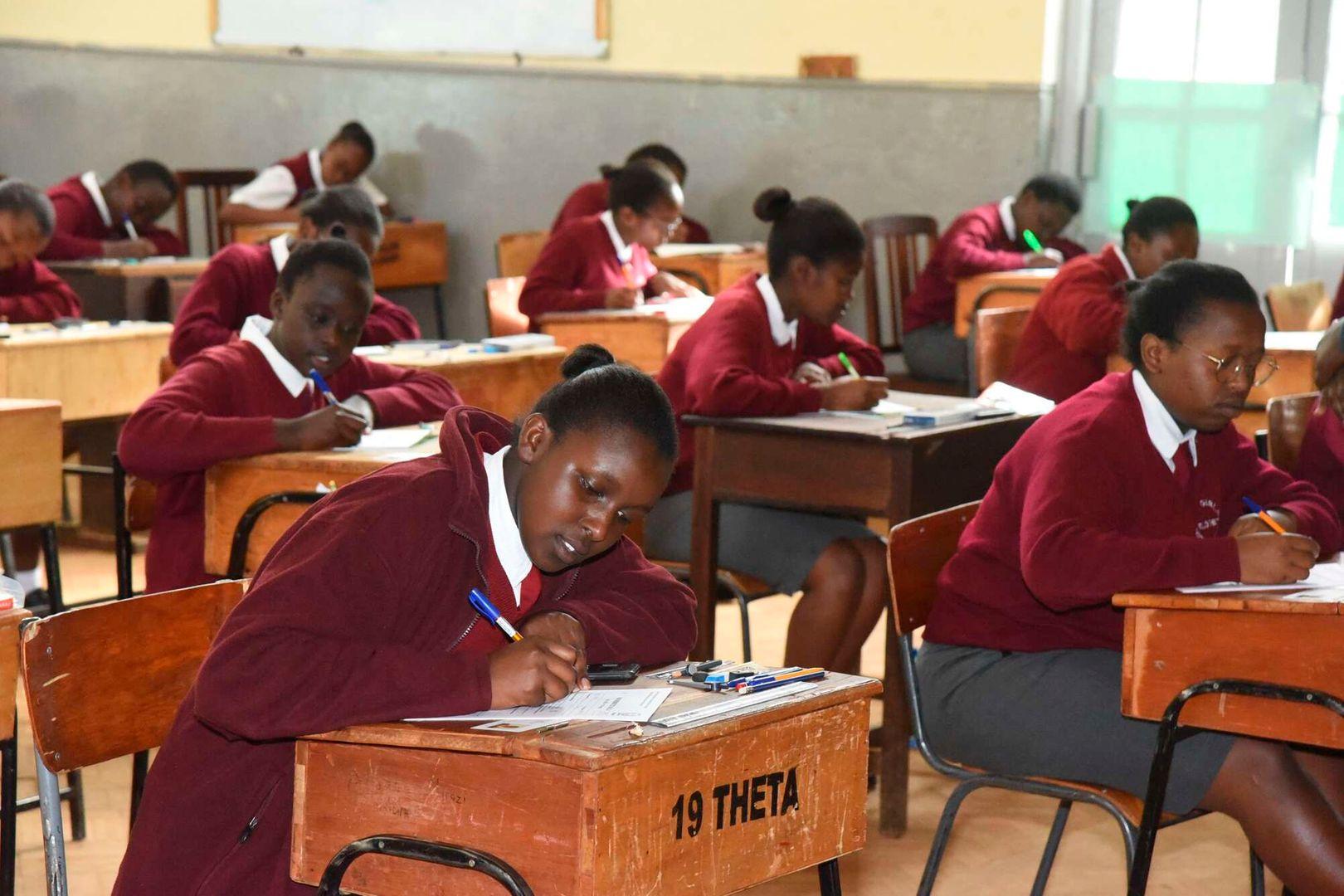
- KCSE candidates are increasingly exposed to individuals claiming they can predict questions in forthcoming examinations.
- Ashford Kimani warns that such predictions exploit examination anxiety and can undermine effective revision.
- Candidates should instead master the approved curriculum, practise extensively and strengthen their examination skills.
Every year, as Term Three progresses and the Kenya Certificate of Secondary Education (KCSE) examinations draw closer, a strange industry begins to flourish. Suddenly, self-proclaimed examination analysts, prediction specialists and academic prophets emerge from every corner. They announce what they claim will appear in the national examination. Some make bold predictions about particular questions, topics, poems, set texts, compositions, comprehension passages or even the exact structure of papers. Others present their predictions with such confidence that anxious candidates and parents begin to believe that somebody, somewhere, has secretly obtained a window into the forthcoming examination.
I have heard, seen, witnessed and even read some of these rather strange analyses over the years. What is particularly disturbing is the manner in which these predictions are packaged. They are often presented when candidates are most vulnerable — when the examination is only weeks away, anxiety is high and everyone is desperately looking for an advantage. The targets are usually unscrupulous candidates, desperate parents and teachers who are under pressure to produce impressive results.
The language is familiar: “This is likely to come.” “Our sources indicate.” “This topic has been repeated in several mocks.” “National schools have tested this question.” “Expect this particular area.” Sometimes, an examination question from a particular mock is circulated widely with the suggestion that it is a strong candidate for the actual KCSE. The closer the examination gets, the more dramatic the predictions become.
Let us be clear: KCSE is not a prophecy.
Mocks prepare candidates, they do not predict KCSE
The Kenya Certificate of Secondary Education is a national assessment. It is not designed to reproduce the mock examination of a particular school, county, examination consortium, publisher or group of schools. It is not supposed to be predictable, plausible or relatable to any particular school’s mock examination — whether that examination comes from a small private school, a prestigious national school or a supposedly powerful examination network.
Mocks serve an important purpose, but that purpose is frequently misunderstood. A mock examination is an assessment constructed to provide learners and teachers with an opportunity to practise, diagnose weaknesses, measure preparedness and familiarise candidates with examination conditions. Its usefulness lies in preparation, not in its ability to forecast the national examination.
A mock can contain an excellent question. Another school may independently set a similar question. A publisher may produce something resembling it. A teacher may notice a common curriculum concept appearing across several papers. None of this means that the actual KCSE paper must follow the same pattern.
The fundamental point is simple: KCSE examines the approved curriculum.
The examination is anchored in the syllabus and curriculum framework approved for the subject. Therefore, candidates should spend their final weeks mastering the prescribed content, developing the required competencies and practising the skills demanded by the examination — not chasing rumours about supposedly leaked patterns or magical predictions.
This distinction matters enormously.
When candidates begin preparing for a prediction instead of preparing for the curriculum, they narrow their intellectual field. They start abandoning topics because somebody has declared them “unlikely.” They concentrate excessively on questions that resemble something encountered in a particular mock. They may even memorise answers without understanding the underlying concepts. That is dangerous examination preparation.
A candidate who genuinely understands the syllabus is much safer than one who has memorised fifty predicted questions.
Do not monetise candidates’ examination anxiety
There is another problem. Predictions create a market. Some people understand that examination anxiety can be monetised. They package ordinary revision materials as privileged information. A compilation of past questions becomes a “special prediction.” A collection of common topics becomes a “leaked forecast.” A teacher’s educated guess becomes an “insider analysis.” Before long, desperate parents are paying money for something that cannot legitimately guarantee what will appear in the national examination.
This is where candidates and parents must exercise judgement.
There is nothing wrong with purchasing legitimate revision materials, examination practice papers, marking schemes, textbooks or quality instructional resources. There is everything wrong with being manipulated into believing that somebody possesses a secret formula for knowing the KCSE paper before it is administered.
Nobody outside the legitimate examination process should be selling certainty about the contents of a future KCSE paper.
Teachers also have a responsibility. The final weeks should not become a period of psychological warfare in which candidates are bombarded with speculative predictions. A responsible teacher should tell learners what they need to know: understand the syllabus, revise systematically, practise extensively, identify weaknesses, improve examination technique and remain calm.
Candidates should also remember that examination setters are not obliged to make the national paper resemble what schools have been setting. In fact, an effective national assessment must provide sufficient independence from individual school mocks to serve its national purpose.
If every mock examination could reliably predict KCSE, there would be little point in having a national examination in the first place.
This does not mean that KCSE is random. It is not. It is structured around the curriculum, assessment objectives and requirements of the subject. Experienced teachers can identify important areas of the syllabus and can design meaningful revision strategies. Past KCSE papers can reveal recurring concepts, question formats and assessment tendencies. But identifying examinable curriculum areas is fundamentally different from predicting the exact questions that will appear.
That distinction should never be lost.
Candidates need confidence, not prophets
As Term Three advances, candidates need confidence, not prophets. They need teachers who will teach, not fortune-tellers who will speculate. They need revision programmes, not rumours. They need authentic resources, not expensive promises. They need to understand that the examination is testing what they have been taught within the approved curriculum.
So, to every KCSE candidate: do not allow fear to make you gullible. To every parent: be careful about anyone demanding money in exchange for supposed examination predictions. To every teacher: equip learners with knowledge and skills rather than feeding their anxiety. And to those making extravagant predictions, remember that an examination is not a gambling event whose winning numbers can be announced beforehand.
KCSE is not predictable, plausible or relatable to any particular school’s mock examination — national school mocks included.
Prepare for the syllabus, master the skills, practise the questions, understand the concepts and walk into the examination room with confidence.
READ ALSO: Poor parenting fuelling youth indiscipline in Kwale, Matuga administrator says
Anyone telling you that they can reliably reveal the KCSE paper because of what appeared in a particular mock may not be giving you an academic advantage.
They may simply be selling your anxiety back to you.
By Ashford Kimani
Ashford is a teacher of English and Literature and writes on education and social affairs.
You can also follow our social media pages on Twitter: Education News KE and Facebook: Education News Newspaper for timely updates.
>>> Click here to stay up-to-date with trending regional stories
>>> Click here to read more informed opinions on the country’s education landscape