- The Ministry of Education has begun reclassifying all public secondary schools into four categories under the Competency-Based Education system.
- The new C1, C2, C3 and C4 framework will determine schools’ readiness to offer specialised Senior School pathways.
- Education officials say the exercise will guide infrastructure development, teacher deployment and equitable resource allocation.
The Ministry of Education has launched a nationwide reclassification of all public secondary schools into four new categories—C1, C2, C3 and C4—in a landmark exercise that will shape the future of Senior School education under the Competency-Based Education (CBE) system.
The nationwide assessment marks one of the most significant reforms in Kenya’s education sector as the government prepares for the transition of Grade 9 learners to Grade 10. Unlike the traditional categorisation of schools based on national, extra-county, county or sub-county status, the new framework focuses on each institution’s ability to deliver the specialised learning pathways introduced under CBE.
Education officials say the reclassification is designed to ensure every learner is admitted to a school that has the facilities, teachers and learning environment necessary to support their interests, talents and career aspirations.
The categorisation is based on several key indicators, including the availability of classrooms, science laboratories, ICT facilities, technical workshops, libraries, sports infrastructure, specialised learning equipment and qualified teachers. These factors determine the number of career pathways a school can effectively offer.
Under the new framework, C1 schools will be the most prepared institutions, with adequate infrastructure and specialised staff to offer all three Senior School pathways—Science, Technology, Engineering and Mathematics (STEM), Social Sciences, and Arts and Sports Science. These schools already possess well-equipped laboratories, digital learning facilities, workshops, libraries and sports amenities capable of supporting a comprehensive learning programme.
C2 schools will have sufficient resources to offer two of the three pathways. Although they have relatively good infrastructure, they still require additional facilities or specialised teachers before they can provide the full range of learning options.
C3 schools will have the capacity to offer only one pathway due to limited infrastructure or staffing. Many of these institutions will require expanded laboratories, workshops, ICT facilities and additional teachers before they can diversify their academic programmes.
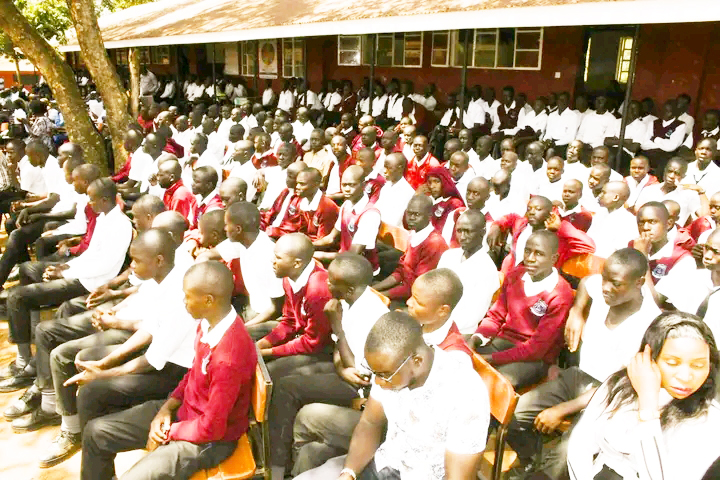
Meanwhile, C4 schools will consist of institutions that require substantial government investment before they can fully implement the Senior School curriculum. These schools face significant shortages in classrooms, laboratories, workshops, digital infrastructure, sports facilities and specialised teaching personnel.
Framework to guide government investment
The new categorisation will also serve as a blueprint for government investment in secondary education. Rather than allocating development resources uniformly, the Ministry of Education will use the classification to identify schools with the greatest infrastructure gaps and prioritise funding accordingly.
Under this approach, C1 schools are expected to receive funding largely for maintenance, modernisation and expansion of existing facilities. C2 schools will benefit from targeted investments aimed at completing the infrastructure needed to introduce a third learning pathway. C3 schools are likely to receive increased funding for new laboratories, workshops, ICT centres, classrooms and teacher deployment to broaden their capacity. C4 schools, which face the greatest resource challenges, are expected to receive the highest priority for infrastructure development, learning equipment and specialised staffing to enable them to meet the minimum standards required for Senior School implementation.
Education officials have emphasised that the C1, C2, C3 and C4 classification is not a ranking system and will not replace the existing categories of national, extra-county, county and sub-county schools. Neither is it intended to determine capitation funding per learner. Instead, it is a strategic planning framework designed to guide infrastructure development, teacher deployment and equitable resource allocation across the country.
Preparations for Grade 10 transition
The reclassification exercise comes as Kenya prepares for the first cohort of Competency-Based Education learners to join Senior School. At Grade 10, students will specialise in one of three pathways—STEM, Social Sciences, or Arts and Sports Science—allowing them to pursue education that aligns with their strengths, interests and future career ambitions.
To support the transition, the Ministry of Education has intensified capacity-building programmes for principals, teachers and education officers while undertaking nationwide assessments of school readiness. Information gathered through the reclassification exercise will inform future investments in classrooms, laboratories, workshops, ICT infrastructure and specialised teacher recruitment.
Officials believe the reforms will strengthen equity, improve the quality of learning and ensure that every learner, regardless of location, has access to a school capable of delivering the specialised curriculum envisioned under the Competency-Based Education system.
READ ALSO: Teachers raise concerns over TPAD appraisals amid claims of bias by school managers
As implementation gathers pace, the C1, C2, C3 and C4 framework is expected to become the foundation upon which future investments in secondary education are planned, paving the way for a more skills-oriented, learner-centred and equitable education system across Kenya.
By Hillary Muhalya