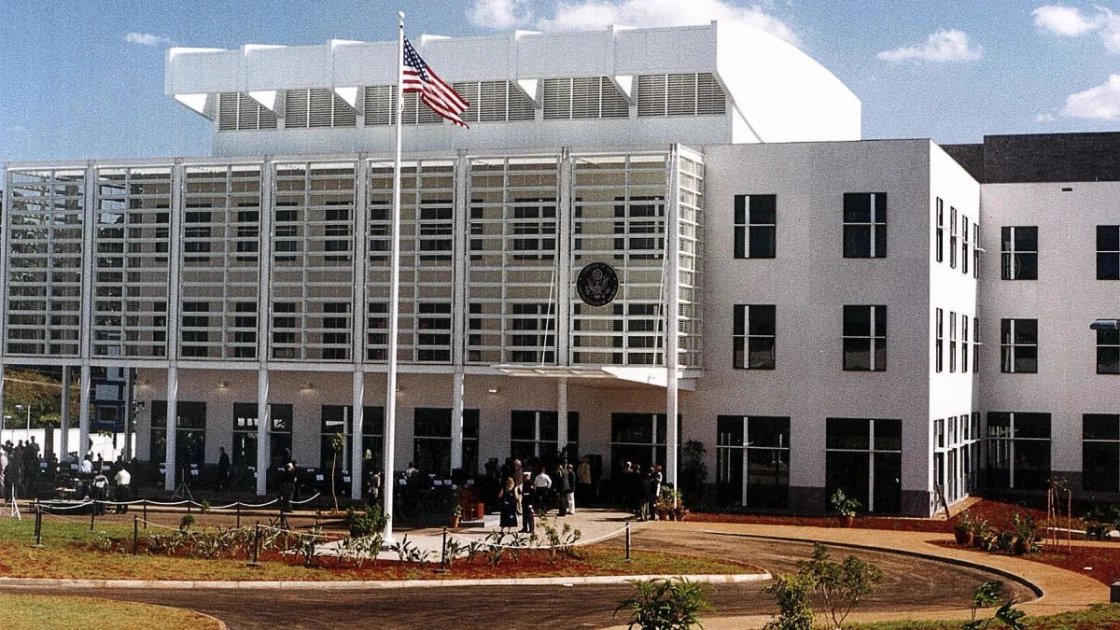
- The United States has centralized routine visa processing in selected African countries, ending local visa application services in more than 20 nations.
- Applicants from affected countries will now travel to designated regional hubs to complete visa interviews and other processing requirements.
- The new system is expected to reshape travel planning while increasing demand at major U.S. visa-processing centres across the continent.
Thousands of Africans seeking to visit, study, work or settle in the United States are set to experience a major shift in the visa application process following a sweeping reorganization of U.S. consular operations across the continent. In one of the most significant changes to American visa services in Africa in recent years, the United States has centralized routine visa processing in a limited number of regional hubs, effectively ending local visa application services in more than 20 African countries.
The move represents a fundamental change in how U.S. visas will be processed across Africa. While American embassies will remain operational in the affected countries and continue providing diplomatic and consular services, many will no longer conduct routine immigrant and non-immigrant visa interviews or process new visa applications. Instead, applicants will be required to travel to designated regional centres in other African countries to complete the process.
Under the new arrangement, countries including Kenya, Uganda, Tanzania, Rwanda, Ethiopia, Ghana, Cameroon, Senegal, Côte d’Ivoire, Morocco, Egypt, Algeria, Tunisia, Angola and South Africa will continue offering routine U.S. visa services. Nigeria also remains a major visa-processing centre through its designated consular posts.
These countries have now become the continent’s primary U.S. visa gateways, serving not only their own citizens but also applicants from neighbouring nations whose embassies no longer provide routine visa processing. As a result, embassies in these regional hubs are expected to handle a significantly higher number of applications, making them central to the new system.
On the other hand, routine U.S. visa services have been discontinued in Madagascar, Eritrea, Mali, The Gambia, the Republic of the Congo, Burundi, Guinea, Benin, Sierra Leone, Botswana, Zimbabwe, South Sudan, Gabon, Malawi, Zambia, Mozambique, Lesotho, Eswatini, Chad, Niger, Mauritania, Burkina Faso and Namibia. Although U.S. embassies in these countries remain open, their role will largely focus on diplomatic engagement, assistance to American citizens, emergency consular services and other official government functions rather than processing routine visa applications.
Applicants face higher travel costs
For many prospective travellers, the new arrangement introduces additional financial and logistical challenges. Instead of applying within their home countries, applicants may now have to secure travel documents, purchase international transport, book accommodation and spend extra days abroad simply to attend biometric appointments and visa interviews. For students, business travellers, tourists and families seeking to reunite with relatives in the United States, these added costs could become a significant barrier.
The concentration of visa services into fewer regional centres is also expected to increase demand at the remaining processing hubs. With embassies in cities such as Nairobi, Addis Ababa, Kampala, Kigali, Dar es Salaam, Accra, Dakar, Lagos, Yaoundé, Johannesburg and Cape Town now serving applicants from multiple countries, longer appointment waiting times and increased workloads may become inevitable, particularly during peak travel and university admission seasons.
According to the U.S. government, the restructuring is aimed at modernizing consular operations, strengthening security screening, improving service delivery and making better use of limited consular resources across Africa. By consolidating visa processing into strategically located regional hubs, U.S. authorities say they can deploy specialized personnel more efficiently, standardize visa adjudication procedures and respond more effectively to changing application volumes.
A new era in U.S.-Africa visa services
The changes do not mean that U.S. embassies have closed in the affected countries. Rather, they reflect a shift in operational strategy, with diplomatic missions continuing to provide essential services while routine visa processing is transferred elsewhere. Emergency assistance for American citizens, passport services, diplomatic engagement and other consular responsibilities will continue as normal.
For prospective applicants, the most important step is now to verify the appropriate visa-processing location before beginning an application. Depending on an applicant’s country of residence and the category of visa being sought, interviews and other required procedures may have to be completed in another African country designated as a regional processing hub.
READ ALSO: MoE should develop a clear funding formula to ensure proper school participation in sports
The overhaul signals a new chapter in U.S.-Africa consular relations. While Washington argues that the centralized model will enhance efficiency, consistency and security, the policy also reshapes the travel experience for millions of Africans by making cross-border travel an increasingly necessary part of the journey toward obtaining a U.S. visa. As the new system takes effect, applicants across the continent will need to plan earlier, budget for additional travel expenses and familiarize themselves with the regional hub assigned to handle their applications.
By Hillary Muhalya
You can also follow our social media pages on Twitter: Education News KE and Facebook: Education News Newspaper for timely updates.
>>> Click here to stay up-to-date with trending regional stories
>>> Click here to read more informed opinions on the country’s education landscape