- Ashford Kimani says Africa’s institutions must recognise young people as present-day innovators, workers, entrepreneurs and agents of change.
- He argues that meaningful youth empowerment requires listening, mentorship, education and genuine participation in decision-making.
- Kimani says families, schools, governments, churches and businesses share responsibility for turning Africa’s youthful population into an asset.
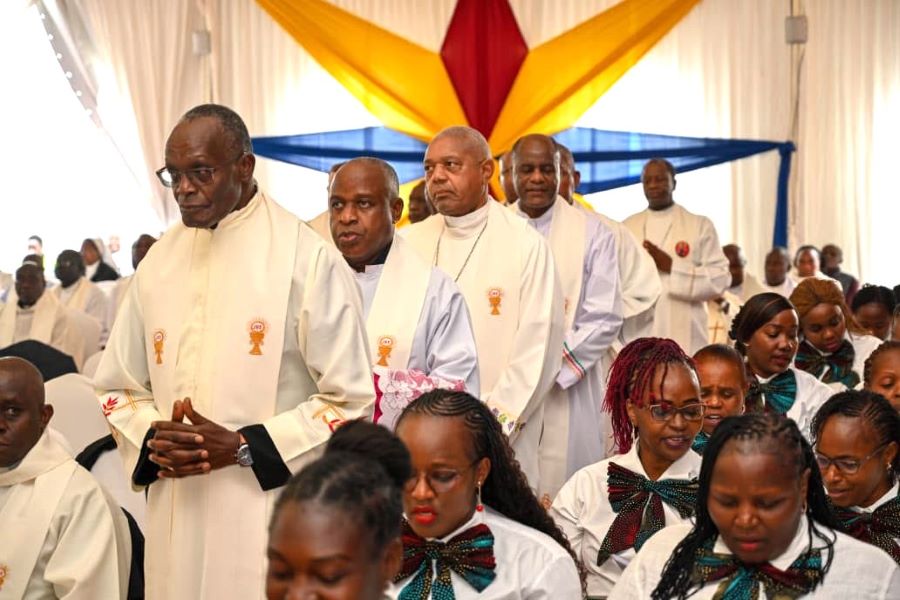
The recently concluded plenary assembly of the Association of Member Episcopal Conferences in Eastern Africa (AMECEA) in Nairobi was more than a gathering of Catholic bishops. It offered a timely reflection on one of Africa’s greatest assets and challenges—its young people.
As church leaders deliberated on the theme of accompanying young people in hope, they offered lessons that extend far beyond the walls of the Church and speak directly to families, schools, governments, businesses and society at large.
The first lesson is that Africa cannot afford to ignore its young people.
With the continent having the world’s youngest population, every institution must recognise that the future is already here. Young people are not merely tomorrow’s leaders; they are today’s innovators, volunteers, entrepreneurs, workers and agents of change.
Any organisation that consistently sidelines them risks preparing itself for irrelevance.
Secondly, the conference reminded us that listening is a critical leadership skill. Too often, adults assume they know what young people need without taking time to understand their experiences.
Yet today’s youth grapple with unemployment, mental health challenges, digital addiction, substance abuse, migration and uncertainty about the future.
Solutions developed without listening to those directly affected are unlikely to address their realities effectively. Leadership must therefore begin with attentive listening before proceeding to prescriptions and speeches.
Young people need accompaniment, not lectures
A third lesson is that accompaniment can be more powerful than authority.
The bishops emphasised the importance of walking with young people rather than simply instructing them. This principle applies equally to parents, teachers, employers, religious leaders and political leaders.
Guidance is most effective when rooted in relationships built on trust, empathy and mutual respect.
The conference also underscored the importance of creating meaningful opportunities for young people to participate in decision-making.
Across many institutions, young people are invited to events but excluded from the tables where important decisions are made. Genuine inclusion requires more than symbolic representation.
It means trusting young people with responsibility, valuing their ideas and allowing them to contribute meaningfully to shaping decisions that affect their lives and communities.
Technology should become an opportunity
Another important lesson concerns technology.
Young Africans are growing up in an interconnected digital world where social media and emerging technologies influence their beliefs, relationships, aspirations and opportunities.
Rather than viewing technology solely as a threat, institutions should harness it as a tool for education, evangelisation, innovation, entrepreneurship and civic engagement.
A digital generation requires leadership that understands the opportunities and risks of the digital world.
The Nairobi gathering also highlighted the importance of restoring hope among young people.
Economic hardship, unemployment, conflict and social inequalities have left many young Africans questioning whether their dreams are attainable.
Hope cannot be manufactured through speeches alone. It grows where young people have access to quality education, meaningful work, entrepreneurship opportunities, mentorship and spiritual nourishment.
Schools must prepare learners for life
Education provides another important lesson.
Schools must move beyond preparing learners solely for examinations and prepare them for life.
Critical thinking, ethical leadership, emotional intelligence, resilience, creativity and community service are increasingly as important as academic achievement in preparing young people for a rapidly changing world.
Teachers remain among the most influential mentors in shaping attitudes and values that endure long after certificates are awarded.
The conference further reminded leaders that institutions must evolve without abandoning their core values.
Young people seek authenticity rather than perfection. They are attracted to institutions and communities that demonstrate compassion, transparency, accountability and service.
Whether in churches, schools, businesses or government, credibility is earned when actions match words.
Empowering youth is a shared responsibility
Perhaps the greatest lesson from the Nairobi AMECEA conference is that responsibility for nurturing young people does not belong to the Church alone.
Families must provide stable and supportive homes. Schools must inspire learning and character development. Governments must create opportunities. The private sector must invest in young talent, while civil society and religious organisations must mentor emerging leaders.

Building the next generation is a shared responsibility.
Africa stands at a defining moment in its history. Never before has it possessed such a youthful population with immense potential.
This demographic dividend can become either one of the continent’s greatest strengths or one of its greatest missed opportunities.
The difference will depend significantly on whether today’s leaders choose to invest in young people intentionally and consistently.
The Nairobi AMECEA conference has reminded us that leadership is ultimately about people.
READ ALSO: NBA, Chuka University seal strategic pact to advance biosafety education and research
When institutions choose to walk alongside young people, listen to their voices, nurture their gifts and trust them with responsibility, they are not merely securing their own future—they are helping shape Africa’s destiny.
By Ashford Kimani
Ashford Kimani is a teacher of English and Literature who writes on education, youth and social affairs.
You can also follow our social media pages on Twitter: Education News KE and Facebook: Education News Newspaper for timely updates.
>>> Click here to stay up-to-date with trending regional stories
>>> Click here to read more informed opinions on the country’s education landscape