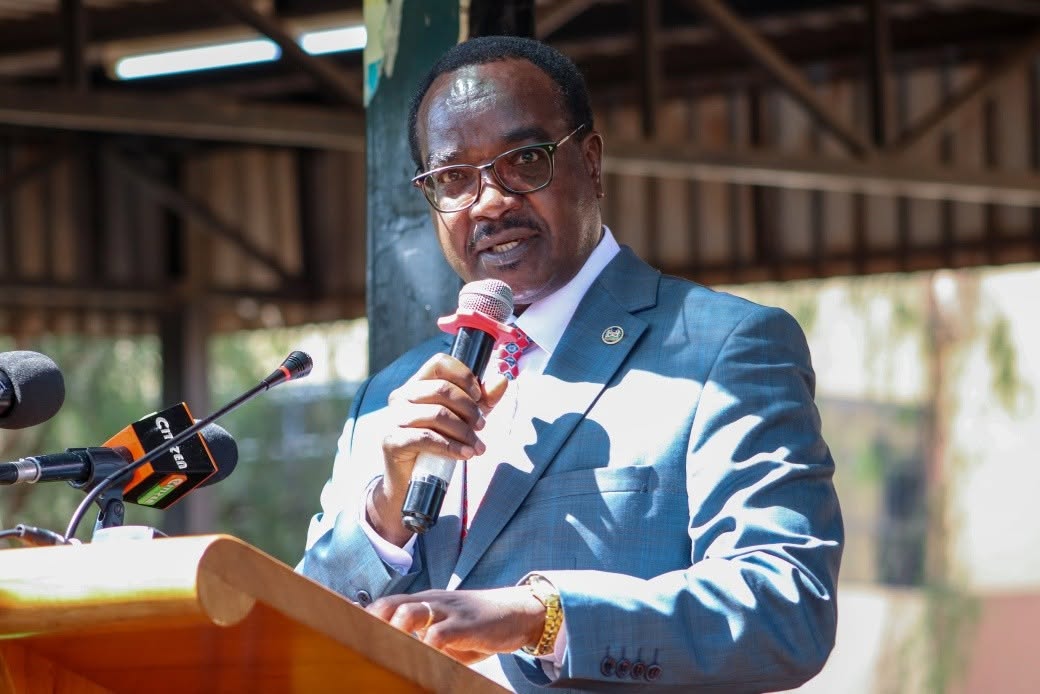
- Ogamba said the assessment will enable the government to identify learners with disabilities in schools and other learning institutions who need specialised support.
- MoE, through KISE, will distribute 11,139 assistive devices to 321 inclusive education programmes and special schools across all 47 counties
The Kenya Institute of Special Education (KISE) is set to conduct a nationwide special needs assessment aimed at identifying learners who require assistive devices and technologies.
Speaking during the flag-off of the third phase of assistive device distribution to schools at KISE in Kasarani on Thursday, July 16, Education Cabinet Secretary Julius Ogamba said the assessment will enable the government to identify learners with disabilities in schools and other learning institutions who need specialised support.
“The information gathered will enable the Ministry through KISE to plan more effectively, allocate resources equitably and ensure that every learner receives support that is appropriate to their individual needs.
The CS further directed KISE to partner with all special needs learning institutions to ensure every learner has access to an assistive device, intending to achieve a one-to-one allocation ratio.
ALSO READ:
Government distributes 11,139 assistive devices to learners with disabilities across Kenya
KISE Director Dr. Norman Kiogora expressed appreciation to the Ministry of Education for facilitating the procurement of the assistive devices, noting that the special needs assessment exercise should be completed within two months.
“I want to assure you, CS, that within the next two months, we will provide the information you requested. We have already completed the pilot phase, giving us a good foundation to build on,” he said.
Under the third phase of the programme, the Ministry of Education, through the Kenya Institute of Special Education (KISE), will distribute 11,139 assistive devices to 321 inclusive education programmes and special schools serving learners with visual and physical disabilities across all 47 counties.
The specialised learning and mobility equipment are intended to enhance access to education by addressing barriers faced by learners with visual and physical impairments.
By Frank Mugwe
You can also follow our social media pages on Twitter: Education News KE and Facebook: Education News Newspaper for timely updates.
>>> Click here to stay up-to-date with trending regional stories
>>> Click here to read more informed opinions on the country’s education landscape