Kenya has successfully hosted the 9th edition of the African School of Fundamental Physics and Applications (ASP2026), a biennial summer programme aimed at strengthening capacity in fundamental physics and its applications across Africa.
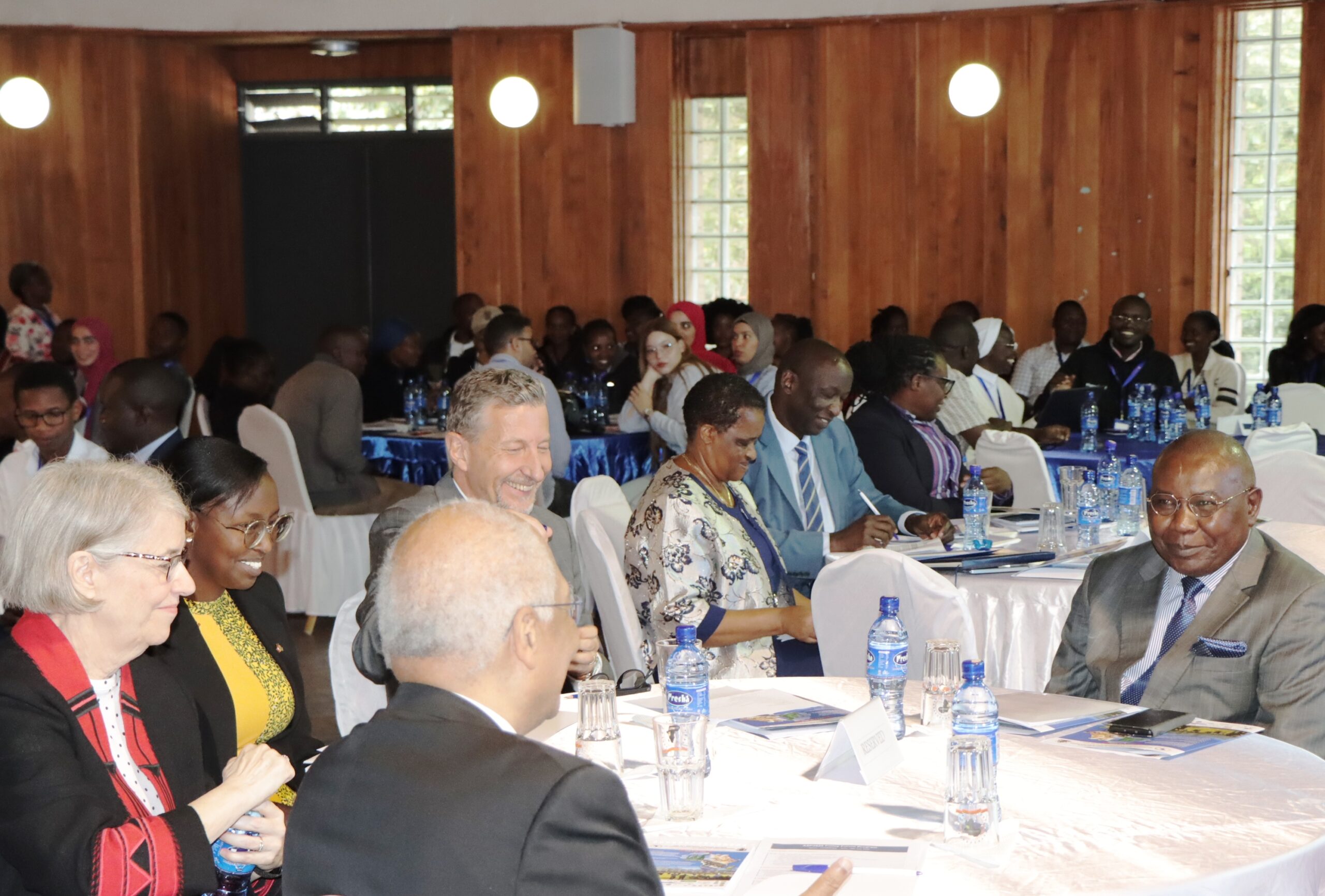
The week-long programme, held from July 6 to 11 at the Centre for Mathematics, Science and Technology Education in Africa (CEMASTEA) in partnership with the University of Nairobi, brought together about 65 undergraduate and postgraduate physics students from universities across Africa and beyond.
The event also attracted more than 50 lecturers, researchers and scientists from leading institutions worldwide, as well as over 70 secondary school physics teachers, providing a platform for knowledge exchange, collaboration and professional development.
Speaking during the opening ceremony, Education Cabinet Secretary Julius Migos, in a speech delivered by Dr. Pius Mutisya, Chairperson of the Board of Governors at CEMASTEA, underscored the importance of partnerships in advancing scientific research and innovation.
“The future of scientific discovery depends on strong partnerships among governments, universities, research institutions and industry,” the CS said.
ALSO READ:
Government opens university scholarship applications for over 202,000 KCSE 2025 candidates
He called for increased collaboration through joint research programmes, researcher exchange initiatives, shared laboratory facilities, postgraduate supervision and equitable international partnerships that strengthen local scientific capacity while contributing to global scientific advancement.
The Cabinet Secretary noted that Africa continues to face major challenges, including energy access, water security and climate-related issues, which require science-driven solutions.
He urged stakeholders to invest more in both fundamental and applied physics research by equipping universities and research institutions with modern laboratories, high-performance computing facilities, postgraduate scholarships and adequate support for early career scientists.
The CS also challenged institutions of higher learning to strengthen the connection between education and employment by integrating entrepreneurship, innovation, intellectual property management and business development into their academic programmes.
“I reaffirm the Government of Kenya’s commitment to supporting science, technology and innovation as key drivers of national development and global competitiveness,” the CS said.
Switzerland’s Ambassador to Kenya, Mirko Giulietti, reaffirmed his country’s commitment to supporting education, research and innovation in Kenya and globally.
He highlighted the 2024 Memorandum of Understanding (MoU) between Kenya and Switzerland on education, research, technology and innovation, which focuses on promoting collaboration among key stakeholders through joint projects and sustainable partnerships.
The agreement prioritises areas such as digitalisation, artificial intelligence, STEM and Technical and TVET, start-up ecosystems, clean technology, renewable energy and digital health.
CEMASTEA acting CEO Gladys Masai said physics remains one of the most important disciplines driving scientific and technological advancement, and the institution will continue preparing physics teachers to improve curriculum delivery.
Chairperson of ASP local organising committee, Sister Dr. Mary Simiyu, who is also an alumnus of the ASP programme, said the initiative has become an important platform for creating international collaborations and opening up opportunities for African scientists.
She noted that partnerships formed through the programme promote innovation, research and skills development that can ultimately create employment opportunities for young people.
ALSO READ:
Stakeholders Push for introduction of AI subject in Schools to equip learners with digital skills
Dr. Simiyu observed that many African institutions still face shortages of teaching and learning resources in physics, adding that ASP helps bridge this gap by bringing modern scientific equipment, expertise and practical demonstrations closer to African universities and schools.
She announced that the next edition of the African School of Fundamental Physics and Applications will be hosted in Ghana, with Kenya expected to participate.
The ASP summer programme targets undergraduate and graduate students, offering intensive training in theoretical and experimental physics, particle detection, data analysis and scientific computing.
In Kenya, the programme is anchored by a strong network of institutions led by the University of Nairobi’s Department of Physics in collaboration with the Catholic University of Eastern Africa, Chuka University, Jomo Kenyatta University of Agriculture and Technology (JKUAT), Kenyatta University, Masinde Muliro University of Science and Technology, Multimedia University of Kenya (MMU), Taita Taveta University, and the Technical University of Kenya.
By Obegi Malack
You can also follow our social media pages on Twitter: Education News KE and Facebook: Education News Newspaper for timely updates.
>>> Click here to stay up-to-date with trending regional stories
>>> Click here to read more informed opinions on the country’s education landscape
>>> Click here to stay ahead with the latest national news.