- Kenya’s schools face a critical test of leadership as administrators and policymakers weigh prestige projects against the urgent need for dormitories, laboratories, sanitation, and libraries.
- With the Constitution guaranteeing dignity and safe learning environments, there are calls to align infrastructure spending with curriculum reforms to protect learner welfare and secure the future of education.
“The true measure of any society can be found in how it treats its most vulnerable members.” -Mahatma Gandhi
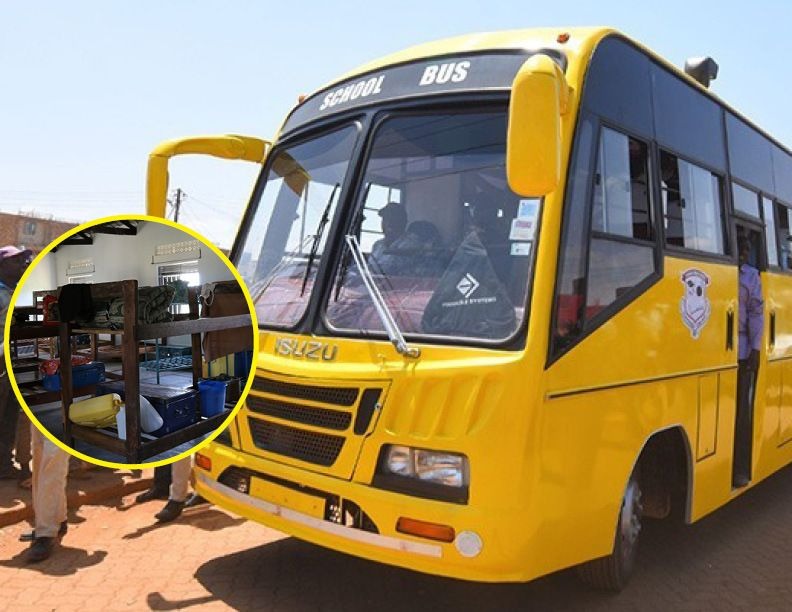
Imagine a school proudly unveiling a brand-new bus amid great celebration. At the same time, hundreds of learners retire each evening to overcrowded dormitories, attend science lessons without functional laboratories, or use sanitation facilities that compromise their health and dignity. Such scenes invite a difficult but necessary question: Have we, in some instances, begun to mistake visible achievements for meaningful educational progress?
This is not an argument against school buses. They are invaluable assets that facilitate academic trips, co-curricular activities, benchmarking, and exposure to the wider world. However, when the acquisition of a bus takes precedence over the construction of decent dormitories, laboratories, workshops, libraries, or adequate sanitation facilities, we must pause and ask whether our budgeting priorities truly reflect the best interests of learners.
As Winston Churchill aptly remarked, “We shape our buildings; thereafter they shape us.” The spaces children occupy each day silently mould their attitudes, aspirations, discipline, and self-worth. Schools do not merely teach through textbooks and teachers; they educate through the environments they create.
ALSO READ:
The Constitution of Kenya, 2010 provides a clear moral and legal foundation for educational leadership. Article 28 unequivocally states that “Every person has inherent dignity and the right to have that dignity respected and protected.” This constitutional guarantee extends to every learner in our schools. Human dignity is therefore not an aspiration but a constitutional obligation. Every child deserves safe dormitories, hygienic sanitation facilities, spacious classrooms, functional laboratories, workshops, libraries, and learning environments that affirm their worth and inspire excellence.
The Constitution further reinforces this obligation through Article 53(1)(b), which guarantees every child “the right to free and compulsory basic education.” Yet meaningful education is far more than access to a classroom. A learner cannot fully benefit from education while sleeping in congested dormitories, studying science without laboratories, or learning in environments that compromise health, safety, and dignity. Article 53(2) further reminds every education stakeholder that “A child’s best interests are of paramount importance in every matter concerning the child.” Surely, the best interests of the learner should remain the foremost consideration whenever schools prepare budgets or determine development priorities.
Similarly, Article 43(1)(b) guarantees every person “the right to accessible and adequate housing, and to reasonable standards of sanitation.” Although schools are unique learning institutions, these constitutional values should inspire the provision of safe boarding facilities and adequate sanitation for learners.
Overcrowded dormitories and inadequate sanitation are not merely infrastructure deficits; they undermine learner welfare, compromise health, diminish dignity, and ultimately affect academic performance.
The implementation of the Competency-Based Curriculum (CBC) further underscores the urgency of aligning infrastructure with educational goals. CBC is founded on practical learning, creativity, innovation, collaboration, and problem-solving. Such competencies cannot flourish where schools lack adequately equipped science laboratories, technical workshops, digital learning facilities, or libraries. Practical learning cannot remain an aspiration while the essential infrastructure remains absent.
The philosopher John Dewey wisely observed, “Education is not preparation for life; education is life itself.” If education is indeed life itself, then the learning environment should reflect the excellence, dignity, and functionality that we hope learners will one day reproduce in society.
Educational leadership therefore carries profound responsibility. School administrators and Boards of Management (BOMs) are entrusted not merely with managing finances but with stewarding the future of young people. Every budgeting decision should be guided by one fundamental question: Will this investment significantly improve learner welfare, curriculum delivery, and educational outcomes?
Strategic plans should become living blueprints rather than documents filed away in cabinets. Infrastructure audits, curriculum requirements, learner welfare, and long-term institutional needs should guide every financial decision. Educational resources are limited, making prudent prioritisation not simply desirable but indispensable.
The Ministry of Education also has a vital responsibility to provide policy direction, strengthen oversight, and continually guide schools on infrastructure priorities that support quality education. Regular infrastructure audits, clear policy guidelines, and accountability mechanisms can help ensure that schools invest first in facilities that directly enhance learning and safeguard learners’ welfare before embarking on projects driven primarily by visibility or prestige.
Similarly, the Teachers Service Commission (TSC) has commendably invested in strengthening instructional leadership through continuous professional development. There is an opportunity to deepen this effort by collaborating more closely with the Ministry of Education to strengthen school leaders’ capacity in strategic planning, financial stewardship, infrastructure prioritisation, and evidence-based decision-making. Effective educational leadership today demands excellence not only in pedagogy but also in prudent resource management.
ALSO READ:
Members of Parliament, through the National Government Constituencies Development Fund (NG-CDF), have remained invaluable partners in expanding educational opportunities. Their support can become even more transformative through regular consultative forums involving school administrators, Boards of Management, Ministry officials, parents, and local communities. Such engagements would enable schools to present priorities grounded in strategic plans, infrastructure assessments, and curriculum needs rather than assumptions or projects that merely attract public attention.
Many institutions across Kenya have demonstrated exemplary stewardship by investing first in classrooms, laboratories, dormitories, libraries, workshops, and sanitation before pursuing additional projects. Their success reminds us that benchmarking is not merely an administrative exercise but an avenue for sharing best practices and promoting sound governance across the education sector.
As Peter Drucker famously noted, “What gets measured gets managed.” Perhaps it is time we broadened the indicators by which schools celebrate success. Alongside examination results and transport facilities, let us also celebrate modern laboratories, dignified boarding facilities, safe sanitation, vibrant libraries, functional workshops, and learning spaces that inspire excellence.
Ultimately, the greatness of a school is not measured by the number of buses parked in its compound but by the quality of learning it offers and the dignity with which it treats every child entrusted to its care.
As Nelson Mandela reminded us, “Education is the most powerful weapon which you can use to change the world.” That weapon is sharpened not only by dedicated teachers and determined learners but also by wise leadership and thoughtful investment. Long after buses have worn out, laboratories will continue producing scientists, workshops will shape innovators, libraries will cultivate thinkers, and dignified learning environments will nurture confident citizens.
Our budgets are more than financial statements—they are moral documents that reveal what we value most. If we truly aspire to build an education system capable of transforming Kenya, then every budgeting decision must begin with one enduring question: Does this investment place learners, their dignity, and their future at the centre of our priorities?
By Astiba kebongo
You can also follow our social media pages on Twitter: Education News KE and Facebook: Education News Newspaper for timely updates.
>>> Click here to stay up-to-date with trending regional stories
>>> Click here to read more informed opinions on the country’s education landscape