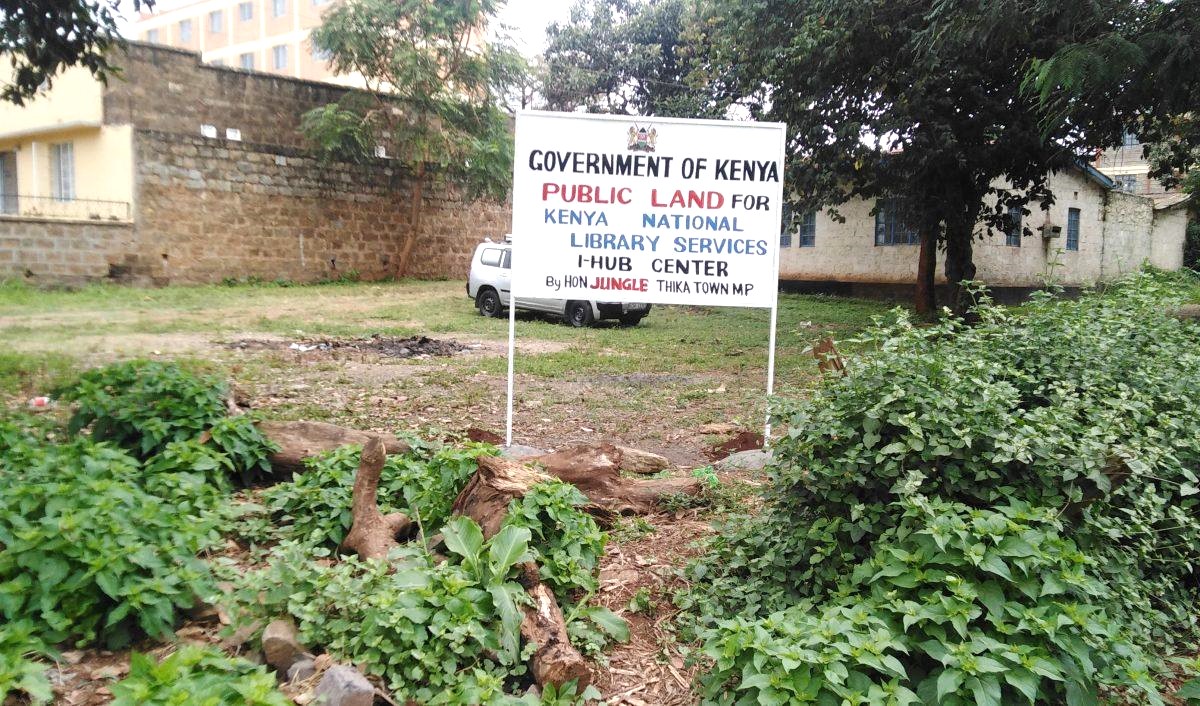
- The Government has directed all public institutions to prepare 20-year Land Use and Management Plans to safeguard public land.
- Schools, hospitals, universities and State agencies will be required to submit the plans to the National Land Commission.
- The reforms aim to curb land grabbing, encroachment and the irregular allocation of public land.
The Kenyan Government has unveiled far-reaching measures aimed at protecting public land from encroachment, illegal occupation and land grabbing by directing all State agencies to prepare comprehensive 20-year Land Use and Management Plans (LUMPs).
The new guidelines, announced on June 30, 2026, through the National Land Commission (NLC), represent one of the most significant reforms in public land governance in recent years.
Every ministry, department, State corporation, school, college, university, hospital and other public institution will now be required to prepare a structured plan showing how land under its custody will be protected, utilised and developed over the next two decades.
Under the directive, every institution must submit its Land Use and Management Plan to the National Land Commission for approval.
The plans are expected to outline the intended use of every parcel of public land, environmental conservation measures, infrastructure development, boundary protection mechanisms and procedures for resolving land disputes.
The Government says the reforms are intended to curb rampant cases of encroachment, illegal occupation and irregular allocation of public land that have deprived citizens of vital public resources and delayed development projects.
For many years, schools, hospitals and other public institutions have lost valuable land to private developers, influential individuals and neighbouring communities because of weak documentation, poor planning and inadequate protection.
Some institutions have lost playgrounds, farms, forests and land reserved for expansion through gradual encroachment, while others have been drawn into lengthy legal disputes over public property.
The policy therefore places greater responsibility on accounting officers, Boards of Management and institutional heads to become active custodians of public land.
Public institutions will no longer be expected merely to occupy land but also to demonstrate how they intend to protect and utilise it sustainably for present and future generations.
What institutions must do
To comply with the new framework, institutions should first ensure that all land ownership documents, including title deeds, allotment letters, deed plans, survey maps and beacon certificates, are complete, accurate and securely stored.
Certified digital copies should also be maintained to minimise the risk of loss or destruction.
Institutions are further encouraged to undertake regular surveys to verify boundary beacons.
Missing or damaged beacons should be reinstated by licensed surveyors, while permanent fencing and clear boundary markings should be established wherever possible.
Visible signage identifying land as Government property can also discourage encroachment.
Every school and public institution should establish an active land management committee under its governing board to oversee land matters, monitor boundaries and advise on future developments.
Routine inspections should be conducted to detect illegal cultivation, construction, dumping or unauthorised occupation before such activities become permanent.
The Government also expects institutions to maintain accurate and updated land records indicating acreage, existing developments, reserved expansion areas, utility corridors, forests, playgrounds and agricultural sections.
Technology is expected to play an increasingly important role, with institutions encouraged to digitise land records using Geographic Information Systems (GIS), digital maps and electronic databases.
Planning for the future
Institutions are expected to reserve sufficient land for future expansion.
Schools should identify space for additional classrooms, laboratories, dormitories, libraries, sports facilities and staff housing, while hospitals, colleges and other public institutions should similarly plan for future growth.
Idle public land without a clear development plan often becomes the first target for encroachers.
The Government has also encouraged institutions to build strong relationships with neighbouring communities, noting that local residents are often the first to detect attempts to invade public land.
Where encroachment occurs, institutional leaders have been advised to report cases immediately to the National Land Commission, the Ministry responsible for lands, county land offices, security agencies and the courts where necessary.
Land experts have welcomed the directive, saying long-term planning will improve transparency, reduce land conflicts and preserve strategic public assets for future generations.
They argue that public land should remain available for expanding schools, hospitals, roads, research centres, security installations and other essential public services rather than being lost through irregular allocation.
Ultimately, protecting Government land is not merely a legal obligation but a national responsibility.
READ ALSO: Murang’a KUPPET warns teachers against KCSE examination duties over unpaid KNEC allowances
Every principal, head teacher, chief executive, accounting officer and governing board has a duty to practise responsible stewardship by planning wisely, maintaining proper records, securing boundaries and ensuring that every acre entrusted to public institutions continues serving the people of Kenya.
By Hillary Muhalya
You can also follow our social media pages on Twitter: Education News KE and Facebook: Education News Newspaper for timely updates.
>>> Click here to stay up-to-date with trending regional stories
>>> Click here to read more informed opinions on the country’s education landscape