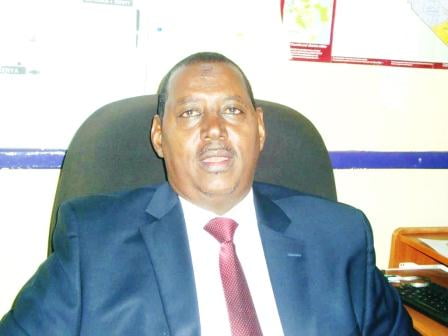
- Former TSC Regional Director Ibrahim Hish Adan examines the successes and emerging funding challenges facing Mandera’s flagship Elimu Kwa Wote bursary programme.
- The analysis highlights how delayed disbursements are affecting school operations, Board of Management teachers and learner support.
- Adan argues that greater transparency, predictable funding and stronger accountability are essential to sustain the programme’s gains.
Few county programmes in Kenya have shaped a political career as decisively as Elimu Kwa Wote has shaped the governorship of Mandera’s Mohamed Adan Khalif.
Launched in January 2023, the programme promised what had long seemed out of reach in one of Kenya’s poorest and most drought-prone counties: free public secondary education for every child.
The pledge did more than open classroom doors. It became the centrepiece of Khalif’s political agenda and remains one of the defining achievements of his administration as the country gradually approaches the 2027 General Election.
From the outset, the programme adopted an ambitious funding model.
The county committed to meeting approximately 60 per cent of fees for boarding students and 70 per cent for day scholars, while national government capitation was expected to cover tuition costs.
Funding has expanded steadily over the years:
- 2022/23: KSh350 million
- 2023/24: KSh460 million
- 2025/26: KSh450 million
County officials estimate that nearly KSh1.7 billion has been invested in bursaries over four financial years, benefiting more than 120,000 learners in secondary schools, colleges and universities.
The programme contributed to increased transition rates from primary to secondary school, improved enrolment and reduced the financial burden on many families.
Transparency concerns emerge
Despite these achievements, the programme has faced sustained criticism regarding transparency and implementation.
In January 2023, the High Court issued conservatory orders suspending the initial KSh350 million disbursement after a petitioner argued that there had been inadequate public participation and insufficient disclosure regarding beneficiary selection and allocation criteria.
In September 2024, the Mandera chapter of the Kenya Secondary School Heads Association (KESSHA) accused the county government of delaying second- and third-term disbursements, warning that schools risked sending learners home because of accumulated fee arrears.
County officials attributed the delays to inconsistencies discovered during beneficiary verification, noting that only 15 of the 68 schools initially submitted corrected data.
Although both sides offered different explanations, the outcome remained the same—schools did not receive funds on time.
Schools feeling the strain
According to school principals, the funding situation has become increasingly difficult.
The county’s contribution has never covered the full cost of education, leaving schools to absorb the remaining balance.
Even the pledged 60 per cent allocation is released in staggered instalments throughout the academic year:
| Term | Share of County Allocation |
|---|---|
| First Term | 50% |
| Second Term | 30% |
| Third Term | 20% |
During the first two years, the arrangement functioned relatively well.
However, principals now report growing unpredictability.
They claim that Grade 10 learners under the Competency-Based Education (CBE) system have not received funding for the first two terms of the year.
They also report that Form Three and Form Four learners received only about 23 per cent of the expected second-term allocation instead of the scheduled 30 per cent.
These funding gaps have created financial pressures that schools were never designed to absorb.
The most immediate impact has been on school payrolls.
Boards of Management rely heavily on locally generated fees to pay Board of Management teachers and non-teaching staff.
Delayed county disbursements have reportedly left many schools unable to pay June salaries for these employees.
Ironically, these are often the staff members who fill staffing gaps created by shortages of teachers employed by the Teachers Service Commission (TSC).
A programme at a crossroads
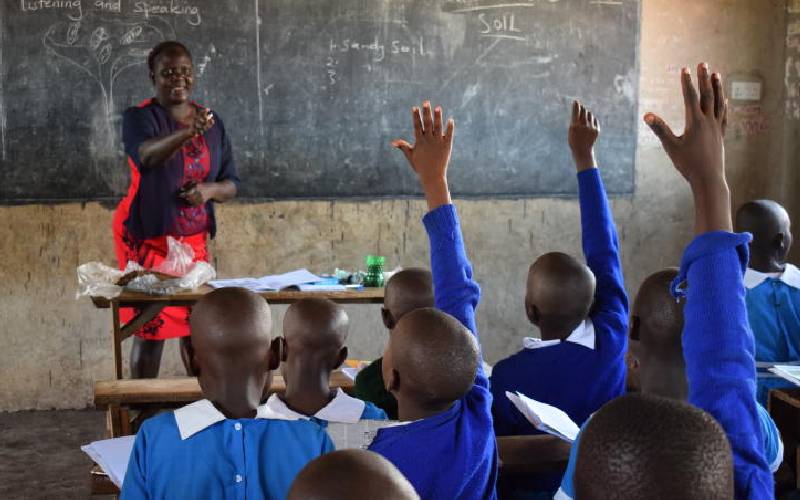
There is little doubt that Elimu Kwa Wote has transformed access to education in Mandera County.
Thousands of learners who previously faced financial barriers have remained in school because of the programme.
Its scale remains one of the most ambitious education initiatives undertaken by a county government in Kenya.
However, education stakeholders argue that delayed disbursements and widening funding gaps now threaten those gains.
The growing difference between promised allocations and actual disbursements is beginning to affect the day-to-day operations of schools.
Unpaid salaries, delayed bursaries and unfunded learner cohorts are increasingly challenging the programme’s long-term sustainability.
As Mandera continues investing heavily in education, stakeholders say the programme’s future will depend on timely disbursement of funds, improved transparency and stronger financial planning.
Without those improvements, they warn, a programme that has become synonymous with expanded educational access risks falling short of the expectations it created.
READ ALSO: Public officers seeking political seats must resign by February 9, 2027, says IEBC
For many learners and schools, the success of Elimu Kwa Wote will ultimately be measured not only by promises made, but by the resources that consistently reach classrooms.
By Ibrahim Adan
You can also follow our social media pages on Twitter: Education News KE and Facebook: Education News Newspaper for timely updates.
>>> Click here to stay up-to-date with trending regional stories
>>> Click here to read more informed opinions on the country’s education landscape