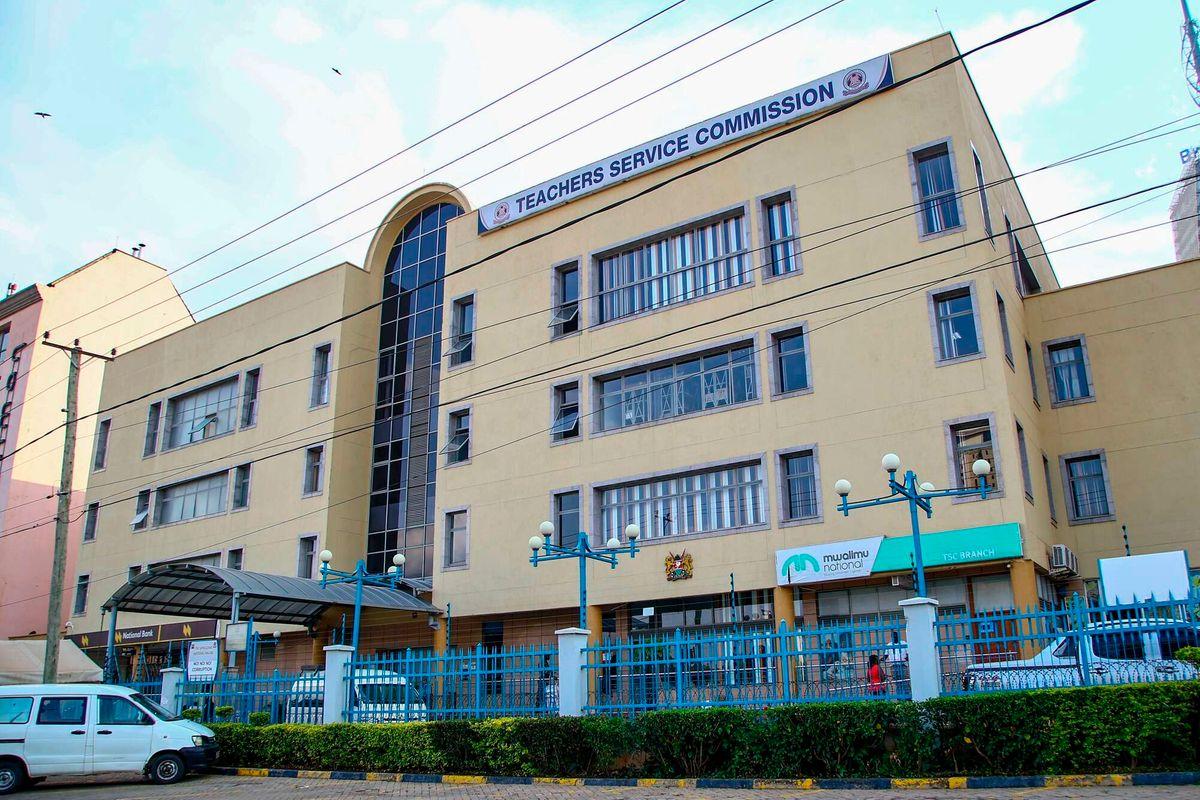
- The Teachers Service Commission is navigating a critical period of leadership transition while implementing major education reforms.
- The article argues that continuity and institutional stability are essential for sustaining progress in promotions, staffing and teacher management.
- It highlights the need for a carefully managed succession process to protect reforms already underway.
The Teachers Service Commission (TSC) is currently operating at a critical intersection of leadership transition, institutional reform and rising expectations from teachers and the wider education sector.
As Kenya continues to implement deep structural changes in education, the stability of the institution responsible for managing the teaching workforce has become a central concern.
At the heart of this debate is the recognition that TSC is not an ordinary agency. It is a constitutional commission responsible for teacher recruitment, deployment, promotion, discipline and professional development across the country.
Any disruption in its leadership or operations therefore has nationwide implications.
When the tenure of a Chief Executive Officer at TSC expires, the institution does not cease functioning. The law provides for continuity through acting leadership, ensuring that essential services continue uninterrupted.
An acting Secretary/CEO assumes operational responsibility, including:
- Teacher recruitment and deployment
- Payroll management and human resource administration
- Promotions and career progression processes
- Disciplinary and professional conduct management
- Implementation of Commission decisions
While this arrangement ensures continuity, it is inherently transitional. It is designed to maintain stability rather than introduce major long-term structural changes.
How Long Does It Take to Appoint a Substantive CEO?
The appointment of a substantive Secretary/CEO does not follow a fixed constitutional timeline. However, in practice, the process typically falls within three broad scenarios:
Normal Process (2–4 Months)
- Vacancy declaration
- Advertisement and applications
- Shortlisting and interviews
- Vetting and appointment
- Gazettement
Extended Process (4–9 Months)
Delays may arise due to:
- Court cases
- Disputes over eligibility or selection
- Administrative delays
- Re-advertisement of the position
Prolonged Process (9–18 Months or More)
More complex situations may involve:
- Court injunctions
- Restarted recruitment processes
- Policy or legal reviews
- Prolonged stakeholder disagreements
During such periods, acting leadership may remain in office longer than initially anticipated.
Because TSC is highly centralised, delays or instability at the top can have ripple effects across the education system.
Even short disruptions may slow reforms and administrative processes, with consequences that can take months to reverse.
Potential impacts include:
Recruitment Challenges
Teacher hiring may slow down, creating staffing shortages and uneven teacher distribution across regions.
Promotion Delays
Promotion cycles may stall, resulting in backlogs, frustration and reduced morale among teachers.
JSS Staffing Concerns
Staffing under Competency-Based Education (CBE) may become uneven, affecting the quality of implementation.
Administrative Backlogs
Transfers, disciplinary cases and other human resource decisions may accumulate.
Policy Slowdowns
Ongoing reforms may lose momentum or require re-alignment, delaying intended outcomes.
Reforms Currently Underway
The Commission is implementing several interconnected reforms that are reshaping the teaching profession. These include:
- Review of teacher promotion frameworks
- Transition from Career Progression Guidelines (CPG) to more flexible systems
- Stabilisation of Junior Secondary School staffing
- Expansion of digital teacher management systems
- Strengthening Teacher Professional Development (TPD)
- Staffing rationalisation across regions and hardship areas
- Reform of disciplinary and professional conduct systems
- Recognition of upgraded academic and professional qualifications
These reforms require consistency, coordination and uninterrupted implementation.
The Role of Acting Leadership
During the current transition period, acting leadership has played a stabilising role within TSC.
Core functions such as recruitment, payroll processing, promotions, deployment and disciplinary management have continued without interruption.
At the same time, reforms have remained active in areas including:
- Digital transformation of HR systems
- JSS staffing stabilisation
- Promotion system reviews
- Administrative efficiency improvements
This continuity has helped prevent institutional paralysis during a sensitive period of change.
Why Continuity Matters
A growing view within education circles is that reform continuity is as important as leadership succession.
The argument is that reforms require sustained oversight to reach maturity.
Frequent or poorly timed leadership transitions may:
- Slow implementation
- Trigger policy re-evaluation
- Create administrative uncertainty
- Reduce stakeholder confidence
Allowing reforms to stabilise before major leadership changes may strengthen institutional outcomes.
The Question of Timing
The timing of appointing a substantive CEO is critical.
A well-managed transition ensures that the incoming office holder inherits a stable institution with clear reform direction.
In contrast, poorly timed transitions during sensitive reform periods may:
- Interrupt policy momentum
- Create overlapping priorities
- Require re-alignment of ongoing programmes
For this reason, the recruitment process—whether it takes two months or more than a year—has direct implications for reform success.
The Case for an Orderly Transition
Within this context, some stakeholders argue that ongoing reforms should be allowed to reach key milestones before major leadership changes occur.
This position is based on institutional continuity rather than individual preference.
The argument emphasises that:
- Reforms already underway should not be interrupted unnecessarily.
- Institutional memory is critical during transition periods.
- Stability benefits both teachers and learners.
- Incoming leadership should inherit a consolidated reform framework.
This approach prioritises completion over disruption and seeks to avoid repeatedly resetting reform efforts.
Conclusion
Ultimately, the effectiveness of the Teachers Service Commission depends not only on who leads it, but also on how stable and consistent its operations remain during periods of change.
The ongoing reforms in promotions, staffing, digital systems, professional development and teacher welfare represent a long-term transformation agenda whose success depends on continuity, coordination and sustained implementation.
Leadership transitions are inevitable, but their timing and management determine whether they strengthen or weaken institutions.
If handled carefully, the current phase can serve as a bridge between reform initiation and full consolidation.
In the end, the cost of instability is not borne by the institution alone—it is borne by teachers in classrooms and learners across the country.
READ ALSO: Nandi allocates Sh846.6 million to education and vocational training in 2026/2027 budget
Stability, therefore, is not merely an administrative preference; it is an education imperative.
By Hillary Muhalya
You can also follow our social media pages on Twitter: Education News KE and Facebook: Education News Newspaper for timely updates.
>>> Click here to stay up-to-date with trending regional stories
>>> Click here to read more informed opinions on the country’s education landscape