The future of Kenya’s national examinations is being redrawn with a firmness rarely witnessed in recent years. In what could become one of the most consequential reforms in the history of the country’s assessment system, the government has unveiled a sweeping package of measures aimed at restoring confidence in national examinations, sealing administrative loopholes, and protecting the integrity of academic qualifications earned by millions of learners.
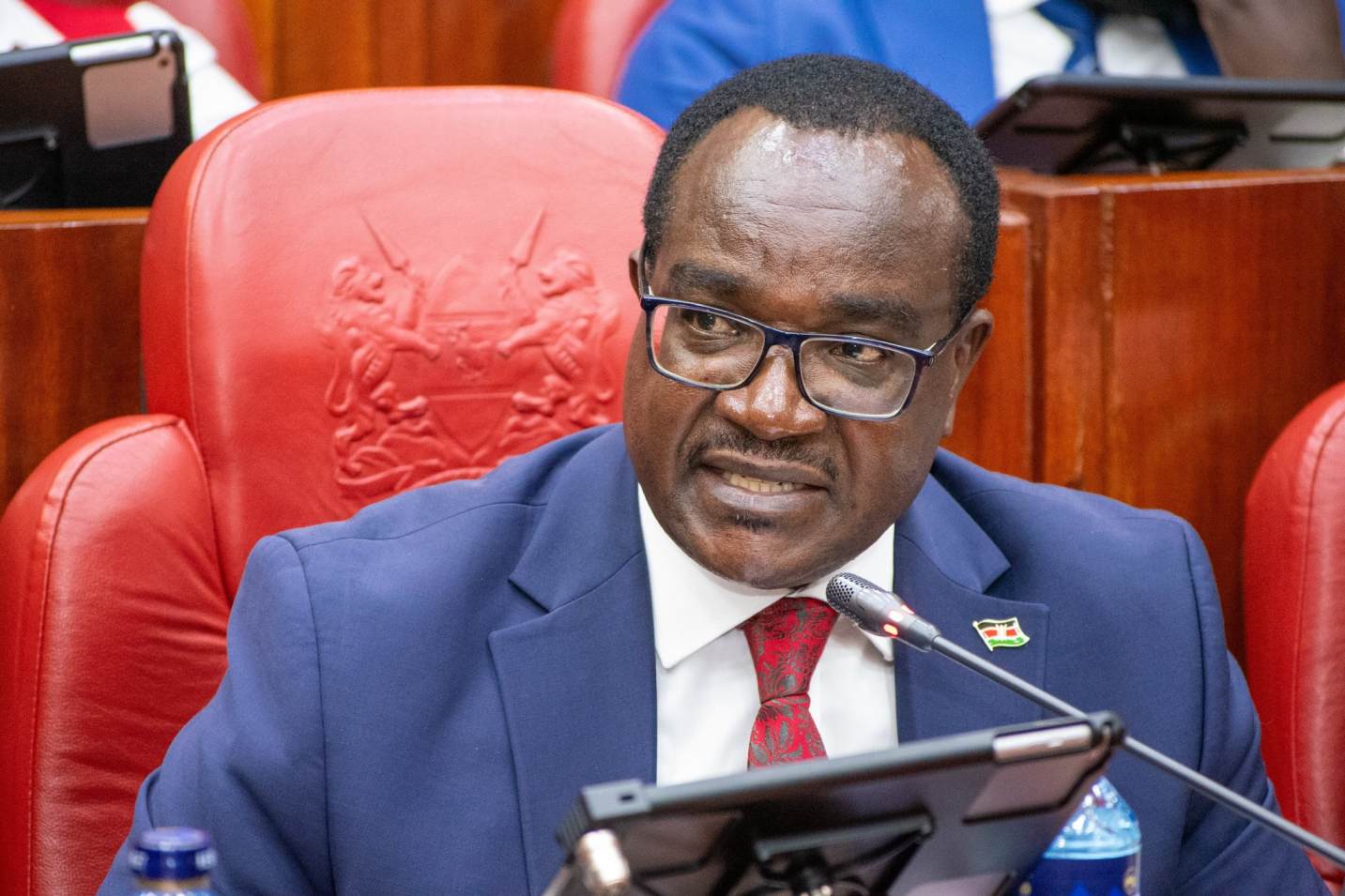
Speaking on the reforms, Ambassador Julius Kibet Bitok, the Principal Secretary for Basic Education, said the government is determined to ensure that every candidate who sits a national examination is properly identified, correctly registered, and assessed within a system founded on transparency, fairness, and credibility.
He noted that the reforms are intended to strengthen public confidence in national assessments while safeguarding the future of learners whose academic journeys depend on the integrity of examination outcomes.
A defining moment for assessment
His remarks come at a defining moment in Kenya’s educational transformation. As the country advances deeper into Competency-Based Education (CBE), expectations surrounding assessment have become increasingly sophisticated.
The examination system is no longer merely a mechanism for assigning grades; it has become a national instrument for measuring learning, validating achievement, and opening doors to future opportunities. Any weakness within that system, therefore, carries implications that extend far beyond the classroom.
For many years, education stakeholders have expressed concern about registration irregularities, inaccurate learner records, examination malpractice, and administrative oversights that occasionally cast shadows over otherwise credible results. While significant progress has been made in addressing these challenges, isolated weaknesses have continued to threaten public trust.
The latest reforms represent a direct and deliberate response to those concerns.
Accountability begins with registration
At the heart of the new framework lies a simple but powerful principle: accountability must begin where registration begins.
Schools will now bear greater responsibility for the accuracy of candidate information submitted to national databases. Headteachers, principals, and examination centre managers will be required to verify every detail before registration records are finalised.
This shift reflects a growing recognition that examination integrity cannot be secured at the end of the process if it is compromised at the beginning. A single registration error can trigger a chain reaction affecting examination administration, result processing, certification, and future verification of academic credentials.
By demanding greater vigilance at the point of entry, education authorities hope to eliminate problems before they occur rather than attempting to correct them later.
Tough stance on irregular registration
Perhaps the most striking aspect of the reforms is the government’s uncompromising stance against irregular candidate registration.
Education officials have made it clear that every learner presented for a national examination must be recorded in verifiable official records. The era of questionable registrations, undocumented candidates, and inconsistencies in examination data is being confronted with unprecedented determination.
The significance of this move cannot be overstated. National examinations form the backbone of educational progression in Kenya. They influence admission to institutions of higher learning, determine scholarship opportunities, and often shape career pathways.
Any practice that compromises the authenticity of examination records undermines not only the credibility of the system but also the aspirations of deserving learners.
Greater parental involvement
Equally transformative is the introduction of stronger parental involvement in the registration process.
Through enhanced digital verification mechanisms, parents and guardians will have the opportunity to confirm critical registration details before examinations are administered. This development introduces a new layer of transparency by transforming parents from passive observers into active participants in safeguarding the accuracy of learner records.
When schools, parents, and examination authorities work from the same verified information, the likelihood of costly errors diminishes significantly. More importantly, learners gain the assurance that their personal information has been validated through multiple levels of scrutiny.
Standardising learner identity records
Another pillar of the reforms focuses on the standardisation of candidate identity records.
Learners’ names and biodata must correspond precisely with official documentation, including birth certificates and other recognised records. While this requirement may appear routine, it addresses one of the most persistent administrative challenges within education systems worldwide.
Many learners have previously encountered difficulties arising from discrepancies between school records and official documents. Such inconsistencies often emerge during certification, university admission, employment verification, or professional registration.
By insisting on accuracy from the outset, the government is taking preventive action that could spare thousands of learners unnecessary complications in the future.
Strengthening examination centres
The reforms also extend to the management and structure of examination centres.
New operational requirements are intended to ensure that centres possess the capacity, resources, and administrative oversight necessary to conduct examinations effectively. Institutions that do not meet prescribed thresholds may be required to collaborate with larger centres under the supervision of education authorities.
This measure is about more than logistics. It is about creating environments where examination security can be maintained, supervision strengthened, and resources deployed efficiently.
Strong centres create strong systems, and strong systems inspire public confidence.
Protecting the value of qualifications
Beyond the technical details, these reforms reveal a deeper national ambition. They reflect a growing understanding that educational credibility is one of a nation’s most valuable assets.
Every certificate awarded by Kenya’s examination system carries a promise—that the holder genuinely earned the qualification through effort, ability, and merit.
That promise must be protected.
When confidence in examinations weakens, confidence in qualifications follows. When confidence in qualifications declines, institutions, employers, and society begin to question the very foundation upon which educational advancement is built.
Conversely, when examination systems are trusted, the value of academic achievement rises, and opportunities expand for deserving learners.
The road ahead
As Kenya continues to strengthen its education sector, the success of these reforms will depend on collective commitment from schools, parents, learners, and education administrators alike.
Policies can establish standards, but it is consistent implementation that transforms standards into reality.
The road ahead will demand diligence, cooperation, and unwavering adherence to the rules. Yet if the reforms achieve their intended purpose, they may well be remembered as the moment Kenya decisively fortified the integrity of its national examinations and secured the credibility of its academic credentials for generations to come.
READ ALSO: How schools can fill learning gaps in Form Four candidates before KCSE
The message emerging from the country’s education leadership is unmistakable: in the new era of examination management, accuracy is not optional, accountability is not negotiable, and integrity is not a slogan—it is the foundation upon which the future of every learner will stand.
By Hillary Muhalya
You can also follow our social media pages on Twitter: Education News KE and Facebook: Education News Newspaper for timely updates.
>>> Click here to stay up-to-date with trending regional stories
>>> Click here to read more informed opinions on the country’s education landscape