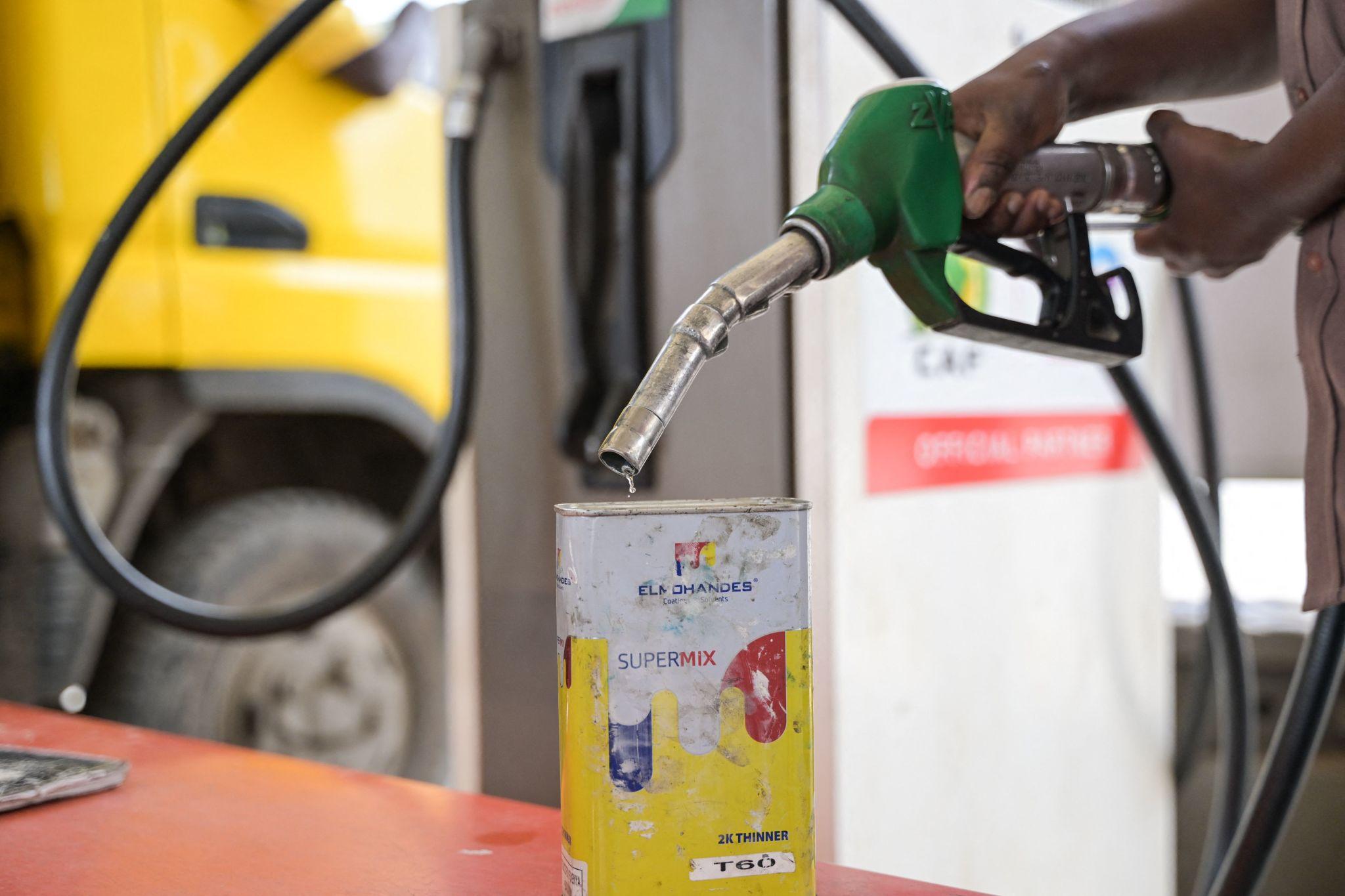
Kenya is slowly entering a new era where technology, local innovation, and renewable energy could become the country’s strongest weapons against rising fuel prices and the high cost of living that continues to burden millions of households.
For years, Kenyans have endured painful increases in fuel prices triggered by global oil market shocks, a weakening shilling, heavy dependence on imported petroleum products, and rising transport and production costs. Every increase at the pump has spread rapidly across the economy, pushing up food prices, electricity costs, transport fares, school expenses, and the overall cost of doing business.
Now, the government is betting on a major technological and energy transformation that could gradually change that reality.
Kenya is preparing to roll out the new Energy (Biofuels) Regulations, 2025, which will allow petrol sold in the country to be blended with locally produced biofuels. Under the programme, petrol will first be introduced as E5 fuel containing five percent ethanol before eventually transitioning to E10 fuel containing 10 percent ethanol.
The ethanol will be produced locally from crops such as sugarcane molasses, cassava, maize, and sorghum, while biodiesel may also be generated from vegetable oils and recycled cooking oil.
Although the programme may appear to focus mainly on fuel blending, experts say it represents something much bigger — the use of technology and innovation to reduce economic pressure on ordinary citizens.
Kenya currently imports nearly all its refined petroleum products using billions of shillings in foreign currency every year. That dependence leaves the economy highly exposed whenever global crude oil prices rise or international conflicts disrupt fuel supply chains.
When global fuel prices increase, the effects quickly spread across the economy.
Transport becomes expensive. Food prices rise. Manufacturing costs increase. Farmers pay more for production. Businesses raise prices. Electricity costs climb. Eventually, ordinary consumers suffer the most.
The biofuel programme aims to reduce part of that dependence by replacing a percentage of imported petroleum with locally produced energy.
If Kenya successfully transitions from E5 to E10 blending, the country could replace between five and 10 litres of imported petroleum fuel in every 100 litres consumed with ethanol produced locally. While this may appear modest initially, the long-term economic implications could be significant.
Experts estimate that if local ethanol production becomes efficient and scalable, the programme could gradually reduce pump prices by approximately two to six percent while shielding consumers from sudden international fuel shocks.
For a country where fuel prices affect nearly every aspect of daily life, even a modest reduction could significantly ease the cost of living.
But the true strength of the programme lies in technology and industrial efficiency.
Countries that have successfully controlled fuel costs did not rely solely on imported petroleum. Instead, they invested heavily in local innovation, renewable energy systems, industrial processing technology, modern farming methods, and efficient fuel production infrastructure.
Brazil became one of the world’s biggest biofuel success stories after embracing ethanol technology in the 1970s. Today, the country blends about 27 percent ethanol into petrol and operates millions of flex-fuel vehicles capable of using either petrol or ethanol. Brazil managed to reduce dependence on imported oil while simultaneously empowering farmers and strengthening its economy.
The United States also uses ethanol-blended fuel extensively, mainly from corn production, while India has rapidly expanded toward E20 fuel as part of efforts to lower fuel imports and support local agriculture.
Kenya now has an opportunity to learn from those countries.
Instead of relying entirely on imported energy, Kenya can use technology to transform agriculture into an energy powerhouse.
Modern ethanol processing plants, smart blending systems, digital fuel monitoring technology, and improved logistics could help lower production costs while improving fuel supply stability. Expansion of local biofuel industries could also create thousands of jobs in farming, manufacturing, transport, engineering, and industrial processing.
Technology can also help Kenya reduce fuel wastage and inefficiencies.
Digital fuel tracking systems can help combat fuel theft and illegal diversion. Smarter transport systems can reduce traffic congestion and fuel consumption in major towns and cities. Improved railway networks can lower dependence on expensive road transport. Investment in electric mobility, solar energy, and modern public transport systems can further reduce pressure on petroleum demand.
Experts argue that Kenya cannot sustainably lower the cost of living without aggressively embracing technology-driven energy solutions.
Fuel remains one of the biggest drivers of inflation in Kenya because nearly every sector depends on transport and energy. Whenever fuel prices rise sharply, the cost of food, housing, school transport, electricity, and consumer goods also increases.
Reducing fuel dependence through technology therefore becomes not just an energy policy, but an economic survival strategy.
The biofuel programme could also transform rural economies.
Farmers growing sugarcane, cassava, maize, and sorghum may gain access to stable industrial markets as ethanol demand increases. Increased agricultural activity could stimulate rural incomes, encourage agro-processing industries, and create investment opportunities in regions that have long struggled economically.
Kenya already has ethanol processing facilities with a combined capacity estimated at about 83 million litres annually, although actual production remains much lower. The new regulations are expected to encourage investors to expand production capacity and modernize infrastructure.
Environmental benefits could also emerge.
Biofuels generally produce lower greenhouse gas emissions compared to conventional fossil fuels. Cleaner fuels could help reduce air pollution while strengthening Kenya’s commitment to climate action and green industrialisation.
Still, challenges remain.
Experts warn that the transition must be carefully managed to avoid pressure on food production, especially if excessive land shifts toward fuel crops. Concerns have also been raised about compatibility issues for older vehicles if ethanol blending increases rapidly without proper preparation.
There are also fears that poor regulation, corruption, or inefficient implementation could undermine the programme’s benefits.
However, supporters believe the long-term rewards could far outweigh the risks.
Kenya’s future may no longer depend entirely on imported oil from distant nations. Instead, part of the country’s energy could come directly from local farms, factories, innovation, and Kenyan technology.
The battle against the high cost of living may not be won overnight.
READ ALSO: EACC pushes for tougher verification of academic certificates ahead of 2027 elections
But many analysts believe one of the strongest solutions lies in exactly what Kenya is now beginning to embrace — technology-driven local energy production, industrial innovation, and smarter economic systems designed to reduce dependence on expensive imports.
If properly implemented, Kenya’s biofuel revolution could become more than just a fuel programme.
It could become a turning point in the country’s economic future.
By Hillary Muhalya
You can also follow our social media pages on Twitter: Education News KE and Facebook: Education News Newspaper for timely updates.
>>> Click here to stay up-to-date with trending regional stories
>>> Click here to read more informed opinions on the country’s education landscape