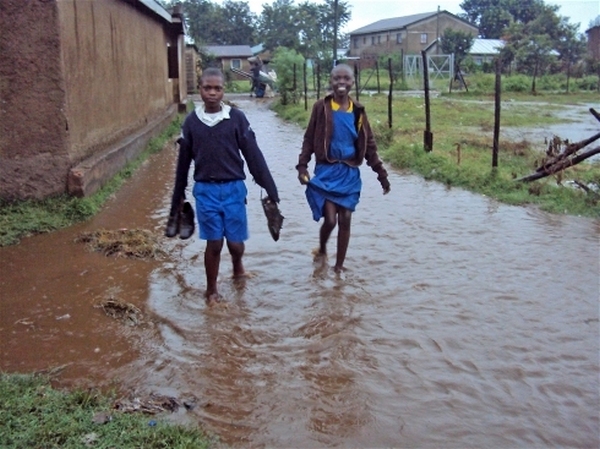
A fresh alert from the Kenya Meteorological Department has put the country on high alert, warning of extremely heavy rainfall expected across several regions. As communities prepare for potential flooding, concern is mounting over the safety of school-going children, now emerging as one of the most vulnerable groups.
Across urban centres and rural areas alike, rainfall patterns have intensified, often shifting rapidly from light drizzle to heavy downpours that overwhelm drainage systems. Roads become impassable, footpaths disappear under water, and visibility drops—creating dangerous conditions for pedestrians, motorists, and especially learners commuting to and from school.
Unlike adults who may delay travel during extreme weather, children’s movements are largely dictated by school schedules, forcing many to navigate hazardous conditions. Reports from affected areas indicate learners are increasingly exposed to risks such as crossing swollen drainage channels, walking through flooded roads alongside vehicles, and using unsafe transport routes.
ALSO READ:
TSC to recruit 16,000 intern teachers, 5,000 replacements in major 2026 staffing drive
In informal settlements and rural communities, where infrastructure is often inadequate, pupils face even greater danger as they trek long distances along paths that quickly become impassable during heavy rains.
Beyond the immediate safety concerns, the Weather Department asserted that heavy rainfall is also disrupting access to education, as flooded roads and overflowing rivers have cut off entire communities, preventing both learners and teachers from reaching schools. It added that in some instances, school compounds have become waterlogged, forcing temporary closures.
“Even where schools remain open, attendance has dropped significantly as parents weigh the risks of sending children out in dangerous conditions.”
Shared danger on flooded roads
The situation is further complicated by the lack of separation between pedestrians and vehicles during floods. Motorists contend with stalled engines and poor visibility, while pedestrians—including children—struggle through submerged walkways. This convergence creates a high-risk environment where accidents can occur with little warning.
Experts warn that children are particularly vulnerable due to limited awareness of water depth and current strength, as well as difficulty identifying safe crossing points. Fast-moving water, even when shallow, can easily sweep a child off their feet.
Authorities are now urging parents, schools, and transport providers to prioritise safety as the rains intensify. “Parents are advised to keep children at home during severe weather alerts or ensure they are escorted where necessary. Schools, meanwhile, are being encouraged to closely monitor forecasts and consider temporary closures when conditions become unsafe.” Reads part of the notice
Transport operators have also been cautioned against using flooded routes, even under pressure to maintain services.
The meteorological department emphasises that early warning systems remain critical in preventing tragedy, but their effectiveness depends on swift action at the community level.
ALSO READ:
Kenya’s silent storm: How drugs are invading homes, schools, and a generation
The recurring impact of heavy rainfall has highlighted deeper infrastructural and planning gaps. Experts point to the need for improved drainage systems, safer pedestrian walkways, and flood-resilient school infrastructure, particularly in high-risk areas.
There are also growing calls for clearer weather-based school closure protocols and stronger community-based safety networks to protect children during extreme weather events.
Safety over routine
As the country braces for continued downpours, the warning serves as a stark reminder that extreme weather is no longer just an environmental issue but a child safety and education concern.
With roads flooded and risks rising, authorities stress that protecting lives must take precedence over maintaining daily routines. For many learners, the journey to school—once routine—has become a perilous undertaking in the face of intensifying rains.
By Hillary Muhalya
You can also follow our social media pages on Twitter: Education News KE and Facebook: Education News Newspaper for timely updates.
>>> Click here to stay up-to-date with trending regional stories
>>> Click here to read more informed opinions on the country’s education landscape