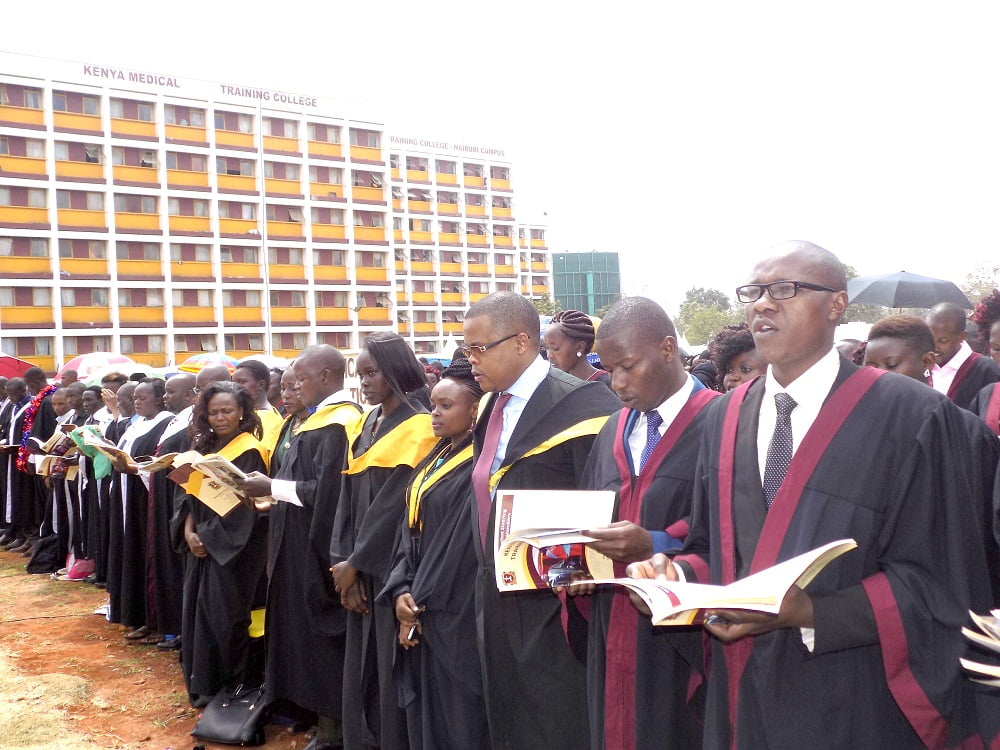
For many young Kenyans who have pursued health sciences at the Kenya Medical Training College (KMTC), the dream of meaningful employment both at home and abroad has become a reality, especially for those trained in physiotherapy.
In recent years, an emerging trend has begun to shape the careers of fresh graduates and experienced practitioners alike: a growing demand for KMTC physiotherapy graduates in Germany. What began as isolated employment opportunities has blossomed into structured recruitment, with coordinated programs that have successfully placed dozens of Kenyan-trained physiotherapists in German hospitals, clinics, and rehabilitation centers.
This development has captured the attention of educators, policymakers, and aspiring health professionals across Kenya because it combines several powerful forces: Kenya’s strong foundation of healthcare training, the global need for rehabilitation professionals, and Germany’s particularly acute shortage of physiotherapists at a time when its healthcare system is grappling with demographic shifts and rising demand for chronic care. According to Dr. Kelly Oluoch, Chief Executive Officer of KMTC, this is not a future possibility, it is a present reality.
Dr. Oluoch has publicly outlined how, in the latest recruitment cycle, 84 KMTC physiotherapy graduates have already secured employment in Germany, and another cohort of approximately 159 candidates is being prepared for placement. These figures reflect a substantial investment by both Kenyan educators and international recruiters in cultivating a workforce capable of filling shortages in one of Europe’s most advanced healthcare systems. But more than numbers, this shift signals a new horizon for Kenyan health professionals whose training equips them with both practical skills and the ability to adapt to international standards.
ALSO READ;
To understand why German healthcare employers value KMTC graduates, it helps to look at the broader context of healthcare workforce dynamics in both countries. Kenya, through institutions like KMTC, has prioritized effective training for allied health professions, including physiotherapy. Students receive rigorous clinical instruction and community-based experience. On the other hand, Germany, despite its highly developed health infrastructure, has struggled in recent years to produce enough physiotherapists to meet the needs of its population. An ageing society coupled with increasing incidences of chronic disease and the need for post-operative rehabilitation has placed pressure on existing practitioners. As a result, healthcare facilities across Germany have begun actively seeking qualified professionals from abroad.
This demand is not simply due to numbers. German regulators and employers look for well-trained physiotherapists who can integrate into clinical teams and deliver quality patient care. KMTC’s curriculum, which focuses on practical skills rooted in evidence-based practice, has positioned its graduates as competitive candidates. But before any Kenyan physiotherapist can accept a job offer and begin practicing in Germany, there are key requirements that must be met, requirements that ensure both professional competence and patient safety.
The first of these is recognition of professional qualifications, known in Germany as “Anerkennung.” This is not a ceremonial credential, but a legal prerequisite. It involves submitting educational records, evidence of clinical training, and sometimes additional documentation to a German state authority that reviews foreign qualifications for equivalence to German standards. Without this recognition, a graduate cannot use the protected title of Physiotherapeut/Physiotherapeutin nor can they be employed in a regulated health role.
Alongside qualification recognition is the need for proficiency in the German language. In most cases, physiotherapists must demonstrate competence at B2 level or higher on the Common European Framework of Reference for Languages (CEFR). This level enables practitioners to communicate effectively with patients, understand clinical instructions, and participate fully in multidisciplinary healthcare teams. Many Kenyan graduates work with language tutors or enroll in intensive language programs to meet these standards before or during their transition.
ALSO READ;
TSC, unions must ditch bureaucracy in addressing teacher issues
Once qualification recognition and language requirements are in place, the next steps involve legal work authorization, typically through a type of employment visa that allows the practitioner to live and work in Germany. Often, German employers support this process by acting as sponsors or guiding candidates through bureaucratic steps. In this way, recruitment becomes more than job placement, it becomes a coordinated journey from classroom to clinic.
Importantly, the experience of working in Germany offers not only professional growth but also economic opportunity. Salaries for physiotherapists in Germany are generally competitive, especially when viewed in the context of the cost of living adjustments and the benefits included in employment contracts. To make this clear for Kenyan graduates and families planning for their future, it is useful to translate typical German earnings into Kenya Shillings (KES).
While exact salaries can vary based on experience, location, and type of employer, the broad ranges reported by job surveys and salary aggregators give a reliable picture of potential earnings. In Germany, an entry‑level physiotherapist, someone newly qualified or with minimal professional experience, can expect a gross monthly salary in the range of roughly €2,500 to €3,000. Based on an exchange rate of approximately €1 = KES 157, this translates to about KES 392,500 to KES 471,000 per month, or roughly KES 4.7 million to KES 5.65 million per year. These figures are before tax and social contributions, but they signal a solid starting income when compared to many other opportunities.
Physiotherapists who have accumulated several years of experience tend to earn more. Mid‑career professionals frequently report expected salaries between €3,000 and €4,000 per month, equivalent to KES 471,000 to KES 628,000 per month, or approximately KES 5.65 million to KES 7.54 million annually. For those who have developed specialised skills or who work in larger cities with higher living costs, salaries can climb even further. Experienced or specialised physiotherapists may earn €4,000 to €5,400 or more per month, which is about KES 628,000 to KES 847,800+ monthly, or KES 7.54 million to KES 10.17 million+ per year.
In addition to base salaries, many German employers offer social benefits that form part of the overall compensation package: contributions to pension schemes, statutory health insurance, paid vacations, and sometimes support for professional development. For Kenyan practitioners, these benefits represent long-term financial and social security, aspects of work life that are valued especially when building a career overseas.
These salary conversions also highlight another point: while the cost of living in Germany may be higher than in Kenya, the earnings potential, especially when saved or invested — can be significant. For many KMTC graduates, the opportunity to work in Germany provides a chance not only to support themselves and their families but also to send remittances, invest in businesses back home, or pursue further professional training.
Beyond numbers and requirements, the emotional and professional journey involved is noteworthy. Graduates who make the transition often speak of the satisfaction that comes from working in environments where their skills are in demand, their contributions are valued, and their day-to-day work has a tangible impact on patients’ recovery. Physiotherapy, by its nature, involves close interaction with people of all ages, helping stroke survivors regain mobility, assisting older adults recovering from orthopedic procedures, and enabling athletes to return to their sport after injury. For many Kenyans, being able to bring that expertise to international settings is deeply fulfilling and professionally rewarding.
ALSO READ;
Kakamega High swoop for Musingu tactician Lugalia in fierce school football rivalry
But it is also important to recognize that this pathway is not without challenges. Candidates must invest time in learning language skills, navigating foreign credentialing systems, and adapting to cultural differences in the workplace. Without realistic preparation and support, even the most qualified graduates can find the process daunting. This is why the structured recruitment programs mentioned by the KMTC CEO, those that combine qualification support, language training, and placement assistance are so valuable. They help bridge the gap between ambition and achievement.
For policymakers and education planners in Kenya, the trend of physiotherapy graduates going abroad also raises important questions. On one hand, international placements represent a success for Kenya’s professional training systems and provide economic benefits through remittances and skills development. On the other hand, it invites reflection on how to balance international opportunities with local healthcare needs, especially in underserved areas of Kenya where physiotherapy services are also in demand. Ideally, partnerships with countries like Germany can evolve into bilateral workforce agreements that support professional exchange without weakening domestic health systems.
As the global healthcare landscape continues to evolve, physiotherapy remains one of the professions with strong international mobility, particularly for graduates from well-regarded training programs like those at KMTC. The combination of high demand, structured recruitment, and competitive compensation makes it one of the clearest pathways for health professionals seeking global careers.
When Dr. Kelly Oluoch speaks about the placements of hundreds of KMTC graduates, he is not simply recounting statistics; he is pointing to a shift in how Kenyan healthcare training is being recognized beyond national borders. For young Kenyans contemplating their future, particularly those currently enrolled in health sciences, the message is both aspirational and instructional: quality training opens doors, but success also depends on preparation, adaptability, and willingness to meet international standards.
In the years ahead, we are likely to see even more KMTC physiotherapy graduates taking up roles in Germany and other countries with similar workforce needs. As these professionals gain experience and return home, or as they build networks that span continents, they contribute not only to their own careers but also to the growing reputation of Kenyan health professionals on the global stage.
For many families in Kenya, this story represents hope: hope that education leads to opportunity, that skills mastered in Nairobi or Mombasa can make a difference in Berlin or Munich, and that the next generation of health workers will forge careers that are both personally rewarding and globally significant.
By Hillary Muhalya
You can also follow our social media pages on Twitter: Education News KE and Facebook: Education News Newspaper for timely updates.
>>> Click here to stay up-to-date with trending regional stories
>>> Click here to read more informed opinions on the country’s education landscape