At the heart of every functional education system are two critical pillars: the employer and the employee voice. In Kenya’s case, that means the Teachers Service Commission (TSC) and teachers’ unions such as the Kenya National Union of Teachers and the Kenya Union of Post-Primary Education Teachers. These institutions are not enemies. They are not rivals. They are partners—bound by a shared responsibility to sustain the teaching profession and safeguard the future of education.
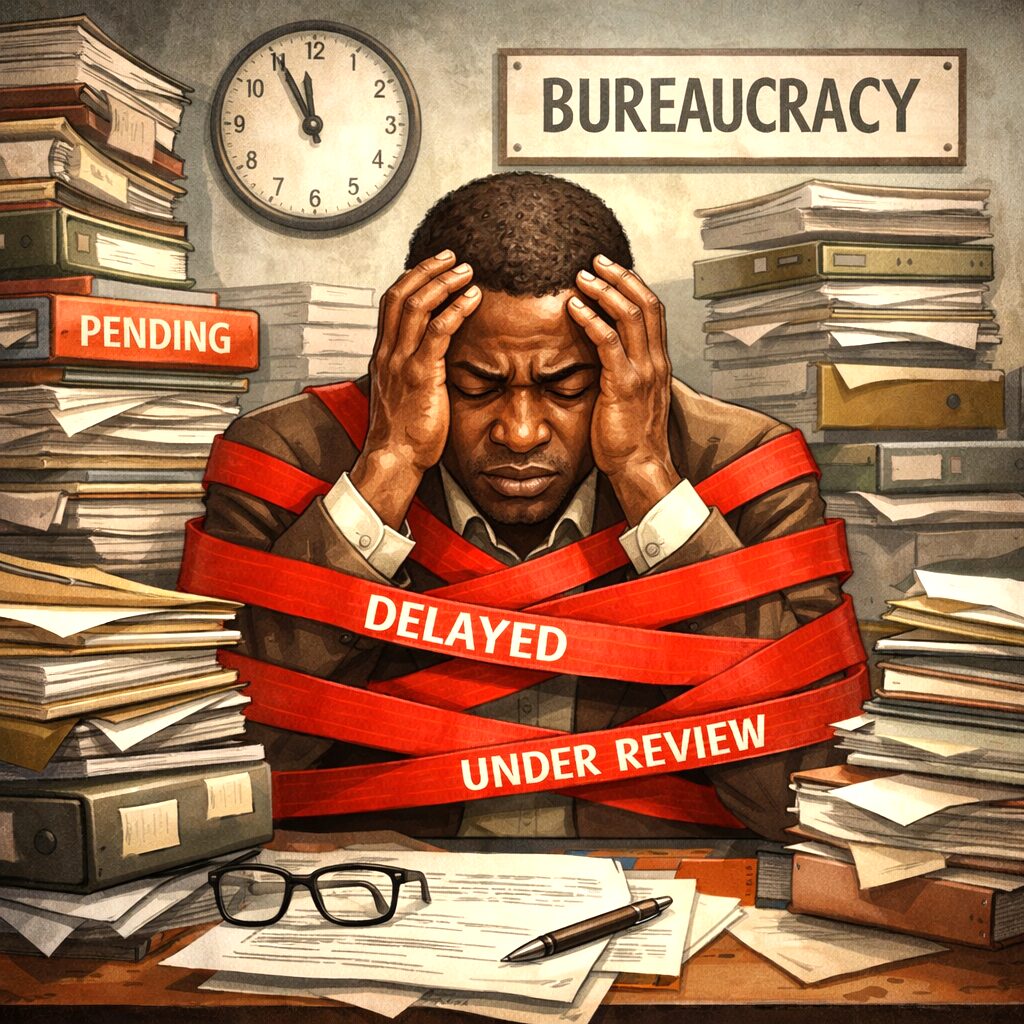
Yet, instead of operating with agility and purpose, they often find themselves entangled in layers of endless bureaucracy.
And the question must be asked: why should institutions meant to serve teachers be slowed down by the very systems meant to support them?

Bureaucracy, in its ideal form, is meant to bring order. It creates structure, ensures accountability, and prevents chaos. But when it becomes excessive—when it multiplies processes, delays decisions, and suffocates initiative—it stops being a tool and becomes an obstacle.
That is where the problem lies.
Today, both unions and the TSC operate within heavily procedural systems. Every decision passes through multiple desks. Every approval requires layers of validation. Every reform is subjected to prolonged consultations, reviews, and counter-reviews. What should take weeks stretches into months. What should take months drags into years.
And in that delay, teachers suffer.
Promotions stall because files are “under review.” Salary adjustments take too long because processes must be “followed.” Retirement dues are delayed as paperwork moves slowly through administrative corridors. Even the simplest of grievances can take an unreasonably long time to resolve.
The system is working—but too slowly to be effective.
For unions, bureaucracy presents a different but equally frustrating challenge. Their role is to advocate, negotiate, and protect the rights of teachers. But before they can even engage meaningfully, they must navigate procedural hurdles—formal requests, scheduled meetings, regulatory compliance, legal frameworks, and internal governance structures.
By the time action is taken, momentum is often lost.
Urgency is replaced by process.
Energy is replaced by paperwork.
And in the end, the teacher—the very person both sides are meant to serve—is left waiting.
But why does this happen?
Part of the reason lies in fear of making mistakes, of being questioned, and of being held accountable. Institutions become overly cautious. Every decision must be documented. Every action must be justified. Every step must be traceable.
While accountability is necessary, overregulation creates paralysis.
Another reason is legacy systems. Many of the administrative structures governing education today were designed for a different time—when populations were smaller, demands were fewer, and the pace of change was slower. But today’s education system is dynamic, complex, and fast-moving. It requires responsiveness, not rigidity.
Yet, the structures have not evolved fast enough.
There is also the issue of control. Bureaucracy often centralizes power. Decisions are held at the top, while implementation happens at the bottom. This creates bottlenecks. Those on the ground—those who understand the realities of classrooms—have limited authority to act. Everything must go “up” before it comes “down.”
And in that upward movement, time is lost.
But perhaps the most critical issue is this: bureaucracy has become normalised.
Delays are expected.
Inefficiency is tolerated.
Frustration is absorbed.
And slowly, a culture develops where slow systems are accepted as “just the way things are.”
But they should not be.
Because the cost is too high.
When unions are slowed down, teachers lose a strong, responsive voice. When the TSC is slowed down, service delivery weakens. And when both are slowed down, the entire education system begins to drag.

And a slow education system cannot compete in a fast-changing world.
So, what must change?
First, there must be a deliberate shift from process-driven systems to results-driven systems. Procedures should support outcomes—not replace them. The goal should not be to complete steps, but to solve problems.
Second, decision-making must be decentralised. Not everything needs to be handled at the top. Empowering regional and institutional levels to make certain decisions can significantly reduce delays. Trust must replace excessive control.
Third, technology must be fully embraced. Digital systems can streamline processes, reduce paperwork, and improve efficiency. Promotions, transfers, and retirement processing should not depend on physical file movement in an era when digital solutions are available.
Fourth, there must be accountability for delay. Just as teachers are evaluated on performance, institutions must also be evaluated on efficiency. Timelines should not be suggestions—they should be commitments.
Fifth, collaboration between unions and TSC must be strengthened. Instead of operating in reactive cycles—where one acts and the other responds—there should be proactive engagement. Continuous dialogue, not crisis-driven meetings, should define their relationship.
Because ultimately, they are not working for themselves.
They are working for the teacher.
And the teacher cannot wait indefinitely.
A teacher’s promotion is not just a file—it is a career milestone.
A teacher’s salary adjustment is not just a figure—it is a livelihood.
A teacher’s retirement dues are not just paperwork—they are dignity after service.
When these are delayed, it is not just inefficiency—it is injustice.
So again, the question stands:
Why should unions and TSC be subjected to incessant bureaucracies?
They should not.
They should be empowered.
They should be efficient.
They should be responsive.
Because the weight they carry is too important to be slowed down by systems that no longer serve their purpose.
Break the bureaucracy—and you restore momentum.
READ ALSO: TSC, varsities, HELB get major boost in new supplementary budget
Restore momentum—and you restore trust.
And when trust is restored, the entire education system moves forward with strength, speed, and purpose.
By Hillary Muhalya
You can also follow our social media pages on Twitter: Education News KE and Facebook: Education News Newspaper for timely updates.
>>> Click here to stay up-to-date with trending regional stories
>>> Click here to read more informed opinions on the country’s education landscape
>>> Click here to stay ahead with the latest national news.