Taking a time series analysis of the development of basic education in Kenya one will not fail to notice that it could, occasionally, be compared to the Roman god that is famed to have had two faces on opposite sides of its head.
“Janus was the ancient Roman god of beginnings, endings, transitions, doorways at the same time. It had the ability to look forward and backwards at the same time. The month of January is named after him, signaling a time for new beginnings.” How does this relate to education planning and management currently?
The Presidential Working Party on Education Reforms (PWPER) made two recommendations relevant to this article; one was that the classification of senior schools from national to sub county schools be abolished. Instead, schools would only be identified as public or private schools.
Secondly, it recommended the abolishment of boarding senior schools progressively by introducing Day streams there. In any case, it argued 70% of students at that level are in Day schools. These recommendations can be equated to the vision of one face of Janus.
Two years into this report the Ministry of Education simply baptized senior schools to clusters 1(C1) to 4 (C4) of the previous national to subcounty schools. Nothing other than the nomenclature of these schools changed. Everyone knows that the endowed and popular former national schools are cluster one schools.
ALSO READ:
Korean organization unveils new special needs unit to tackle school dropouts in Nyando
Furthermore, the idea of enhancing the development of Day schools was seriously undermined in two ways. One was allowing the well-established cluster 1 – 3 schools with boarding facilities to maximize their 2026 grade 10 intake to take advantage of spaces created by the absence of former form 1 and 2 students thus denying cluster 4 schools potential students.
Secondly, there has been major infrastructural developments in selected cluster 1 to 3 boarding senior schools leading to greater attractiveness of these schools going forward implying that the idea of developing Day schools has not been embraced fully in government circles.
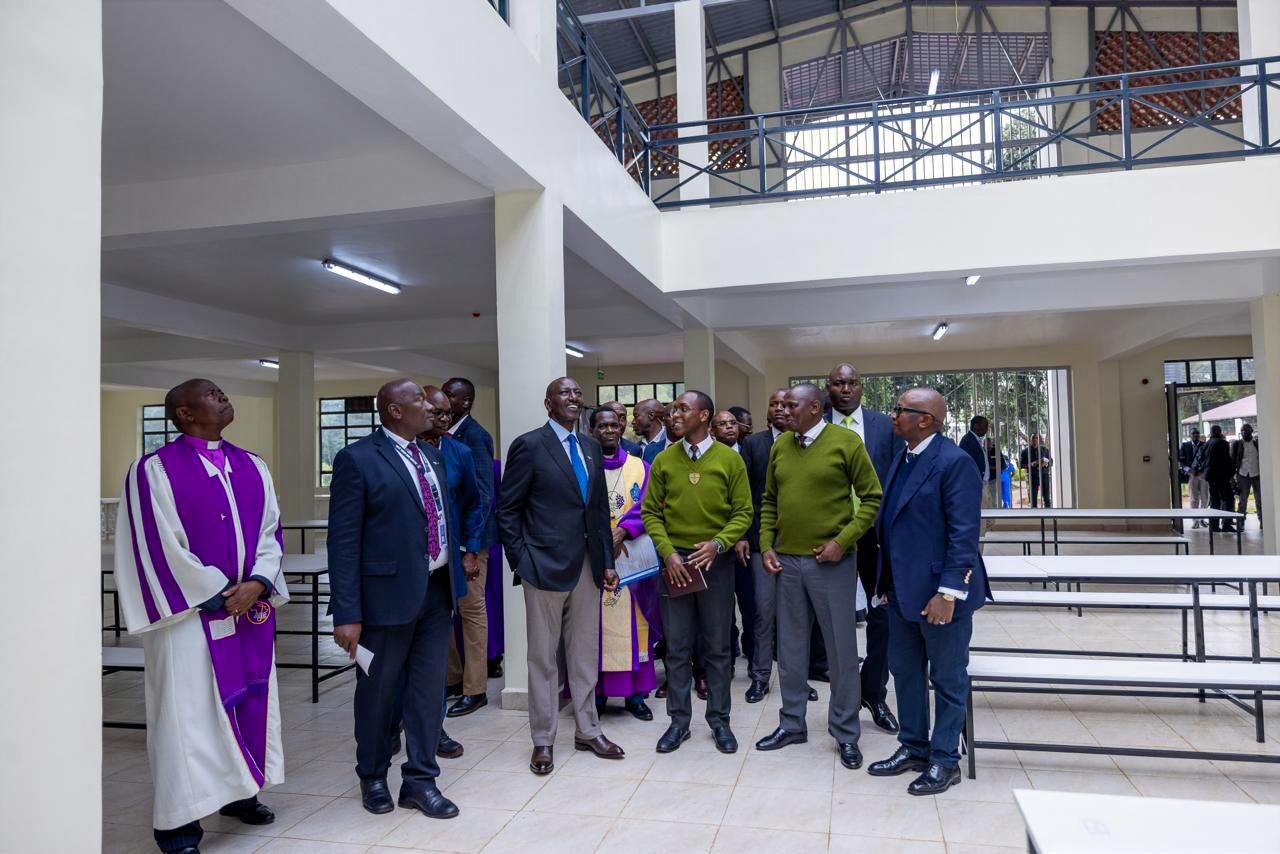
Take for example The Alliance High school. During the 100th anniversary of its establishment the parents and alumni constructed a 600-capacity dormitory. Then the government granted a whopping Ksh 550 million for construction of 40 classrooms, a sports academy and for improving the road network within the school.
This coming shortly after it took grade 10 students that exceeded expectations in their grade 9 assessments is a clear manifestation that the second face of Janus was over riding the plans of the first face of Janus that was being pushed through the PWPER to try to bridge this gap between these schools. And that means that the gap between the well-endowed and poor schools will continue to widen.
So, at what point are we going to have a well thought out equity-driven policy plan that will be implemented without much influence by senior people in government? Can we through this kind of plan abandon the “Janus god” double faced strategy in education development? I wish to take liberty to propose that we develop an “Equalization Fund” from government coffers through which the marginalized communities in Kenya can be assisted through building of good modern senior schools.
ALSO READ:
Four examples in recent years support this idea. First, the constitution of Kenya (2010) provided for an equalization fund for general development of counties in Northern and Eastern Kenya. This has made some impact in the last twelve years of devolution.
Secondly the Affordable Housing Fund has led to the construction of good cheap houses not only in cities but also in small townships. Three, the government, 15 years made a policy decision to build one Technical and Vocational Training Institute in every constituency. This has improved the availability of TVET courses in previously unreached areas.
Fourthly, and finally, the establishment of the Infrastructure Development Fund is bound to be a game changer in the development of infrastructure in the East African Region. The anticipated extension of the Standard Gauge Railway from Naivasha to Malaba and the dualling of the Rironi – Mau Summit highway within a year is great news to the country.
If these funds become useful development resources as expected, why could we not do the same for senior secondary schools? Why can’t we initially build one complete secondary school per sub – county and progressively increase to five in every election cycle? The managers of these funds will be made to account them satisfactorily.
Let us abandon Janus for, through its warped strategy, we tend to make one step forward and one step backwards.
By Benjamin Sogomo
Educational specialist/Former Secretary TSC
benjamninsogomo@gmail.com
You can also follow our social media pages on Twitter: Education News KE and Facebook: Education News Newspaper for timely updates.
>>> Click here to stay up-to-date with trending regional stories
>>> Click here to read more informed opinions on the country’s education landscape