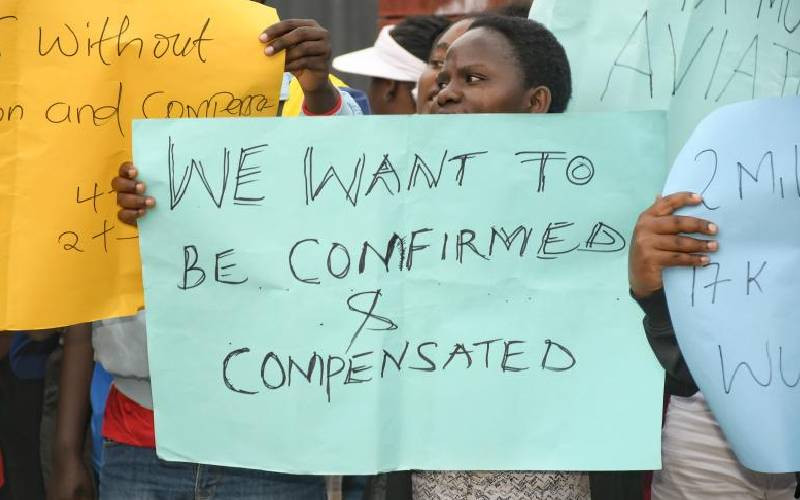
In early 2026, Kenya’s education sector faced a seismic shift that has thrown the careers of tens of thousands of young teachers into uncertainty. The Teachers Service Commission (TSC) internship programme, long viewed as a pathway for newly trained and registered teachers to enter public schools, was declared illegal, unconstitutional, and discriminatory by the Court of Appeal of Kenya. The appellate judgment, delivered on 27 February 2026 by a three-judge bench comprising Justices Jamila Mohammed, Fred Ochieng, and F. Tuiyot, upheld an earlier ruling from the Employment and Labour Relations Court (ELRC) that the Commission had no legal mandate to hire qualified teachers as interns under inferior terms. The ruling effectively voided the internship programme, leaving more than 43,000 intern teachers in a precarious state, their employment status hanging in the balance.
Origins of the Internship Programme and Legal Challenges
The TSC internship programme emerged as a response to acute teacher shortages, especially in junior and senior secondary schools under Kenya’s Competency-Based Curriculum (CBC). By recruiting newly trained teachers as “interns,” the Commission sought to provide classroom experience while creating a cost-effective way to meet staffing needs. Interns performed the same duties as regular teachers but received lower pay, limited benefits, and no pensionable terms. While the scheme offered employment opportunities to young teachers, it also became a source of legal and ethical concern.
Critics argued that the programme lacked statutory backing and violated the Constitution by discriminating against qualified professionals. Under Kenya’s Constitution, the TSC is mandated to employ registered teachers under terms that respect their rights, including fair remuneration and career progression. By hiring fully trained professionals as interns under reduced terms, the Commission was accused of disguised employment, avoiding its obligations under law.
ALSO READ:
Nyanza Region endorses Oyuu and KNUT steering team ahead of union elections
The Employment and Labour Relations Court Decision
The dispute culminated in Employment and Labour Relations Court Petition E223 of 2023, filed by teachers and civil society groups. On 17 April 2024, the ELRC ruled that TSC’s internship scheme had no constitutional or statutory mandate and that it constituted unfair labour practice and discrimination. The court emphasized that the teachers were not traditional interns seeking experience but were fully qualified professionals performing the core duties of permanent staff. By treating these teachers differently, the Commission violated their constitutional rights to fair treatment and equality.
The ELRC’s decision was groundbreaking because it recognized that the substance of employment matters more than the label. Simply calling a contract “internship” does not relieve an employer — even a constitutional body like the TSC — of its obligations to comply with labour law and constitutional protections.
Court of Appeal: Nullifying the Internship Programme
The TSC appealed, but on 27 February 2026, the Court of Appeal delivered a decisive judgment in Civil Appeal No. E403 of 2024, titled Teachers Service Commission vs Forum for Good Governance & Human Rights and others. The three-judge bench — Justices Jamila Mohammed, Fred Ochieng, and F. Tuiyot — upheld the ELRC ruling, declaring the internship programme illegal, unconstitutional, null, and void.
The appellate court underscored that the interns were trained and registered teachers, performing the same functions as permanent staff, yet denied equivalent remuneration and benefits. By maintaining this dual system, TSC had discriminated against a specific class of employees, violating Article 27 of the Constitution. The judges concluded that the Commission had effectively created a category of “inferior employees” without legal authority, a practice incompatible with Kenya’s labour and constitutional law.
The Precarious Position of Intern Teachers
The Court of Appeal’s ruling left intern teachers in a state of professional limbo. With the programme invalidated, their contracts lack legal foundation, meaning TSC cannot rely on them without breaching the court’s judgment. Yet tens of thousands of teachers remain in classrooms across the country, essential to maintaining student learning.
The Commission faces a stark choice: absorb interns into permanent, pensionable employment or terminate their contracts, a decision complicated by financial and logistical constraints. Absorption would respect constitutional rights but require billions of shillings in additional funding, challenging the national budget. Termination, while fiscally easier, risks mass unemployment, staff shortages, and industrial unrest.
ALSO READ:
Invest in girl child education to build a balanced society, reduce poverty, principal tells parents
Possible Scenarios Going Forward
Given these complexities, there are three main scenarios for the future of intern teachers:
- Full Absorption
This involves converting all interns into permanent, pensionable positions. It aligns with constitutional protections and ensures continuity of education services. However, the Treasury must approve additional funding, and TSC may adopt phased absorption, prioritizing longer-serving teachers first. While financially demanding, this scenario preserves teacher rights and classroom stability.
- Contract Termination
The second scenario would involve terminating the contracts of all interns. This could result in immediate job losses for tens of thousands of teachers and cause staff shortages in schools, particularly in remote and underserved areas. The disruption would negatively affect students’ learning outcomes and could provoke industrial action from teachers’ unions.
- Legislative or Policy Reform
A third approach involves enacting new laws or regulations to regularize interns’ employment in a constitutionally compliant manner. This could include probationary terms with clear pathways to permanent employment, standardizing pay, benefits, and career progression while allowing TSC to manage budget constraints. Legislative intervention could provide the legal clarity needed to stabilize the situation.
Union Responses and Advocacy
Teachers’ unions, including KNUT and KEJUSTA, have been vocal in defending interns. They have warned against abrupt terminations, threatened further legal action, and lobbied for budget allocations to enable absorption. The unions emphasize that interns are performing critical teaching roles and that any policy decision must protect their rights while ensuring educational continuity. Union advocacy is likely to influence both policy and legislative outcomes, ensuring that interns are not unfairly penalized for a flawed programme implemented by the state itself.
Timelines for Resolution
The resolution of the interns’ fate will depend on several factors:
Budget Approvals: Additional funds must be allocated by Parliament to absorb interns into permanent employment.
Legal Compliance: TSC must design a plan that adheres to the court ruling.
Policy Development: Detailed regulations regarding pay, benefits, and career progression need to be drafted.
Union Negotiations: Consensus must be reached to prevent industrial unrest.
Given these considerations, interns may remain in limbo for months or even an entire academic year, continuing to teach under uncertain conditions.
ALSO READ:
How Kitelakapel TTI Is driving Kenya’s 15 billion tree campaign
Broader Implications
This ruling highlights the importance of constitutional adherence and fair employment practices in the public sector. It demonstrates that government agencies cannot circumvent legal obligations by creating inferior categories of employment. The decision reinforces that labelling a contract “internship” does not negate rights and protections owed under law.
For the education sector, the decision underscores the need for transparent, well-funded frameworks to manage teacher employment, balancing fiscal realities with constitutional obligations and the operational needs of schools. Failure to address these issues could affect teacher morale, retention, and student outcomes across Kenya.
Kenya’s intern teachers now find themselves dangling precariously between legal principle and policy reality. The Court of Appeal’s ruling affirms their constitutional rights but leaves their immediate professional future uncertain. How the government, TSC, and unions navigate this challenge will shape not only the careers of tens of thousands of teachers but also the future of the education sector in Kenya.
The path forward will require bold legislative action, careful budgeting, and inclusive stakeholder engagement to ensure that constitutional protections are upheld while maintaining stability in schools. Until then, intern teachers remain fully trained, highly needed, yet without secure legal status — a precarious position that epitomizes the tension between law, policy, and practice in public service employment.
By Hillary Muhalya
You can also follow our social media pages on Twitter: Education News KE and Facebook: Education News Newspaper for timely updates.
>>> Click here to stay up-to-date with trending regional stories
>>> Click here to read more informed opinions on the country’s education landscape