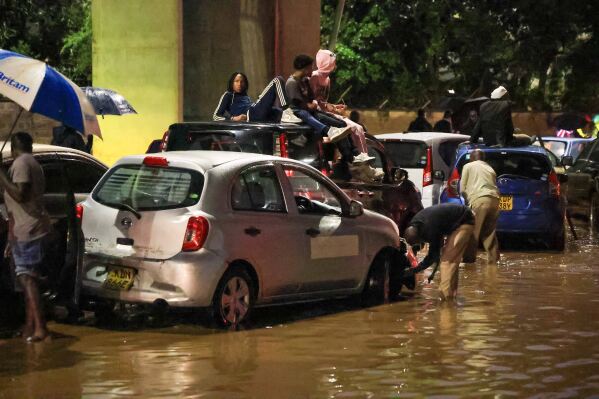
The rains are not to be blamed; our bad behaviours are. The rain didn’t start beating us. We are simply crying wolf. Nature has released her wrath on our errant conduct.
Every time heavy rains fall in Nairobi, the city seems to come to a standstill. Roads turn into rivers, homes are submerged, traffic collapses, and desperate families are forced to abandon their belongings in search of safer ground. The common reaction is to blame the rain, climate change, or poor government planning. Yet, in many ways, the flooding menace in Nairobi is largely a product of our own social irresponsibility. Our careless environmental habits, poor civic discipline, and condescending attitude toward nature have collectively created a crisis that we now suffer from every rainy season.
One of the most visible contributors to flooding is the way residents dispose of waste. Walk along many estates and streets, and you will find plastic bottles, food wrappers, and polythene bags scattered carelessly. These materials often find their way into drainage systems. When the rains come, the blocked drains cannot channel water effectively. Instead, water accumulates rapidly on roads and residential areas, creating flash floods. In many parts of Nairobi, clogged drainage systems have become the norm rather than the exception. What is even more troubling is that the same people who block these drains with garbage are often the first to complain when floods occur.
ALSO READ:
Oyuu bars non-members from KNUT race, invokes labour law ahead of April polls
The problem is worsened by the destruction of natural drainage systems. Rivers and wetlands that once absorbed and regulated excess water have been encroached upon. The banks of the Nairobi River and other streams have been turned into dumping grounds and illegal settlements. These areas were originally nature’s way of managing excess rainwater. Wetlands act like natural sponges, absorbing water during heavy rains and releasing it gradually. When such ecosystems are destroyed or occupied, water loses its natural pathways and ends up flooding homes, roads and businesses.
Urban development has also played a role in worsening the flooding crisis. Nairobi has expanded rapidly over the years, often without adequate planning. Buildings are erected on riparian land, roads are constructed without proper drainage systems and open spaces that once allowed water to seep into the ground are replaced with concrete. The result is a city where rainwater has nowhere to go. Instead of being absorbed into the soil, it runs rapidly across hard surfaces, overwhelming the already clogged drainage systems.
But beyond poor planning, there is a deeper issue of attitude. Many residents treat the environment with a troubling sense of indifference. Littering has become socially acceptable in many public spaces. It is not uncommon to see someone casually throw a plastic bottle out of a car window or dump household waste in a nearby stream. This behavior reflects a deeper cultural problem where people assume that environmental responsibility belongs to the government rather than to individuals.
Social irresponsibility also manifests in how communities respond to environmental regulations. Whenever authorities attempt to reclaim riparian land or demolish illegal structures built on drainage paths, the response is often outrage and resistance. While the human impact of such actions is understandable, the reality remains that occupying these critical environmental spaces inevitably contributes to flooding. The laws meant to protect rivers and wetlands exist for a reason, yet they are frequently ignored until disaster strikes.
The irony is that the flooding problem is largely preventable. If residents adopted responsible waste disposal habits, drainage systems would remain functional. If urban planners and developers respected environmental regulations, natural waterways would continue performing their vital role. If communities valued environmental stewardship, the city would become far more resilient during rainy seasons.
Schools also have a role to play in shaping environmental consciousness. Teachers can cultivate a culture of environmental responsibility among learners by emphasizing the connection between human behaviour and environmental consequences. When young people grow up understanding that throwing garbage into a drain can contribute to flooding in their own neighbourhood, they are more likely to act responsibly as adults. Environmental education must therefore go beyond theory and become part of everyday civic behaviour.
The government must also enforce regulations more consistently. Illegal dumping, destruction of wetlands and construction on riparian land should attract firm penalties. However, enforcement alone cannot solve the problem if citizens themselves do not change their attitudes. Environmental stewardship is not a government project; it is a collective social responsibility.
ALSO READ:
Floods in Nairobi are therefore not just a natural disaster but a mirror reflecting our environmental habits. The overflowing drains, polluted rivers and submerged streets reveal a pattern of neglect and disregard for the ecosystems that sustain urban life. Blaming rainfall alone ignores the deeper truth that human actions have significantly amplified the problem.
If Nairobi is to overcome the recurring flooding menace, the solution must begin with a change in mindset. Residents must recognize that every piece of garbage thrown carelessly into the environment contributes to the crisis. Every illegal structure built on a drainage path increases the risk of disaster. And every act of environmental neglect ultimately returns to haunt the city during the rainy season.
The rains may be natural, but the floods we experience in Nairobi are largely the consequence of our own making. Until we take collective responsibility for the environment around us, the city will continue to drown not just in rainwater, but in the consequences of our own actions.
by Ashford Kimani
Ashford teaches English and Literature in Gatundu North Sub-county and serves as Dean of Studies.
You can also follow our social media pages on Twitter: Education News KE and Facebook: Education News Newspaper for timely updates.
>>> Click here to stay up-to-date with trending regional stories
>>> Click here to read more informed opinions on the country’s education landscape