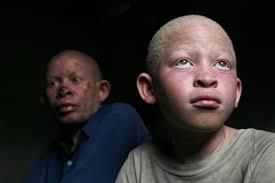
The launch of Ana Antami as a fully registered Non-Governmental Organisation (NGO) marks more than the transition of a community-based oarganisation (CBO). For many learners living with albinism, it signals the beginning of renewed hope, dignity, and opportunity.
For decades, children born with albinism in many parts of Kenya have grown up on the margins of society. In classrooms, playgrounds, and even within their own communities, they have often faced ridicule, discrimination, and harmful myths surrounding their condition.
But in Malava Constituency, a new initiative is working to change that narrative by providing training, support, and empowerment to persons living with albinism.
The organisation’s transformation from a CBO into a fully registered NGO is not merely administrative. It represents a determined effort to create long-term structures that can support and empower people with albinism who have historically been overlooked.
As former British Prime Minister Winston Churchill once said, “The price of greatness is responsibility.” That responsibility is reflected in the story behind the creation of Ana Antami — a story born from painful experiences, quiet resilience, and an unwavering determination to create change.
For many children with albinism, life begins under the heavy shadow of stigma.
They are often stared at before they are understood, judged before they are known, and sometimes bullied for the very skin they were born with.
In many communities, myths and misconceptions still shape how people perceive albinism. Children are given derogatory nicknames, excluded from social activities, and sometimes treated as though they do not belong.
Some victims recount how their presence was even used to frighten crying babies.
ALSO READ:
Principals sound alarm over teacher shortage in STEM pathway under Competency-Based Education
“We have even been used to scare crying children,” one victim recalled. “Parents would threaten their children by saying an albino was coming, hoping the child would stop crying.”
The stigma can sometimes escalate into violence.
In some parts of the country, a dangerous myth persists that people infected with HIV/AIDS can be cured if they engage in sexual intercourse with a person with albinism. This belief has led to cases of rape and defilement targeting women and girls living with the condition.
According to testimonies shared during the launch, many women with albinism have suffered physical and psychological trauma after being assaulted by individuals who believed such myths.
“Many women with albinism have been raped and infected with HIV due to these misconceptions,” one speaker noted. “It is a devastating reality that continues to affect lives.”
Such experiences often leave lasting emotional scars.
Some people with albinism grow up feeling isolated, developing low self-esteem and a sense of being unwanted. Others become defensive and withdrawn as a way of protecting themselves from constant discrimination.
One story shared during the event illustrates the painful curiosity and ignorance that many children with albinism endure.
As a young schoolgirl, Sherleen Tunai Lumumba — who would later become the founder of Ana Antami — experienced an incident that left a lasting mark on her life.
A fellow pupil, acting on stories she had heard at home, grabbed Sherleen’s arm and cut it with a razor blade. The child wanted to see whether Sherleen would bleed red blood like other children.
The girl had been told that people with albinism had green blood and were not real human beings but spirits.
Sherleen bled red blood, just like everyone else.
ALSO READ:
Prof. Julius Nyabundi reappointed as KNEC non-executive chairperson for a second term
Years later, that same girl has grown into a determined advocate for the rights of persons living with albinism.
Today, Sherleen Lumumba stands as the founder of Ana Antami, an organisation dedicated to empowering persons with albinism and ensuring they have access to education, training, and opportunities.
Her journey from a childhood marked by stigma and exclusion to becoming a champion of inclusion is at the heart of the organisation’s mission.
The name Ana Antami, derived from Arabic, means “I Belong.”
For Sherleen, the name represents a powerful declaration of identity and acceptance.
“It means I have accepted who I am and I am proud of it,” she explained. “Being born with albinism is not a sin. No one should judge or demean us because of the colour of our skin.”
Based in Malava Constituency, the NGO focuses on four key thematic areas: health, education, livelihoods, and protection of the rights of persons with albinism.
One of its flagship programmes is “Hatua Mpya”, which translates to “New Beginning.” The initiative aims to equip learners with practical vocational skills that can help them build independent lives.
Through the programme, students receive training in fashion and textile design, where they learn how to apply creativity and craftsmanship to produce garments and other textile products.
Sherleen hopes to expand the programme in the future by introducing additional vocational courses that will allow more learners with albinism to diversify their skills.
The organisation is also working to provide a supportive learning environment tailored to the unique needs of its students.
Many people with albinism experience visual impairments, including short-sightedness. As a result, the institution plans to provide specialised reading glasses, suitable classroom equipment, laptops, and learning materials designed to accommodate their condition.
The campus is also expected to offer dormitories and other facilities that create a safe and inclusive space for learners.
Beyond training, Ana Antami also focuses on economic empowerment.
Graduates of the programme are linked with employment opportunities and receive guidance on business start-up skills, enabling them to establish their own enterprises.
In addition, learners are educated about their legal rights and justice systems, helping them understand how to protect themselves from discrimination and abuse.
Despite the opportunities being offered, Sherleen notes that fear and mistrust remain significant barriers.
Many people with albinism have lived through years of stigma and exclusion, making them hesitant to participate in new initiatives.
“Many people apply for the courses because they are free,” Sherleen explained. “But when reporting time comes, only about half of them show up.”
She says some applicants fear being deceived or exploited.
ALSO READ:
KISE hosts first autism symposium to promote inclusive education
“They worry that they might be tricked or sold somewhere. This shows how deep the mistrust and fear runs within the community.”
Another challenge is that many individuals with albinism come from economically disadvantaged backgrounds, making access to education and healthcare even more difficult.
For this reason, the organisation offers free scholarships to learners.
“This initiative was started to give them skills and knowledge that will help them fend for themselves,” Sherleen said.
The programme also incorporates lessons on climate change awareness, particularly because prolonged exposure to sunlight can have severe health consequences for people with albinism.
The Malava training campus is already operational, and the first cohort of students graduated last month. The organisation is currently enrolling the next intake.
Sherleen says the initiative was inspired by the challenges she observed in mainstream learning institutions.
“Many learners with albinism were being mocked or sidelined in mixed schools,” she said. “I wanted to create a place where they could learn with confidence and dignity.”
According to Grace Achieng, the college’s fashion and textile design trainer, the programme equips learners with both creative and technical skills needed in the fashion industry.
Students undergo 10 months of training, with seven months dedicated to theoretical and practical lessons and the remaining three months spent on internship.
The curriculum includes fashion design, garment cutting and construction, pattern making, and basic tailoring techniques.
“It is incredibly satisfying to watch learners grow from beginners into confident designers,” Achieng said. “Seeing them develop professional skills has been one of the most rewarding experiences in my career.”
The college is open to both youth and adults who are interested in developing vocational skills. Applicants are required to demonstrate passion, commitment, and basic literacy, but no prior experience in fashion design is necessary.
However, the institution faces significant challenges.
Limited resources and training equipment have made it difficult to accommodate the growing number of learners interested in the programme.
Despite these challenges, the trainers remain committed to delivering quality training and producing competitive graduates.
The launch event was attended by several stakeholders, including Nathan Ochunge, Executive Director of the County Splash Development Programme (COSDEP), who served as the guest of honour.
Ochunge praised the initiative for addressing the systemic challenges faced by persons with albinism.
“As we launch this organisation and celebrate the graduation of the first cohort, we are moving people with albinism from the margins into the centre of our shared humanity,” he said.
He emphasised that people with albinism are not inherently vulnerable because of their condition.
Rather, he argued, their vulnerability stems from societal failure to challenge myths and provide adequate protection.
“Their vulnerability is not biological; it is social,” Ochunge said. “It exists because society has failed to protect their dignity and ensure equal opportunities.”
He called on government institutions to strengthen support for persons with albinism, particularly in healthcare and education.
Access to sunscreen, dermatological services, and inclusive learning facilities remains limited for many individuals with the condition.
According to the 2019 Kenya Population and Housing Census conducted by the Kenya National Bureau of Statistics (KNBS), there are 9,729 persons living with albinism in Kenya, representing approximately 0.02 percent of the country’s population.
However, advocacy groups believe the actual number may be higher.
The National Council for Persons with Disabilities (NCPWD) has registered only about 3,800 persons with albinism, leaving thousands outside formal support systems.
Many individuals remain unregistered due to fear of discrimination, social stigma, or safety concerns.
In some regions, particularly during election periods, persons with albinism have been forced to hide due to fears of attacks linked to witchcraft beliefs.
Certain myths claim that body parts of people with albinism can bring wealth, power, or political success when used in rituals.
Such beliefs have led to cases of abduction and violence in parts of East Africa.
For Sherleen and her team, these realities highlight the importance of continued advocacy and community education.
“Our goal is to create safe spaces where people with albinism can live freely, access opportunities, and build confidence,” she said.
Through training, awareness programmes, and advocacy, Ana Antami hopes to restore dignity and self-belief among persons with albinism.
The organisation also encourages beneficiaries to pursue leadership opportunities, including political participation.
Kenya’s Constitution reserves five percent representation for persons living with disabilities, providing opportunities for greater inclusion in governance.
For many learners at the Malava campus, the programme represents more than vocational training. It is a chance to rebuild confidence and rediscover their place in society.
ALSO READ:
KUPPET branches affected by election disputes call for postponement of national elections
As Ochunge noted during the launch, the creation of Ana Antami demonstrates how personal pain can be transformed into purpose.
“Ana Antami shows that exclusion can become empowerment,” he said. “When one voice refuses to be silenced, it can inspire a movement.”
He urged communities, government institutions, and development partners to support initiatives that promote equality and dignity.
Ultimately, the story of Ana Antami is not only about the establishment of an organisation.
It is about redefining how society views people with albinism — not as victims of superstition, but as individuals with talent, creativity, and the ability to shape their own futures.
By Wakhungu Andanje
You can also follow our social media pages on Twitter: Education News KE and Facebook: Education News Newspaper for timely updates.
>>> Click here to stay up-to-date with trending regional stories
>>> Click here to read more informed opinions on the country’s education landscape