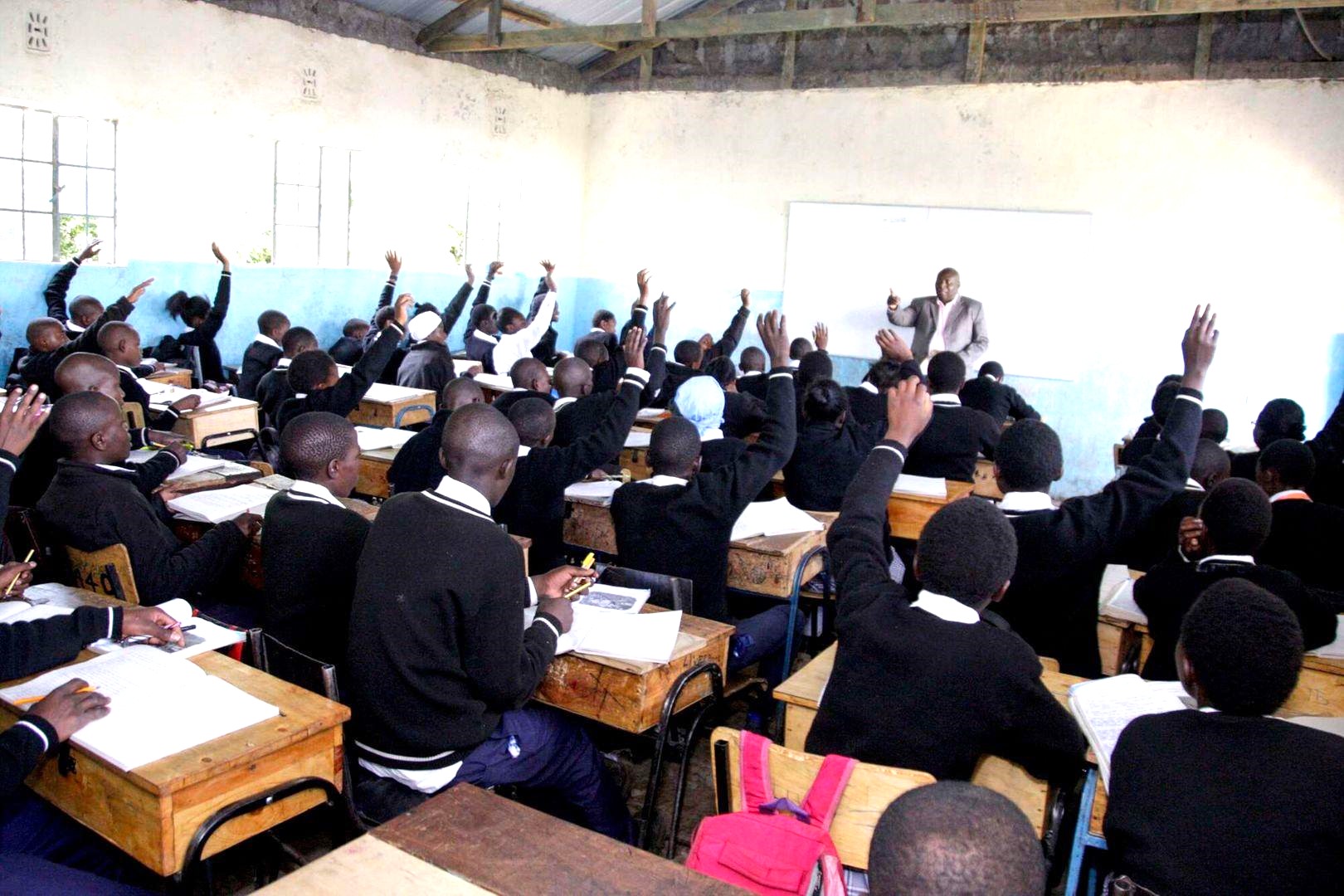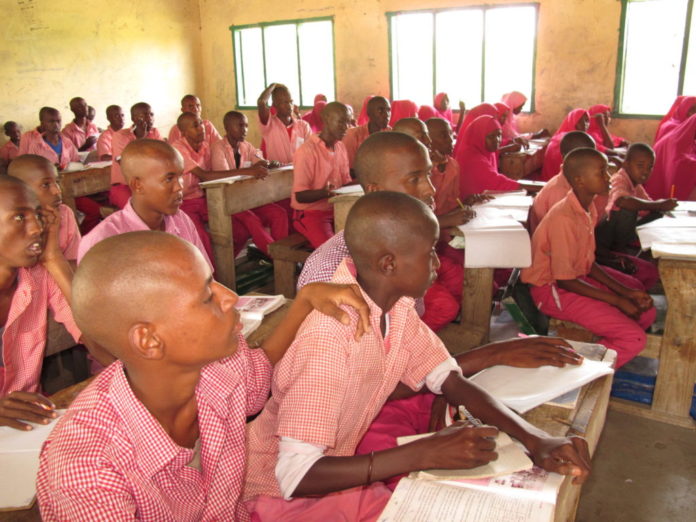
The new Competence-Based Education (CBE) curriculum keeps baffling many, from teachers struggling to deliver it to students receiving it.
Moreover, parents who are ill-equipped to understand it are even more baffled, yet they have to financially support it by funding the system.
Recently, I was with a university Dean of Linguistics who had just come from a workshop or seminar on CBE updates.
Moreover, having been personally groomed in the Certificate of Primary Education (CPE) and Kenya Junior Certificate era at form two level, then a four-year O-level exams (form four) and a two-year Advanced levels course in form Six before proceeding to university for three years.
Yet, I was ill-placed and found it hard to comprehend the original 8.4.4, with about 13 subjects to boot, in primary school.
In pastoralist arid north eastern Kenya, like Garissa, where male chauvinism ruled supreme, the inclusion of Home Science made boys embrace cooking, which used to be basically a girl’s only affair.
“It was a socio-cultural revolution as males too could visit the kitchen to cook and wash their own clothes, without dishing out cash to have such done,” recalls Gabow Hassan, a pioneer 8.4.4 graduate in Saka primary school in Garissa
This was before proceeding to a four-year secondary school study as an entry to university, with an equal number of years.
Now I find it even harder to understand the current CBC curriculum, which later graduates to CBE.
To stay abreast of CBE, I met Naphtali Ochieng at the beginning of the year in Ururi Madiere, Usigu Sub-County. Having exceeded expectations in five subjects, including English, Mathematics, Kiswahili, among others, and meeting expectations in the rest.
In humility, Ochieng had joined Nyabondo Comprehensive School. In a further inquiry, I was told his performance was top-notch and flying the face of expectations in flying colours.
Though torn between being an attorney and an engineer, on two very different pathways, Ochieng stood as my best bet as a CBE insider.
Being the grandson of Bishop James Omolo Oloo of Hera Church in Bondo Township, when Education News asked the cleric about his grandson’s differing pathways, the minister’s answer was simply philosophical.
“Que Sara sara, whatever, will be will be,” said the man of cloth, adding,” since he likes advocating for others and has a knack with fingers,
“Que Sara Sara,” added the cleric.
Back to Ochieng he went on to tell Education News, “we study, nine subjects namely, Mathematics, English Language, Literature in English, Kiswahili Lugha, Kiswahili Fasihi, Intergrated Science, Pre- Technical, Social Studies, Religious Education and Art and Crafts,” he noted adding,” I will be in Nyabondo for three years before going to senior secondary school.”
However, on opening, Ochieng says they were gifted a long list of requirements for Seventh grade.
READ ALSO:
2026 Amani Clubs competitions kick off in Kakamega with call for youth-led unity
Some whispered to EN that, even if you are a pupil at the same school and have fulfilled the long list of requirements, you must still pay the admission fee, ranging from Sh70 to Sh1,000.
“Without the Sh700 admission fee, one cannot be admitted even after fully meeting the requirement list,” said Kaunda Ogosiah in Ururi Madiere.
He adds, ” The seventh-grade entry requirements. The seventh-grade list is quite extensive, and the list of requirements for senior school as a gateway to university must be worth an arm and a leg.”
He laughs, saying,” Free or not free education, if you think education is expensive, try ignorance.”
According to the Ministry of Education, Senior Secondary Schools (Grade 10-12) in Kenya under Competence Based Education (CBE) requires students to take seven subjects- 4 Core Mandatory Subject: English, Kiswahili/ Sign Language, Mathematics, Community Service plus three electives from specific pathways Science, Engineering, Technology, and Mathematics(STEM) and Social Science or Arts and Sports Science.
According to Dr Oneko Ndiewo of Highlands University in Kericho, the senior secondary School broad pathways are geared to enhance and foster career interests.
“Each,” he says, “is legitimate and each pathway leads to viable academic, professional and Leadership futures. None is superior to the other, but it will depend on how the individual carries him/ herself with the papers.”
He adds that they serve different talents and dispensations. However, the former basketball player and coach says the sports science pathways have suffered great injustice due to misunderstanding.
“Some have misled parents and pupils to believe that choosing the arts of sports science closes doors to teaching, law, education, or leadership, among others, far from the truth.”
He adds that the Ministry of Education circular describes clustering for curriculum delivery, not a permanent ceiling on careers.
“Modern education is interdisciplinaryin design. Some universities have Film Studies under the department of engineering. ” So to speak, creativity, teaching, communication, and imagination do intersect.
The arts and sports science pathway houses the disciplines of music, fine arts, film, dance, sports science, and communication. These disciplines interrogate human behaviour, ethnics, culture and power.
Accordingly, Oneko points out that a learner in the pathways can still progress in Education, Law, Journalism, Public Service, Diplomacy, and Educational Leadership.
The Social Science pathway leading to history, Religious Education, Law, Economics, Sociology, Psychology, and Political Science, linking to government policy-making, research, teaching, and leadership.
On the other hand, the STEM pathway focuses on Science, Technology, and Innovation. Such a pathway produces doctors and engineers, as well as students pursuing other science and technology courses.
“No, pathways look to seek support from one another, and none is a stand-alone whatsoever.”
“They are interconnected like Siamese twins,” Oneko laughs.
He says they are flexible.
Accordingly, the senior school is a three-year formative period for learners aged 15 to 17.
Dr Oneko stresses that senior school strives not as an end point but as a threshold – a bridge between foundational learning and broader demands of higher learning and educational development before career launch.
“As a result, CBE, especially senior schools, works on the work to the express intention of moulding a responsible citizenry and citizenship. It is a precursor to pre-university experiences, not a grand finale declaration of intent.”
According to the MoE circular, the senior school takes seven subjects, mainly English, Mathematics, Kiswahili, and Community Service.
The learner can choose additional subjects with professional guidance and flexibility. According to the Ministry of Education circular, the learner may draw from or withdraw from one pathway or cross into other pathways depending on aptitude, aspirations, personality, and personal choice.
The Ministry of Education notes that CBE does not ask young souls to decide who they will be, but rather invites them to choose where they need to be, given the abilities on the cards.
“Do not panic, let us take the bull by the horns and drive him to have a drink of water, let us try,” Oneko concludes, saying, “all are struggling in battle to babysit the CBE .”
By Ochieng Ndiewo
You can also follow our social media pages on Twitter: Education News KE and Facebook: Education News Newspaper for timely updates.
>>> Click here to stay up-to-date with trending regional stories
>>> Click here to read more informed opinions on the country’s education landscape
>>> Click here to stay ahead with the latest national news.