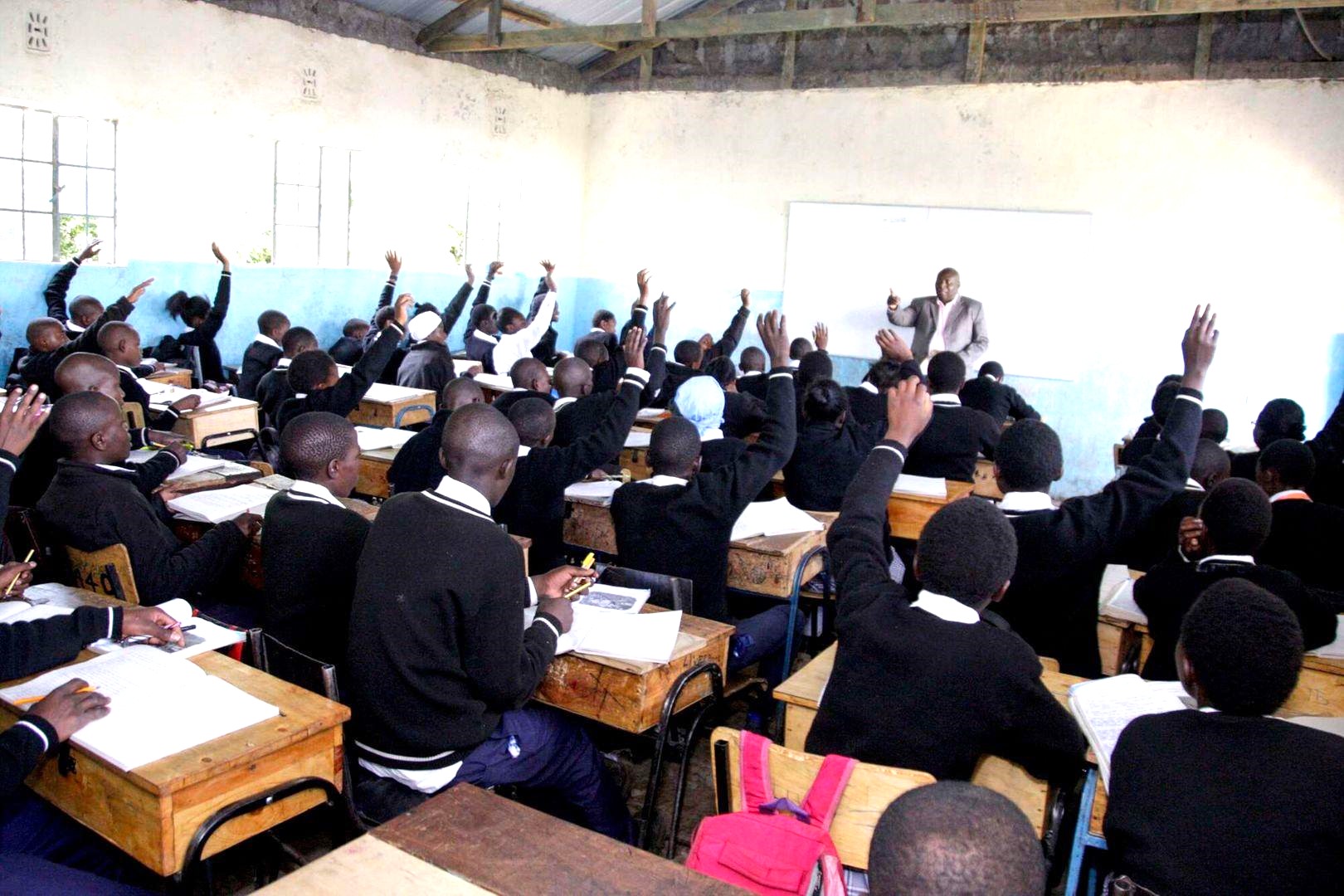
Education is not merely the transfer of knowledge from an adult to a child; it is the gradual initiation of the young into society. A classroom is more than four walls and a timetable. It is a miniature republic where personalities clash and reconcile, where ideas compete, where leadership emerges, and where children learn that the world does not revolve around them.
It is for this reason that the growing enthusiasm for homeschooling should concern us. However well-intentioned, homeschooling risks denying children the rich social and soft skills that only a dynamic school environment can consistently cultivate.
A school is a social laboratory. From the first day a child walks into a pre-primary classroom, they are confronted with differences. There are children from other families, backgrounds, temperaments and abilities. Some are talkative; others are shy. Some grasp concepts quickly; others struggle. In navigating this diversity, a child learns patience, empathy, negotiation, and resilience. These lessons are not written on the chalkboard, yet they are among the most important outcomes of education. At home, the social environment is controlled and predictable. In school, it is varied and often unpredictable. It is in that unpredictability that character is formed.
Soft skills are not acquired through instruction alone; they are absorbed through daily interaction. Consider conflict resolution. In a playground, disagreement over a ball, children argue, defend themselves, compromise or seek mediation from a teacher. They learn that their desires are not absolute. They learn to manage frustration and to articulate their thoughts. In a homeschooling setup, conflict is usually limited to siblings or adults. The range of peer-to-peer negotiation is drastically reduced. A household, no matter how loving, cannot simulate the complexity of twenty or forty age-mates interacting simultaneously.
Collaboration is another casualty of homeschooling. Group work in schools is often messy. It demands listening, dividing tasks, tolerating weaker members, and meeting shared deadlines. These experiences mirror the realities of adult workplaces and civic life. A child educated primarily at home may excel academically yet struggle to function effectively in teams because they have not repeatedly practised collective responsibility. Leadership, too, is refined in communal settings. From class prefects to club officials, schools provide structured opportunities for young people to influence peers, make decisions and face accountability beyond parental supervision.
Exposure to authority figures outside the family is equally critical. In school, children learn to respect rules set by institutions, not just by parents. They encounter teachers with different personalities and expectations. They adapt to varied instructional styles. This adaptability nurtures emotional intelligence and flexibility. Homeschooling centralises authority within the parent-child relationship, which can blur boundaries and limit the child’s experience of structured, impersonal systems that characterise broader society.
Proponents of homeschooling often argue that it shields children from negative peer pressure, bullying and moral decay. While these concerns are understandable, insulation is not preparation. The goal of education should not be to construct a protective bubble but to equip children with the skills to navigate a complex world. Schools, when properly managed, do not merely expose children to challenges; they provide guided environments in which those challenges become growth opportunities. Avoiding society does not build social competence; engaging with it does.
Moreover, school diversity fosters tolerance and national cohesion. In shared spaces, children encounter classmates from different ethnicities, religions and socio-economic backgrounds. They learn to collaborate across differences. They celebrate each other’s achievements and grieve together in moments of loss. Such shared experiences cultivate a sense of belonging to something larger than the family unit. Homeschooling, by contrast, can unintentionally narrow a child’s worldview, especially if social exposure is limited to like-minded groups.
READ ALSO:
Turkana teacher living with disability clinches historic KUPPET–Kisii Gender seat
Supporters of homeschooling may counter that co-curricular activities, church groups or sports academies provide sufficient social interaction. However, these engagements are often periodic and selective. They do not replicate the sustained, daily immersion in a diverse peer community that formal schooling provides. Social skills are sharpened through repetition and routine interaction, not occasional gatherings. A child who sees peers once or twice a week does not experience the same intensity of social learning as one who spends five days a week negotiating friendships, responsibilities and differences.
Education systems worldwide are increasingly emphasising competencies such as communication, collaboration, critical thinking, and creativity. These are inherently social competencies. They flourish where dialogue, debate, teamwork and shared problem-solving are embedded in daily practice. A solitary or predominantly family-based learning model struggles to provide the breadth of social rehearsal needed to master these abilities.
None of this is to deny that some homes provide nurturing, intellectually stimulating environments. Nor is it to claim that all schools are perfect. Indeed, schools must continually improve in safety, inclusivity and responsiveness. But reforming schools is not the same as retreating from them. The answer to imperfections in institutional education should be to strengthen community-based learning spaces, not to withdraw children from them.
Ultimately, education is preparation for life in society. Society is diverse, demanding, and often unpredictable. Schools, at their best, mirror this reality in manageable proportions. They teach children how to wait their turn, how to disagree respectfully, how to lose graciously, how to win humbly and how to coexist with others. These lessons cannot be fully replicated within the confines of a single household. Homeschooling may deliver academic content efficiently, but education is more than content delivery. It is a social formation. And when we remove children from the vibrant ecosystems of schools, we risk raising academically competent yet socially underprepared citizens.
By Joyce Koki
Koki teaches at Kenyatta University Model School and is an opponent of Homeschooling.
You can also follow our social media pages on Twitter: Education News KE and Facebook: Education News Newspaper for timely updates.
>>> Click here to stay up-to-date with trending regional stories
>>> Click here to read more informed opinions on the country’s education landscape
>>> Click here to stay ahead with the latest national news.