The higher education sector is staring at a financial crisis, with cumulative funding gaps now standing at KSh223 billion. The funding deficit threatens student loans, scholarship programs, staff salaries, and ongoing reforms, raising fears of disruption and insolvency across select universities and technical institutions.
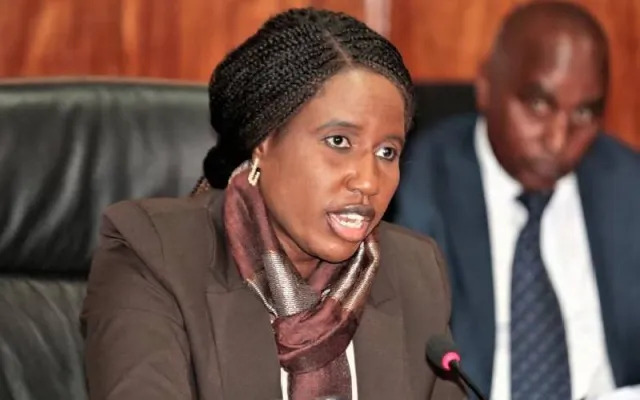
Appearing recently before the National Assembly Education Committee chaired by Tinderet MP Julius Melly, Principal Secretary for Higher Education Beatrice Inyangala explained that the deficit spans scholarships, Higher Education Loans Board (HELB) arrears, private university liabilities, stalled projects, and collective bargaining agreements.
The State Department of Higher Education itself is underfunded. For the 2026–27 financial year, it requires KSh311.9 billion for recurrent expenditure but has been allocated only KSh155.2 billion, leaving a gap of KSh156.7 billion.
Development projects face an additional KSh6.55 billion deficit, meaning the sector is operating at less than half of its required resources.
ALSO READ:
CS Ogamba cites budget strain behind unpaid supervisors, invigilators and examiners
Public universities are overwhelmed by unpaid bills totalling KSh85.28 billion as of January 31, 2026. These arrears include payments to suppliers, pension contributions, statutory deductions, and bank loans, none of which are factored into the proposed budget. Institutions are struggling to pay staff, remit statutory obligations, and service debts, with over half of recurrent expenditure unfunded and development projects short by 57.3 percent.
Additionally, HELB faces one of the most critical gaps as It requires KSh112 billion to clear deficits accumulated over three years. For 2026-27, HELB plans to support 1,383,728 students at a cost of KSh112.1 billion, but the proposed allocation is just KSh45.06 billion, leaving a deficit of KSh67.42 billion.
Current arrears include KSh33.9 billion for the present year and Sh10.7 billion from 2024–25. “Without intervention, thousands of vulnerable students risk delayed or reduced loan disbursements,” Inyangala warned, appealing for KSh112 billion to stabilise financing.
On the other hand, scholarship programs under the Universities Fund are also under strain. Beneficiaries of the student-centred model are projected to rise from 122,634 in 2023–24 to 656,927 in 2026–27. Yet resources needed for 2026–27 total KSh47.36 billion, while only KSh17.92 billion has been allocated, leaving a gap of KSh29.44 billion.
It is projected that by 2026–27, cumulative scholarship deficits could reach KSh51.7 billion, threatening the sustainability of the equity-focused model introduced in 2023.
However, the government is preparing to merge HELB, the Universities Fund, and KUCCPS into a single Tertiary Education Funding Authority under the Tertiary Education Placement and Funding Bill, 2024, aiming at streamlining the student placement, loans, and scholarships under one entity.
The government had earlier committed KSh7.76 billion to implement the 2017–2021 collective bargaining agreements in two tranches. While KSh3.88 billion was paid in the first tranche, only KSh2.8 billion has been set aside for the second, leaving a KSh1.08 billion shortfall, this deficit could trigger industrial strikes across public universities.
ALSO READ:
How some male teachers find themselves in child maintenance battles
Individual institutions are seeking urgent rescue packages. Moi University is requesting KSh3.8 billion to implement a return-to-work formula covering arrears, payroll support, pensions, and dues to terminated staff. The Technical University of Kenya requires Sh2.07 billion to restore full gross salary payments and clear pending obligations, having paid only net salaries since July 2025.
The crisis has now drawn in private universities, with the Kenya Association of Private Universities (KAPU) threatening legal action over unpaid fees amounting to KSh45.77 billion for students placed through KUCCPS. If litigation proceeds, government liabilities could escalate further.
With cumulative deficits already at KSh223 billion, the sustainability of Kenya’s higher education system hangs in the balance, even as authorities push reforms.
By Masaki Enock
You can also follow our social media pages on Twitter: Education News KE and Facebook: Education News Newspaper for timely updates.
>>> Click here to stay up-to-date with trending regional stories
>>> Click here to read more informed opinions on the country’s education landscape
>>> Click here to stay ahead with the latest national news.