Over half of street children in Kenya are aged five years and below and do not know the whereabouts of their parents, according to findings by the Kenya National Bureau of Statistics (KNBS).
Data from the 2019 Kenya Population and Housing Census indicates that 46,639 people are living on the streets nationwide.
Nairobi recorded the highest number at 15,337, followed by Mombasa (7,529), Kisumu (2,746), Uasin Gishu County (2,147) and Nakuru County (2,005).
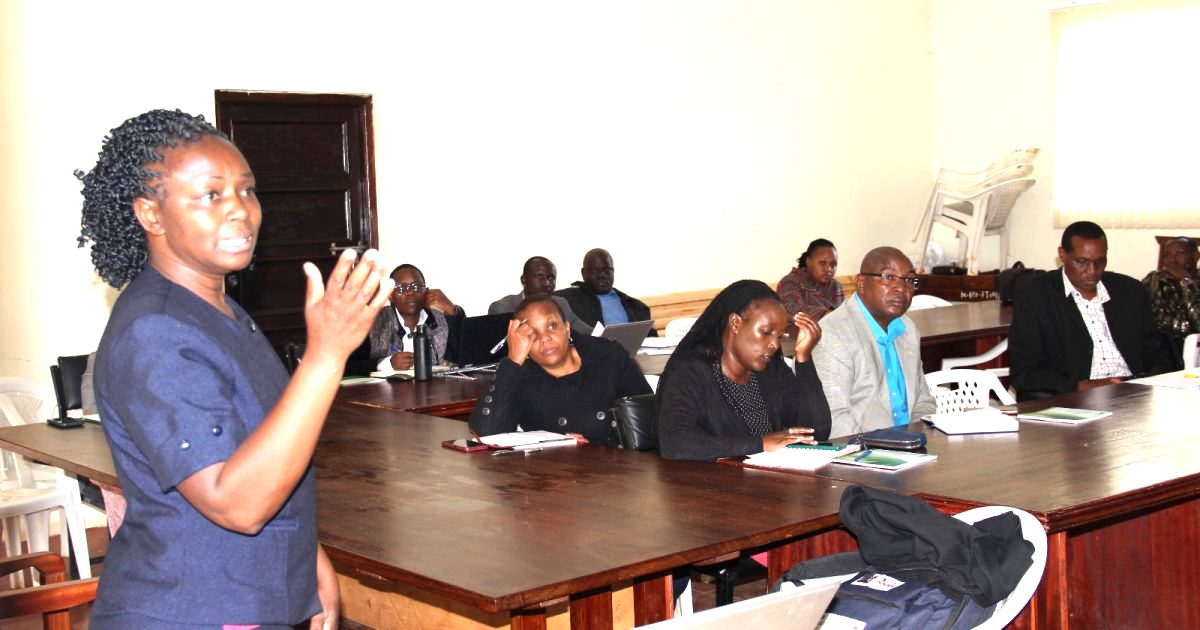
The statistics were presented during an Inter-Ministerial Policy Steering Committee review meeting on the implementation of the National Population Policy held in Kericho.
Speaking at the meeting, South Rift Regional Population Coordinator Ms Janet Lunayo attributed the growing number of street children to rapid population growth across the country.
“The increasing population without corresponding social support systems has contributed significantly to the rise in the number of street children,” Lunayo said. “This trend underscores the urgent need for sustained investment in family planning, social protection and child welfare programmes.”
On employment trends, Lunayo noted that unemployment among the working-age population (15–64 years) currently stands at 5.6 per cent.
“Youth unemployment has declined from 12.3 per cent in 2023 to 8.7 per cent in 2024. This reflects modest gains in labour market absorption, though more still needs to be done,” she added.
She further observed that persons aged 60 years and above are the fastest-growing segment of the population, warning that the demographic shift has implications for social protection systems.
“With Kenya’s official retirement age at 60 years, the growing number of older persons requires strengthened social protection frameworks,” Lunayo said.
READ ALSO:
Alliance @100: A Century of excellence, leadership and legacy
She attributed rising population growth to inadequate access to accurate family planning information, myths and misconceptions about contraception, insufficient financing for family planning commodities, inequitable access to services among vulnerable groups and frequent stock-outs in health facilities.
The report also shows that over 90 per cent of Kenyan women are married by the ages of 45 to 49.
Meanwhile, the proportion of divorced and separated couples increased from 7.7 per cent in 2014 to 9 per cent in 2022, with urban areas recording higher rates than rural settings.
According to the National Population Policy for Sustainable Development, based on the 2019 census, Kericho had a population of 901,777, comprising 450,741 males, 451,008 females and 28 intersex persons. The population is projected to reach approximately 1 million by 2026.
The meeting heard that older persons in Kericho face growing challenges, including inadequate income to meet healthcare and food needs, a shortage of caregivers, and limited family support due to rural-urban migration.
Kericho County Director of Education, Mr Julius Ngoneshi, underscored the role of education in managing population growth.
“Communities that prioritise education are better equipped to plan their families and provide adequately for their children,” Ngoneshi said.
He called for intensified public sensitisation through schools, Technical and Vocational Education and Training institutions, institutions of higher learning, organised community forums, farmers’ groups and public barazas to promote sustainable population management.
“I am pleased to note that Kericho County has achieved a 100 per cent transition rate of Grade 10 learners to secondary schools. This is a strong foundation for empowering our youth,” he added.
The meeting was attended by various department heads from across the county, who reiterated the need for coordinated efforts to address emerging population challenges.
By Kimutai Langat
You can also follow our social media pages on Twitter: Education News KE and Facebook: Education News Newspaper for timely updates.
>>> Click here to stay up-to-date with trending regional stories
>>> Click here to read more informed opinions on the country’s education landscape