Kenya’s education system is standing at a defining crossroads. The move by the Teachers Service Commission (TSC) to separate Junior Secondary School (JSS) from primary schools is no longer a quiet administrative adjustment — it is a bold structural shift that could permanently reshape the architecture of basic education under the Competency-Based Education (CBE) framework. Yet even as the proposal gathers momentum within policy circles, its full implementation hangs in suspense, awaiting parliamentary approval.
What is unfolding is not merely a bureaucratic rearrangement of classes and teachers. It is a struggle over identity, professional alignment, funding priorities, infrastructure readiness, and the future direction of CBE itself.
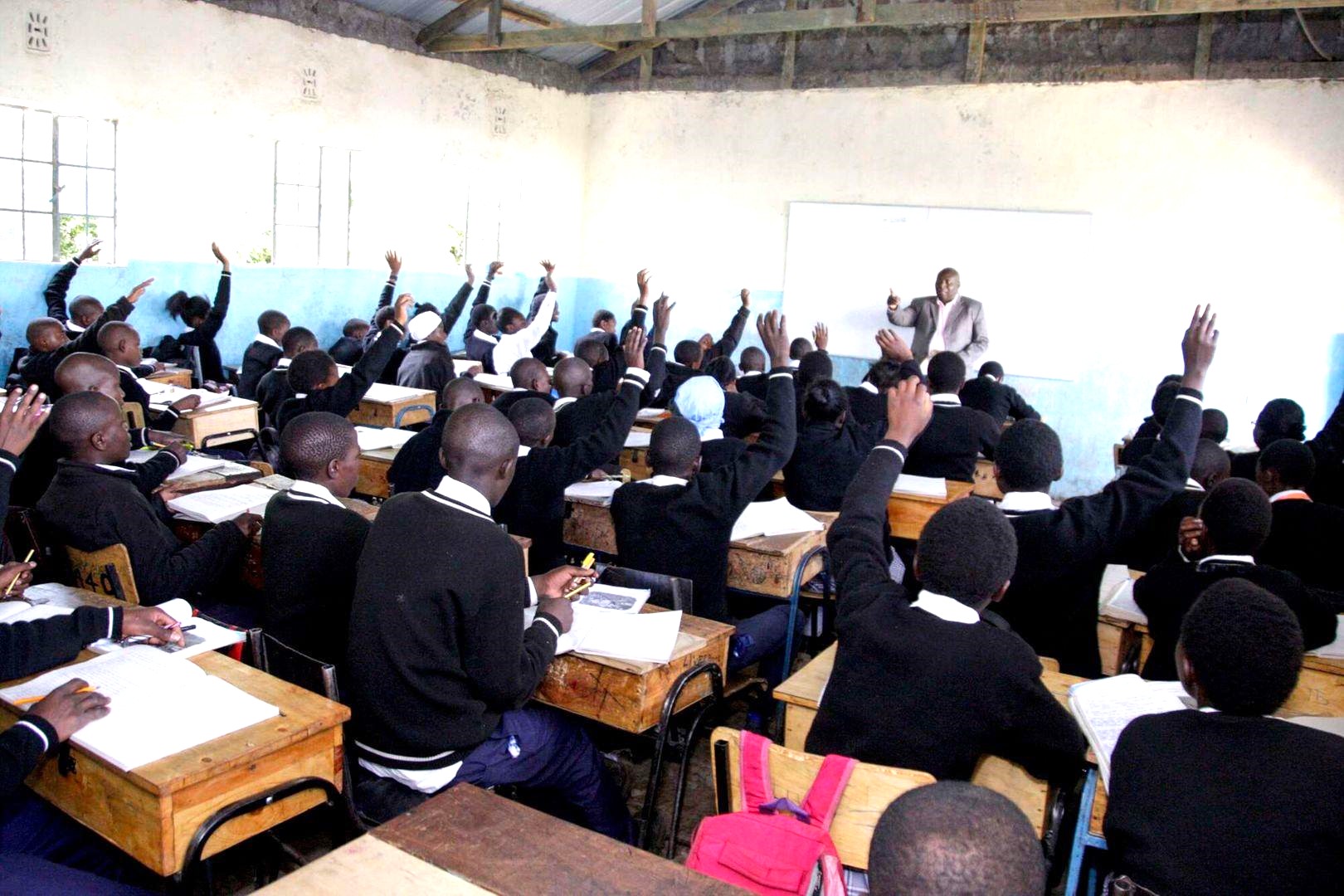
When CBE introduced Junior Secondary, the placement of Grade 7 and Grade 8 learners within primary school compounds was largely a pragmatic compromise. The country was transitioning from the 8-4-4 system. The infrastructure was insufficient. Staffing frameworks were incomplete. Housing JSS within primary schools ensured continuity and avoided chaos. It bought time.
But transitional solutions are rarely permanent. What was meant to be a bridge has now become a tension point.
The TSC’s push to separate JSS signals that the transitional phase is coming to an end. The Commission appears determined to give Junior Secondary a distinct institutional identity — one that reflects its curriculum demands, teacher qualifications, and strategic role within CBE. For TSC, the logic is compelling. Junior Secondary is not upper primary by another name.
It introduces deeper subject specialisation, practical competencies, and exploration of career pathways. Its pedagogy requires laboratories, workshops, ICT integration, and teachers trained in specific disciplines rather than the generalist approach common in primary education.
Professional identity lies at the heart of this separation. Many JSS teachers were recruited with diplomas and degrees in post-primary education. Their training aligns more naturally with secondary education structures. Yet under the integrated model, they have operated within administrative frameworks traditionally designed for primary schools. This created ambiguity in supervision, appraisal systems, job group placement, and promotional pathways.
By separating JSS, TSC seeks to align professional qualifications with institutional structure. It promises clearer career progression, streamlined deployment, and better alignment between teacher training and classroom expectations. For JSS educators who have felt caught between two systems, the move represents validation and clarity.
But professional alignment is only one piece of the puzzle.
Administrative efficiency also drives the proposal. Separation would allow targeted budgeting for Junior Secondary needs. Instead of competing with primary school priorities, JSS could receive focused capitation aligned to laboratories, technical equipment, and subject-based teaching materials. Performance management frameworks could be tailored specifically to JSS competencies rather than borrowed from primary systems. Supervision structures could be sharpened.
In theory, separation enhances accountability.
However, theory meets reality through infrastructure. Across many counties, particularly rural and marginalised regions, facilities remain stretched. Laboratories are scarce. Workshops are underdeveloped. Classrooms are overcrowded. If JSS becomes a distinct entity without commensurate investment, separation could expose rather than resolve systemic weaknesses.
This is where Parliament comes into play.
READ ALSO:
Family in Kisii seeks justice after their Grade 3 child died from Matatu hit
Major structural changes within public education cannot stand solely on administrative authority. They require legislative anchoring and budgetary endorsement. Parliament must interrogate the legal basis for separation, evaluate the funding implications, and ensure equitable resource distribution. Without parliamentary approval, the proposal remains a strategic intention — persuasive, but not binding.
Lawmakers will ask difficult questions. Are counties prepared? Will marginalised schools fall further behind? Does the national budget have the capacity to fund additional staffing and infrastructure? Will separation disrupt learners during transition? These are not abstract concerns. They are grounded in the lived realities of Kenyan schools.
The financial implications are substantial. Establishing JSS as an operationally distinct tier demands more than new signage. It requires laboratories equipped for integrated science, workshops for technical subjects, ICT infrastructure for digital literacy, and increased staffing for subject specialisation. Capitation formulas must be recalibrated. Headship structures reconsidered. Administrative hierarchies redesigned.
Leadership is another unresolved frontier. If JSS fully separates, will it operate under independent principles? Or will primary headteachers retain oversight during a phased transition? The answer will shape institutional culture. It will determine how authority flows, how accountability is enforced, and how teachers relate within the same compound but under different structures.
Union dynamics add further complexity. The classification of JSS teachers influences representation between the Kenya National Union of Teachers (KNUT) and the Kenya Union of Post-Primary Education Teachers (KUPPET). Separation could redraw union boundaries and bargaining power. It may resolve long-standing debates about where JSS teachers belong, but it may also ignite fresh negotiations over representation and benefits.
Beyond the institutional chessboard lies the learner — the ultimate beneficiary or casualty of reform. If separation is well funded, strategically phased, and equitably implemented, learners could experience enriched learning environments. Laboratories could become functional rather than symbolic. Teachers could teach within their areas of expertise. Assessment could align more precisely with competency goals under CBE.
But if separation is rushed, underfunded, or politically contested, learners could find themselves caught in administrative turbulence. Uncertainty breeds instability. Education reform demands clarity and confidence, not confusion.
The political dimension cannot be ignored. Education remains one of the most sensitive sectors in national discourse. Parliamentary debate over JSS separation will not occur in a vacuum. It will intersect with budget negotiations, regional equity concerns, and broader scrutiny of CBE implementation. Legislators will seek assurances that the reform strengthens rather than fragments the system.
At its core, this proposal is a test of CBE’s maturation. The initial integration of JSS within primary schools was pragmatic — necessary to avoid disruption. But long-term sustainability requires structural coherence. CBE envisions Junior Secondary as a bridge between foundational learning and senior secondary specialization. Without distinct identity, that bridge risks structural weakness.
Separation is therefore both symbolic and practical. Symbolic, because it signals that Junior Secondary has come of age. Practical, because it demands systems, funding, and leadership capable of supporting its mandate.
Critics caution that structural change alone does not guarantee quality. They argue that teacher retraining, curriculum refinement, and resource distribution matter more than administrative lines. Supporters counter that without structural clarity, even the best curriculum struggles to thrive.
Both perspectives hold truth.
Reform is rarely linear. It unfolds through negotiation, adjustment, and recalibration. The TSC’s push to separate JSS reflects confidence that the system is ready for its next evolutionary step. Parliament’s scrutiny will test whether that confidence aligns with fiscal and infrastructural reality.
What remains undeniable is that Kenya stands at a pivotal moment. The decision will shape not only teacher deployment and school administration but also the lived educational experience of thousands of learners transitioning through Junior Secondary.
If Parliament grants approval and implementation is carefully staged, Kenya could witness a strengthened middle tier of basic education — one defined by professional alignment, resource focus, and institutional clarity. If approval stalls or funding falls short, the system may continue operating in a hybrid arrangement that blurs distinctions and slows progress.
Education reform demands courage. It also demands prudence. The separation of JSS from primary schools embodies both qualities — bold in ambition, cautious in awaiting legislative sanction.
As the nation watches parliamentary deliberations, one truth stands firm: this is more than a technical adjustment. It is a defining chapter in the story of CBE. The outcome will determine whether Junior Secondary emerges as a fully empowered pillar of Kenya’s education system or remains tethered to a transitional past.
Inside this bold push lies a broader question: the country’s readiness to invest not just in policy but in the structures that sustain it. Structural clarity, professional respect, equitable funding, and learner-centred planning must converge if this reform is to succeed.
The breakaway moment has arrived. Whether it becomes a breakthrough depends on the wisdom of legislative approval and the discipline of implementation.
By Hillary Muhalya
You can also follow our social media pages on Twitter: Education News KE and Facebook: Education News Newspaper for timely updates.
>>> Click here to stay up-to-date with trending regional stories
>>> Click here to read more informed opinions on the country’s education landscape
>>> Click here to stay ahead with the latest national news.