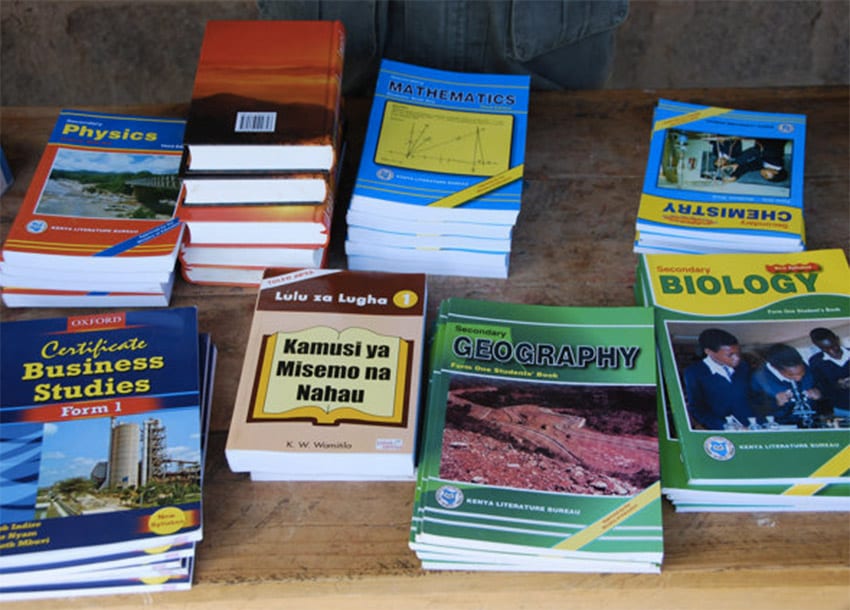
In every education system, official course books are meant to be the backbone of instruction. In Kenya, textbooks vetted and approved by the Kenya Institute of Curriculum Development (KICD) carry institutional authority and enjoy government endorsement.
They are distributed to schools under the assurance that they align with the national curriculum designs and meet the required standards. Yet in practice, many classroom teachers quietly acknowledge a persistent truth: mainstream course books, however approved, are rarely sufficient in content depth and breadth. From that inadequacy emerges an entire ecosystem of revision materials—teacher-authored, exam-focused, and often more responsive to classroom realities.
The approval process by KICD is rigorous. Publishers submit manuscripts, panels of subject experts review them, and only those that align with curriculum designs are cleared for use. This system ensures standardization and protects learners from substandard or ideologically questionable content. However, standardization sometimes comes at a cost. In striving to produce books that are accessible to the “average learner,” many mainstream texts sacrifice conceptual depth.
Topics are introduced, explained in broad strokes, and followed by a few exercises. For high-stakes examination systems and increasingly demanding competency-based expectations, that surface-level engagement leaves gaps.
Teachers, who stand at the frontline of implementation, encounter these gaps daily. A Grade 10 English book may outline literary techniques but provide only two short passages for practice. A Mathematics text may explain a formula but offer limited graduated exercises to move learners from basic understanding to mastery. A Chemistry book may describe a process but omit extended application questions that stretch analytical thinking. These are not necessarily errors; they are omissions born of publishing constraints—page limits, cost considerations, and the need to remain accessible across varied school contexts.
The government’s effort to supply two textbooks per learning area for Grade 10 learners is commendable. It signals commitment to resource equity and curriculum implementation. Yet quantity does not automatically translate to adequacy. Two books may repeat similar explanations, follow comparable structures, and still leave critical aspects underdeveloped. Curriculum designs are often more ambitious than textbooks. They outline competencies, values, inquiry processes, and cross-cutting issues that require deliberate scaffolding. Where textbooks simplify, teachers must amplify.
ALSO READ:
Understanding the MoE certified standards of infrastructure for Senior Schools
It is in this amplification that revision materials are born. Teachers are keen observers of weaknesses—both in learners and in texts. They notice where examples are insufficient, where practice questions are too shallow, where emerging trends in national assessments are ignored. Out of this professional reflection, some begin compiling supplementary notes. What starts as photocopied handouts for a single class gradually evolves into structured revision books. Titles such as Better Best, The Marking Scheme, and Top Notch Guru are not accidental enterprises; they are responses to perceived gaps.
These revision books often distinguish themselves in three ways. First, they are exam-oriented. While mainstream books focus on syllabus coverage, revision materials zoom in on assessment demands. They analyze past papers, identify recurring question types, and provide model answers. In a system where national examinations remain gatekeepers to opportunity, this focus is highly valued by schools and parents alike.
Second, they tend to offer greater depth. A mainstream text may provide ten comprehension questions; a revision book provides fifty, graded from simple recall to evaluative analysis. A standard science book may outline one experiment; a revision guide may simulate multiple experimental scenarios and include marking schemes. This density of practice strengthens learner confidence and exposes them to varied problem-solving contexts.
Third, revision materials are often more adaptable. Teachers who write them are still in classrooms. They revise content annually, integrate feedback from learners and adjust to shifts in assessment trends. Their proximity to real teaching contexts gives them agility that large publishing cycles sometimes lack.
Critics argue that the proliferation of revision books commercializes education and places additional financial burden on parents. There is merit in that concern. When supplementary materials become unofficially compulsory, inequity widens. However, it is equally important to interrogate why such materials thrive. Markets expand where needs are unmet. If mainstream textbooks fully satisfied depth, practice, and assessment alignment, the demand for parallel revision texts would shrink significantly.
The challenge, therefore, is not to demonize revision materials but to rethink the relationship between curriculum design, textbook development, and classroom realities. Curriculum documents are often conceptually rich, envisioning inquiry-based learning, critical thinking, and competency development. Translating that richness into accessible, affordable textbooks is complex. Publishers must balance clarity with rigor, inclusivity with depth, and cost with comprehensiveness. Inevitably, compromises occur.
Teachers, especially experienced ones, bridge that compromise. They design additional worksheets, craft probing questions, and compile revision notes. Some go further and formalize these efforts into published guides. In doing so, they assert professional agency. They refuse to be passive consumers of state-approved texts; instead, they become co-creators of instructional content. This innovation should not be dismissed as mere commercial opportunism. In many cases, it reflects pedagogical commitment.
ALSO READ:
Dorcas Lotome wins KNUT West Pokot Executive Secretary to become first female to clinch the seat
Yet systemic reflection is necessary. If mainstream textbooks are perceived as consistently shallow, then feedback mechanisms between schools, publishers, and KICD need strengthening. Post-approval evaluation should not be perfunctory. Structured teacher feedback on content gaps, insufficient practice items, or misalignment with emerging assessment formats could inform revised editions. Continuous improvement must become the norm rather than episodic overhaul.
Furthermore, teacher professional development should include structured training on critical textbook analysis. Rather than accepting texts as complete authorities, teachers can be equipped to interrogate coverage, depth, and alignment. Such analytical skills would empower them to supplement strategically rather than reactively. Supplementation would then be intentional, focused on specific competencies rather than wholesale replacement.
The presence of two government-supplied textbooks per learning area for Grade 10 signals progress in resource provision. But provision is not the same as sufficiency. Curriculum implementation is dynamic, shaped by learner diversity, assessment pressures, and evolving pedagogical philosophies. Where mainstream course books flatten complexity, teachers reintroduce it. Where examples are sparse, they multiply them. Where assessment demands sophistication, they simulate it.
Revision materials, therefore, are not accidental by-products of an overzealous publishing industry. They are, in many respects, diagnostic tools. Their popularity signals perceived inadequacies in mainstream texts. Instead of viewing them as competitors to approved books, policymakers might read them as feedback – evidence that teachers are identifying gaps and striving to fill them.
Ultimately, no single textbook can exhaust a curriculum. Education is too complex, learners too diverse, and knowledge too expansive for one volume to suffice. The goal should not be to eliminate supplementary materials but to ensure that core textbooks are robust enough to reduce dependency on them. When mainstream books achieve deeper coverage, richer practice, and closer alignment with curriculum designs, revision guides will become enhancements rather than necessities.
Until then, teachers will continue to innovate. They will study weaknesses, craft solutions, and publish where possible. In that quiet industry lies both a critique of inadequacy and a testament to professional resilience.
By Ashford Kimani
Ashford teaches English and Literature in Gatundu North Sub-county and serves as Dean of Studies.
You can also follow our social media pages on Twitter: Education News KE and Facebook: Education News Newspaper for timely updates.
>>> Click here to stay up-to-date with trending regional stories
>>> Click here to read more informed opinions on the country’s education landscape