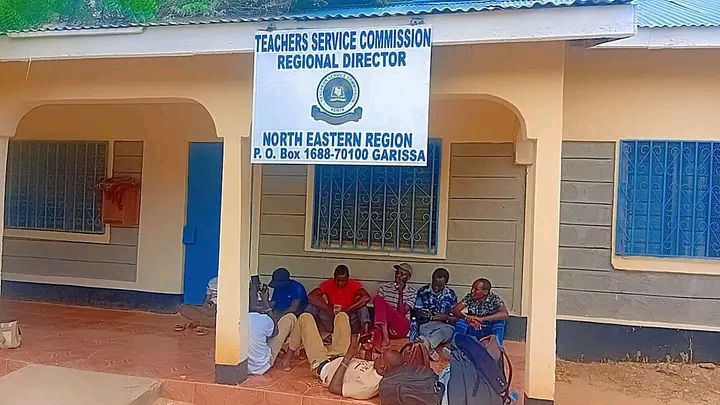
More non-local teachers working in Hulugho ,Garissa County have appealed to the Teachers Service Commission (TSC) to relocate them to safer areas following the killing of a colleague by suspected Al-Shabaab militants.
The appeal comes in the wake of the January 25, 2026 attack that claimed the life of Stephen Musili, a teacher at Hulugho Comprehensive School. His colleague, Agnes Kavata, also a teacher at the same school, survived the attack after the assailants spared her upon learning she was a woman. The attackers reportedly demanded to know the whereabouts of her husband before killing Musili, who lived in the same compound.
Kavata was among the teachers posted to Garissa County in 2022 during a period when thousands of non-local teachers had been transferred out of the region following targeted killings.
She was part of a team deployed to help stabilize the education sector and ensure continuity of learning for children in the area.
Following the January 25, 2026 attack, TSC granted compassionate leave to 22 non-local teachers and enrolled them in counseling programs. However, Kavata said she dropped out of the counselling sessions due to financial constraints, adding that counselling alone is insufficient and that relocation is the only viable solution to guarantee her safety.
Other teachers have echoed similar concerns. Meshack Makwara, a teacher at Hulugho Comprehensive School, urged the government to implement long-term measures to address insecurity in North Eastern Kenya, warning that continued inaction could lead to further loss of life.
ALSO READ:
KUPPET pays tribute to teachers who perished during union elections in Nairobi
Caroline Kaluki, a teacher at Matarba Primary School in Sangailu, described the region as increasingly unsafe for non-local teachers, noting that many are forced to walk long distances to school, exposing them to serious security risks.
Another teacher at Hulugho Comprehensive School, Victor Onyango, said non-local teachers feel they have been marked for attack.
He added that his family has been urging him to return home and seek alternative livelihoods, such as farming, rather than risking his life in the volatile region.
In response to the growing concerns, TSC dispatched a team to Garissa to assess the situation and provide counselling to affected teachers. However, many teachers say they continue to feel unsafe despite these efforts.
Security officials have also stepped in. Deputy Inspector General of the Administration Police Service, Gilbert Masengeli, recently visited Hulugho town, where he held a security meeting with community leaders.
ALSO READ:
Kisii: Nyakeiri Secondary School students report to back after strike
At least 55 non-local teachers are now seeking urgent relocation, citing fear for their lives. They have held several meetings with the Kenya National Union of Teachers (KNUT) to push for intervention.
According to education officials, North Eastern Kenya currently has about 6,500 non-local teachers compared to 1,000 local teachers, highlighting the region’s heavy reliance on educators from outside the area.
Since 2014, more than 40 teachers have reportedly been killed in terror-related incidents in the North Eastern region, triggering widespread panic, repeated teacher withdrawals, and in some cases, job abandonment. At one point, the government was forced to recall retired local teachers to bridge the staffing gap left by the mass exodus.
Leaders from the region have since called for long-term, locally driven solutions, including encouraging young people from the area to enroll in teacher training colleges to address the persistent shortage of teachers.
By Obegi Malack
You can also follow our social media pages on Twitter: Education News KE and Facebook: Education News Newspaper for timely updates.
>>> Click here to stay up-to-date with trending regional stories
>>> Click here to read more informed opinions on the country’s education landscape