Two weeks ago, the Kikuyu Constituency Member of Parliament, and Leader of Majority Party in National Assembly Kimani Ichung’wah claimed that the Principal Secretary for Basic Education, Prof. Julius Bitok, hardly left Nairobi to the countryside.
Ichung’wah claimed that the Principal Secretary hardly visited schools in the field to understand the problems schools were grappling with.
The remarks called to my mind an incident in which President Jomo Kenyatta reportedly gave marching orders to a Minister in his Cabinet who happened to attend a baraza concerning a different Ministry from his own.
The late Jomo Kenyatta reportedly asked the Minister: “Who is doing your work in your office in Nairobi now that you are here? This function doesn’t belong to your ministry? Go back to Nairobi!”
An instructor related this story during a Leadership training session at the Kenya School of Government (KSG) in 2012.
This story is probably apocryphal. It, however, says something: that leadership, thinking, visioning, is brewed at the headquarters of organisations or institutions and not in the field.
It is in headquarters where strategy is evolved to address emerging issues, problems, challenges and crises. An office similar to what in the military is called a war room. A war room is where weighty matters are discussed before a final decision is made. It is in the field where those decisions are executed.
The civil service has experienced civil servants who implement the strategy—the thinking, visioning—aimed at—in the context of education—to improve access, equity and quality of education the children receive at the school level.
The civil servants collect information from heads of schools regarding everything that impedes access, equity and quality of education. The officers provide treasured briefs which reach the desk of the Principal Secretary and ultimately the Cabinet Secretary for deliberation,
Suffice it to say that although field visits are important, what happens at the headquarters in terms of the seriousness with which information from the field is handled, is very important to managing education across the country.
ALSO READ:
The unforeseeable challenges to face transition of Grade 10 learners in 2026/2027
Strategy meetings involving all the heads of technical staff and the support staff on weekly, biweekly or monthly basis is very important. The technical staff are in continuous communication with field staff. The information they prepare ahead of strategic meetings is very important. This is a treasure trove of information that can, without equivocation, address the setbacks the country faces in ensuring that all children regardless of their social condition receive equal educational opportunities.
If the volume of information the headquarters receive from the field is handled perfunctorily, the teething problems schools face will be handled perfunctorily. The headquarters need to invest time, energy and thinking into the reports. Honest and bold look at the issues in the war room or boardrooms is what addresses the problems that the media publishes.
A field visit in the absence of serious handling of reports from the field is hot air. It is a waste of resources.
Nonetheless, it is critical that leaders of organisations leave their offices and visit the field. The meeting can be planned where staff in the field expect a visit from the Cabinet Secretary or a Principal Secretary at more systematic, pre-approved or scheduled times. I find this kind of field engagement more cost effective than the sporadic or unplanned visitations. It provides the leadership from Nairobi the opportunity to addresses things more comprehensively and thoroughly than spontaneous visits
However, unplanned meetings are also good in themselves. Tom Peters, a management consultant calls unplanned visits, as Management by wandering around (MBWA).
Peters says MBWA) is “more or less a metaphor, a metaphor for being in touch, a metaphor for not losing touch with your employees, your vendors, your customers or what have you.”
It is probably in this context that Ichung’wah meant. He probably meant that by getting out of Nairobi, Prof. Bitok would get to grip with what is impeding learners’ access, equity and quality of education.
The visitations are important. They enable the leaders to appreciate the constraints facing delivery of educational services. The leaders can also see for themselves the progress of learner attainment of the knowledge and skills that are prescribed in the curriculum.
This happens in other educational systems. In the USA, for example, it is not unusual for the President himself to visit a school and inspect learning. When President George W. Bush received news of the terrorist attacks on the World Trade Center in New York city on September 11, 2001, he was visiting Emma E. Brooker Elementary School in Sarasota, Florida, to take part in a reading demonstration.
Education Secretary William Bennett carried countrywide tours throughout his tenure as President Ronald’s Education Secretary indicating he and the Department of Education (DOE) would continue keeping public attention focused on education and schools. Bennet went to the core of education: content, and character—things in the curriculum that shapes the minds, hearts and souls of children of a nation or country.
ALSO READ:
KSh206.5 million students’ village project launched at Voi KMTC
While visiting the field is important, it has its drawbacks. My long experience and observations in the civil service convinced me that too much “wandering around” is counterproductive. The work of a manager or leader is in the office. When you have a lot of high-level tasks on your desk, wandering in the countryside is a waste.
A Canadian management theorist Henry Mintzberg argues that managers have multifaceted roles. They are ten in number broadly grouped under interpersonal, informational, and decisional roles.
Many critical roles of a manager or leader suffer when managers stay away from office for too long under MBWA approach. While countryside visitations are important, they deny the manager the time he needs to gather intelligence that can potentially affect his Ministry, Department or Agency (MDA). A manager best gathers intelligence from internal and external sources, trying to identify problems and opportunities for improvement of service at the delivery points.
It is this information that provides contexts for the things he sees on the ground whenever he decides to go there.
There are strategic stakeholders who require to consult or confer with the Cabinet Secretary or his Principal Secretary. Heads of Department also routinely must consult with the boss before they deal with a matter before they take it to his desk, meeting or take action. Consultations of these natures are impossible when the boss is “wandering around” in the countryside
Work of strategic impact on the institution suffers.
When a leader is ever in the field, field staff start thinking that they’re being micromanaged. They feel that the leader doesn’t trust them.
Even if you visit, don’t go to the same place you have visited many times over. Visit places that require you more. Where we have severe issues and problems. It is said that Napoleon Bonaparte visited battle fronts that were more vulnerable to enemy fire. Not those which had control of the war zone. To inspire them.
During field visits you only see a small part of a much larger situation or problem that remains hidden. A manager or leader faces the risk of making hasty decisions based on his or her observations. The decision, applied across the board, can do more harm than good to the entire MDA.
Decisions having wider implications must be carefully deliberated upon. You must go back to the war room, to Nairobi, to the head office to discuss with everyone who matters before the final decision is made.
Former President Mwai Kibaki advised against roadside declaration of policy. Unstructured field visits spawn hasty decisions.
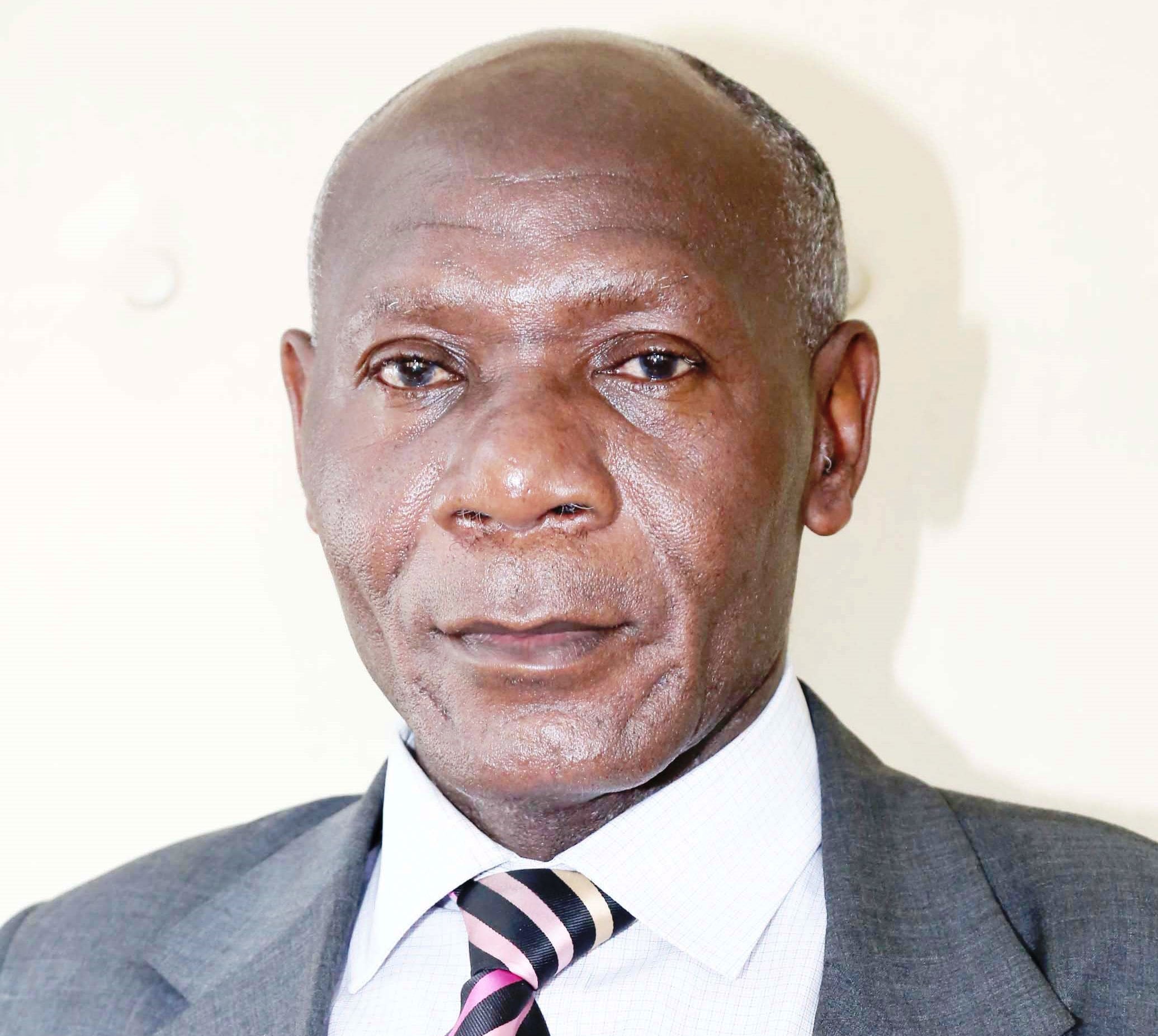
By Kennedy Buhere
Communication Specialist
0725327611
You can also follow our social media pages on Twitter: Education News KE and Facebook: Education News Newspaper for timely updates.
>>> Click here to stay up-to-date with trending regional stories
>>> Click here to read more informed opinions on the country’s education landscape