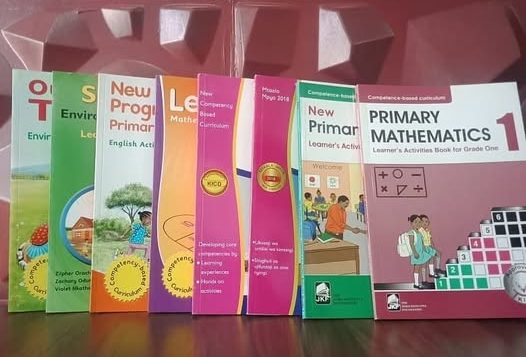
In recent weeks, several media reports have suggested that learning in Grade 10 has been crippled due to the lack of textbooks. While these concerns are understandable, they are largely informed by the mindset of the former 8-4-4 system, where textbooks were the backbone of instruction. Under the Competency-Based Education (CBE) as designed by the Kenya Institute of Curriculum Development (KICD), learning is structured very differently. The absence of textbooks at this stage, therefore, should not be interpreted as a collapse of learning.
CBE is guided by curriculum designs, not textbooks. According to KICD, curriculum designs clearly outline learning outcomes, competencies, suggested learning experiences, key inquiry questions, and assessment approaches. These designs are the primary instructional tools for teachers and learners. Textbooks, where available, are only support materials-not the drivers of learning. As long as teachers are using the approved curriculum designs, teaching and learning can proceed meaningfully.
At Senior School level, CBE emphasizes the development of competencies, including critical thinking, communication, collaboration, creativity, digital literacy, and self-efficacy. Learning is meant to be learner-driven, inquiry-based, and application-oriented. Teachers act as facilitators, guiding learners through tasks, projects, research, problem-solving activities, and real-life applications. These learning experiences do not depend entirely on printed textbooks.
It is also important to note that Grade 10 learners have already selected career pathways and subject combinations aligned to their interests, abilities, and future aspirations. Once teachers assign learning tasks based on the curriculum design, learners are expected to research, collaborate, and generate solutions using a variety of resources. In today’s digital world, learners have access to search engines, online journals, simulations, videos, virtual labs, and open educational resources that support deep understanding and skills acquisition. This aligns directly with KICD’s expectation of independent inquiry and digital competence.
ALSO READ:
The public must also appreciate the complexity of Senior School curriculum implementation. Unlike the previous system where all learners studied the same subjects nationwide, CBE Senior School offers multiple pathways with numerous subject codes. Textbook procurement under such a system cannot be rushed. The government must first establish how many learners are enrolled in each subject code across more than 9,000 secondary schools. For instance, a subject code offered in one C1 school may not be offered in another, and even where it is offered, learner numbers may differ significantly. Procuring textbooks without accurate enrollment data would be inefficient and financially irresponsible.
Furthermore, CBE assessment is continuous and formative. CBE emphasizes Assessment for Learning (AfL), where learners demonstrate competencies through projects, portfolios, presentations, practical tasks, and reflections. These assessments rely more on learner engagement and real-world application than on textbook content. In fact, over-reliance on textbooks risks pulling CBE back toward rote learning, which the curriculum deliberately moved away from.
It is therefore unfair to conclude that learning has stalled simply because textbooks are not yet in schools. What is required at this stage is a mindset shift among parents, the public, and even some educators-from textbook dependency to curriculum fidelity, from content coverage to competency development.
This is not to suggest that textbooks are unimportant. They are valuable learning resources and will play a supportive role once procurement is complete. However, their temporary absence does not invalidate CBE nor does it halt learning. Transition phases in major education reforms inevitably come with adjustment challenges, and patience is essential.
In conclusion, learning in Grade 10 under CBE is not crippled. It is unfolding in a new way-guided by curriculum designs, driven by learners, supported by digital resources, and focused on real-life application. If Kenya is to fully realize the vision of CBE as articulated by CBC Vision-of producing engaged, empowered, and ethical citizens-then the nation must allow the system to operate as designed, rather than judging it using outdated benchmarks.
By Polycap Ateto
Polycap is a ranking teacher and a CBE champion.
You can also follow our social media pages on Twitter: Education News KE and Facebook: Education News Newspaper for timely updates.
>>> Click here to stay up-to-date with trending regional stories
>>> Click here to read more informed opinions on the country’s education landscape