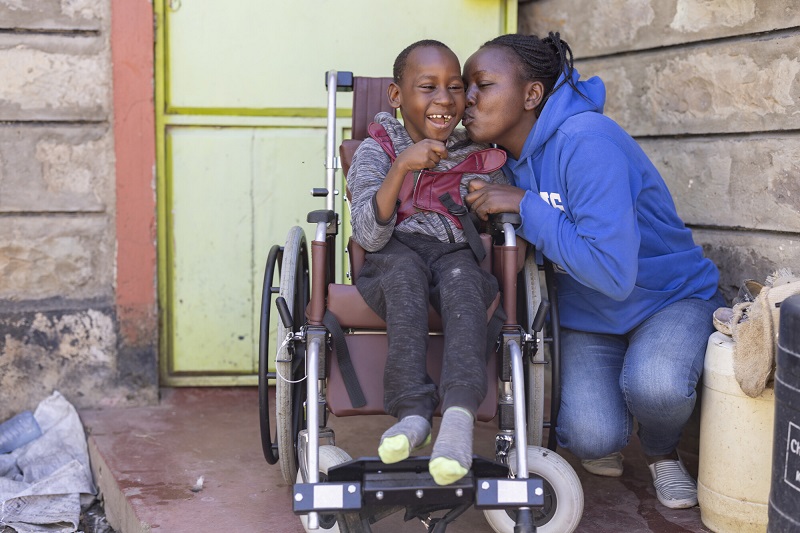
Often, giving is associated with receiving, or at least the hope of receiving, to refill the emptied pot. However, for parents of children with disabilities, receiving care and support remains a gap to be filled. Yet, they often bear the heaviest burden of care, coupled with physical, psychological, emotional, and financial strain.
Globally, there is a growing recognition that supporting parents is not a luxury but a necessity (Lancaster et al., 2023; Loucaides et al., 2024; Savari et al., 2023). Parents’ well-being directly influences the consistency of care, the child’s school attendance, and the uptake of therapies. Despite its importance, support for parents of children with disabilities, especially in low and middle-income countries such as Kenya, remains low.
As policies are developed, systems are structured, and streamlining takes place, a critical population tends to be left out: the parents and caregivers of children with disabilities.
Research evidence through a study titled Autism Spectrum Disorders: Evidence on Education, Therapy and Support Services in Kenya, conducted by the African Population and Health Research Center reveals that caring for a child with autism, for instance, is costly, stressful, emotionally challenging, physically exhausting, and leads to social isolation of the parent or caregiver.
ALSO READ:
Narok DG calls on Ololmasani residents to support Maasai Mara University feasibility study
In the study, which focused on caring for children with autism, the most frequently cited challenge by parents was that caregiving is costly (21.1%), closely followed by being stressful (19.6%) and emotionally challenging (17.4%). This triad of financial, psychological, and emotional strain captures the weight of parents’ burden. Parents’ voices illustrate these categories. On cost, one parent said,
“I cannot even explain… every shilling goes to this child. School fees, therapy, transport. We eat last.” One stressed parent confessed, “Sometimes I feel like my head will explode. You are running up and down, and still nothing changes.”
Emotional challenges were described in terms of heartbreak and helplessness. A parent shared:
“You see other children reading, playing, and your own is still not talking. It pains you daily.” Physical exhaustion (14.6%) was also highlighted in conversations with parents.
Many of them talked about sleepless nights, managing meltdowns, or carrying older children who were hyperactive or non-verbal.
“He doesn’t sleep, so I don’t sleep. Then in the morning I go to the market. My body is finished.” Another parent admitted.
Social isolation (12.8%) and time-consuming (12.9%) also featured prominently. Parents said they often felt cut off from extended family and friends. One parent explained, “You are not invited anywhere because they fear your child. Even church, people move away.”
ALSO READ:
Government to increase primary school capitation in 2026/2027 FY
To cope with these demands, parents indicated that they mainly share their worries with other parents of children with disabilities (30.3%) and pray (26.7%). This point highlights peer support and faith as the most commonly adopted coping strategies among parents.
During discussions with parents, they spoke warmly of connecting with others in similar situations. One parent said, “When we meet as parents, you see you are not alone. You even laugh about things.”
The findings show that parents need care. The majority of the parents, about 94% said that they required psychosocial support. This may reflect the intensity of caregiving, but it also reveals a neglected policy and practice space: while most autism programs center on the child, far fewer address the parent.
Although many parents needed psychological support, only a handful reported talking to a counsellor. In countries with more developed mental health services, parent training and counselling are considered essential components of autism intervention packages (McConachie & Diggle, 2007). Kenya’s absence of such services leaves parents to improvise.
In Kenya, where extended families are no longer as reliable as they once were, formal structures may need to fill the gap. Subsidized counselling, structured peer support groups, and targeted financial assistance could be starting points.
Support services for parents are both urgently needed yet absent. Nearly every parent admitted to the need for psychosocial support, and they were open about the stress, exhaustion, and isolation they face. These voices remind us that autism interventions cannot stop with the child; the well-being of parents should be part of the package.
By Dr. Fridah Kiambati and Davis Muli Musyoki.
About Writers
Dr.Fridah is an inclusive educator, researcher, and information scientist at The African Population and Health Research Center in the Human Development Theme.
Davis is a Communications Officer in the Synergy Unit within the Policy Engagement and Communications (PEC) division at the African Population and Health Research Center.
You can also follow our social media pages on Twitter: Education News KE and Facebook: Education News Newspaper for timely updates.
>>> Click here to stay up-to-date with trending regional stories
>>> Click here to read more informed opinions on the country’s education landscape