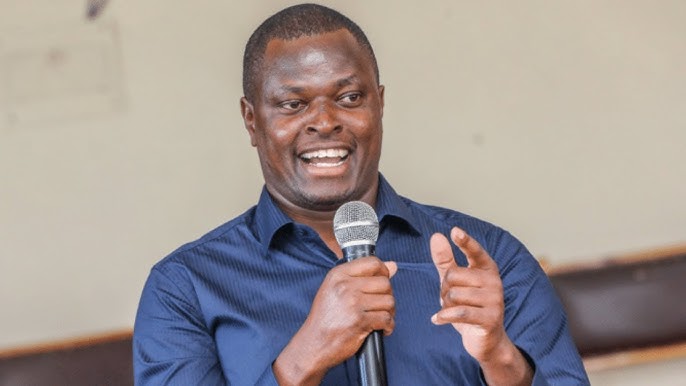
Kiharu Member of Parliament, Ndindi Nyoro, has unveiled a proposal for the creation of a national education kitty to finance free day secondary education across the country, including meals. He argues that the initiative, requiring KSh30 billion annually, can be achieved by consolidating existing devolved funds and supplementing them with direct support from the national government.
Nyoro explained that the plan would pool KSh10 billion from the National Government Constituencies Development Fund (NG-CDF) and another KSh10 billion from county governments, deducted from their equitable share. The remaining KSh10 billion would be injected by the national government through budget adjustments within the Ministry of Education.
Nyoro said the proposal builds on the Masomo Bora Programme recently launched in Kiharu constituency, where parents pay only KSh500 per term for tuition and meals.
“What we did in Kiharu on launching a programme where learners pay KSh500 per term is the journey towards totally free basic education in Kenya, and we’re going to make it happen,” Nyoro told a public forum in Mombasa.
Nyoro described the Kiharu model as a practical step towards guaranteeing every Kenyan child access to education, but cautioned against relying solely on constituency-based programmes. He warned that such approaches could widen inequalities if implemented unevenly across the country. “Instead of me doing this programme in Kiharu and another one doing it in their constituency, my proposal is simple, and we will do it. I will be the champion of the programme, and it will be done,” he said.
ALSO READ:
Nyoro said each constituency would contribute KSh30 million, translating to KSh10 billion nationally, while county governments would add another KSh10 billion. The final KSh10 billion would come from the national government.
“Kenya requires only KSh30 billion to make day secondary school education totally free, including lunch,” he emphasized.
The MP insisted that the push for free secondary education is long overdue and should begin immediately. He called for urgency, proposing that the programme be rolled out from term two of 2026. He added that a national kitty would end the practice of politicians using education support as a campaign tool during election periods.
Nyoro linked free and quality education to long-term economic growth, arguing that education is a key driver of development.
“Because in all economic models, education is the number one parameter for the economy to grow,” he said. He further noted that Kenya has sufficient resources but struggles with effective management.
By Masaki Enock
You can also follow our social media pages on Twitter: Education News KE and Facebook: Education News Newspaper for timely updates.
>>> Click here to stay up-to-date with trending regional stories
>>> Click here to read more informed opinions on the country’s education landscape