In theory, education is the great equalizer. It is supposed to level the playing field, lift the disadvantaged, and offer every child—regardless of birthplace—a fair chance at success. In practice, however, geography has become one of the most powerful determinants of educational destiny. Across the country, a deep and widening divide persists between urban and rural schools, creating two parallel education systems: one advantaged, visible, and resourced; the other neglected, struggling, and too often ignored.
This divide is not always loudly announced. It does not always show up in policy speeches or official reports. Yet it reveals itself daily—in classrooms without teachers, schools without laboratories, learners without textbooks, and communities without hope. Urban advantage and rural neglect have become normalized, accepted as inevitable rather than confronted as a national failure.
Urban schools benefit from proximity: proximity to government offices, training centers, inspectors, donors, NGOs, private partners, and political power. They attract better staffing, faster infrastructure development, stronger internet connectivity, and more opportunities for enrichment. Rural schools, by contrast, suffer from distance—distance from decision-makers, from resources, from reliable infrastructure, and often from sustained attention. Over time, this distance hardens into disadvantage.
Teacher deployment is one of the clearest illustrations of this inequality. Urban and peri-urban schools often enjoy relatively stable staffing, access to subject specialists, and opportunities for professional development. Rural schools, particularly in arid and semi-arid regions, struggle with chronic understaffing, frequent transfers, and high teacher turnover. Young teachers view rural posting as a temporary hardship to be escaped, not a professional opportunity to be embraced. Experienced teachers seek urban transfers for family, medical, or career reasons. The result is predictable: rural learners are taught by fewer teachers, often overstretched, sometimes untrained in key subjects, and rarely supported through sustained mentorship.
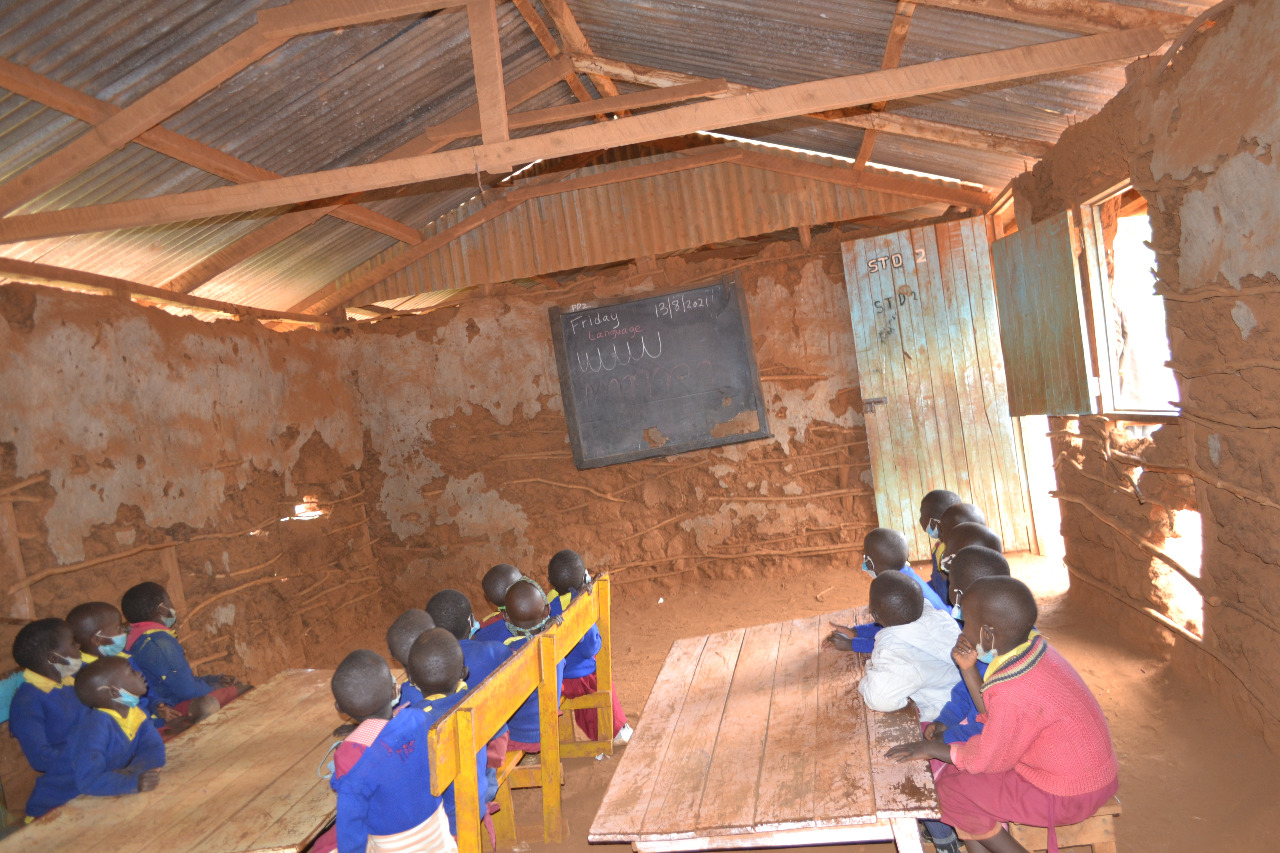
Infrastructure tells a similar story. Urban schools are more likely to have permanent classrooms, electricity, water, laboratories, libraries, and digital devices. Rural schools still grapple with dilapidated classrooms, overcrowding, poor sanitation, and lack of basic learning facilities. In some areas, learners walk long distances to school, arrive tired and hungry, and study in environments that actively undermine concentration and motivation. Yet they are assessed using the same national standards as their urban counterparts, as if conditions were equal.
The digital divide has further deepened this inequality. While urban schools experiment with digital learning, online assessments, and blended instruction, many rural schools lack electricity, devices, or internet connectivity. The push toward digital education, though well-intentioned, risks becoming another layer of exclusion. When learning increasingly assumes access to technology, those without it are silently left behind. Digital equity remains a slogan rather than a lived reality.
Under the Competency-Based Education framework, the urban–rural gap becomes even more pronounced. CBE requires resources: materials for projects, tools for practical activities, time for individualized assessment, and close teacher–learner interaction. Urban parents are better positioned to supplement school resources, support projects, and access learning materials. Rural parents, many struggling with poverty, seasonal incomes, or food insecurity, cannot provide the same support. The consequence is unfair: learners are assessed on competencies they have had unequal opportunities to develop.
Parental involvement itself is shaped by geography and socioeconomic reality. Urban parents are more likely to have formal education, flexible work schedules, and access to information about curriculum expectations. Rural parents may value education deeply, but face barriers of literacy, time, and economic survival. When schools assume equal parental capacity across contexts, they inadvertently penalize rural learners for circumstances beyond their control.
Language and exposure also play a role. Urban learners are often exposed to diverse linguistic environments, media, libraries, museums, and cultural experiences that enrich learning. Rural learners’ worlds may be narrower—not by choice, but by circumstance. This is not a deficit of intelligence or potential; it is a deficit of opportunity. Yet our education system frequently confuses the two.
Perhaps most troubling is how normalized this inequality has become. Poor performance in rural schools is often explained away as inevitable, blamed on culture, poverty, or remoteness. Low expectations take root. Mediocrity is tolerated. Excellence is treated as an urban preserve. In doing so, we waste talent on a massive scale.
This normalization is reinforced by policy design that assumes uniformity where diversity exists. One-size-fits-all policies, curricula, assessment timelines, and resource allocation formulas fail to account for contextual realities. Equity does not mean giving everyone the same thing; it means giving each learner what they need to succeed. When rural schools receive the same allocation as urban schools despite vastly different challenges, inequality is not reduced—it is entrenched.
The consequences extend beyond individual learners. Rural neglect fuels national inequality, regional marginalization, and social fragmentation. When generations of rural children receive substandard education, their chances of accessing higher education, formal employment, and leadership positions diminish. This perpetuates cycles of poverty and exclusion, undermining national cohesion and economic development.
Education systems that ignore rural realities ultimately undermine themselves. A nation cannot develop on the strength of its cities alone. Rural communities produce farmers, teachers, health workers, artisans, and leaders who sustain the country. When their education is neglected, the entire society pays the price.
What makes this situation particularly painful is that rural learners often demonstrate extraordinary resilience. They learn under trees, share textbooks, walk long distances, and persist despite adversity. Their determination is not the problem. The system’s failure to match that determination with support is.
Reversing urban advantage and rural neglect requires deliberate, courageous action. First, resource allocation must be explicitly equity-driven. Rural schools should receive enhanced funding, infrastructure support, and staffing incentives—not as charity, but as justice. Incentives for teachers in hardship areas must be meaningful, sustained, and professionally rewarding.
Second, teacher preparation and deployment policies must treat rural service as a valued professional pathway, not a punishment. Strong mentorship, housing support, career progression, and recognition can transform rural teaching from a burden into a calling.
Third, curriculum implementation must be context-sensitive. CBE activities should be adaptable to local realities, drawing on community knowledge, local resources, and culturally relevant experiences. Assessment should recognize context, not ignore it.
Fourth, digital inclusion must move beyond pilot projects and slogans. Rural electrification, connectivity, and device provision are education priorities, not luxuries. Without them, digital education will remain an urban privilege.
Finally, leadership matters. Strong school leadership can mitigate many disadvantages, but only if leaders are supported, trusted, and empowered. Rural school heads often work under extreme pressure with minimal support. Investing in their capacity is investing in entire communities.
Urban advantage and rural neglect are not natural phenomena. They are policy choices, funding decisions, and leadership priorities made over time. They can be unmade—but only if we acknowledge them honestly and act deliberately.
If education is truly to be the great equalizer, then where a child is born must stop determining how far they can go. Until rural schools are treated not as afterthoughts but as national priorities, the promise of equal education will remain unfulfilled—a noble idea betrayed by unequal practice.
By Hillary Muhalya
You can also follow our social media pages on Twitter: Education News KE and Facebook: Education News Newspaper for timely updates.
>>> Click here to stay up-to-date with trending regional stories
>>> Click here to read more informed opinions on the country’s education landscape