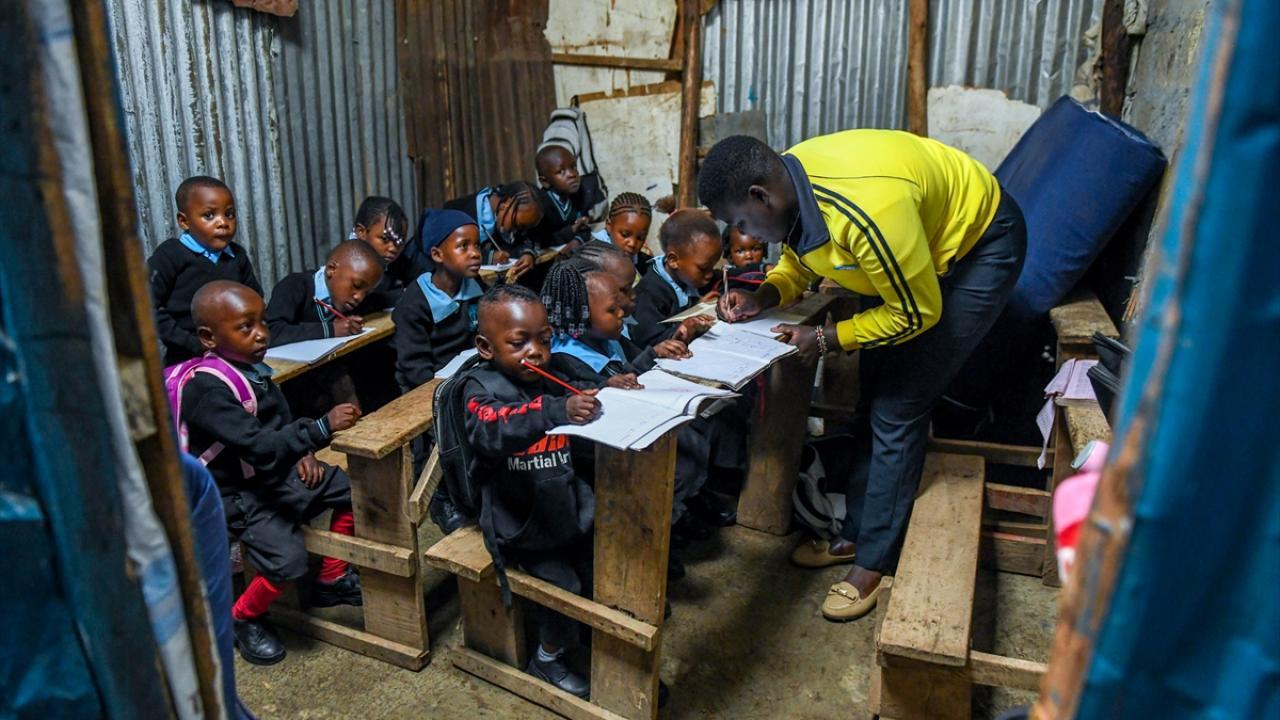
Pioneers of Competency-Based Education (CBE) are now in Grade 10. The firstborns of CBE have indeed transitioned from Junior to Senior School. Meaning, they’re the pacesetters of this new curriculum. To access success, the newbies in Grade 10 must behave maturely. Then, they must have a seismic shift of mindset. For attitude is one of the greatest determinants of success.
Zig Ziglar put it aptly, it’s attitude not aptitude that determines altitude. Attitude is about mindset and beliefs. Aptitude is the natural ability in doing things. In Geography, altitude is the height above the sea level. In this context, altitude is the far the Grade 10 student can climb academically.
Once the Grade 10 student reports to Senior School, it’s important to begin, learn and win. In a heroic book titled You Can Win, Shiv Khera argues that success is a journey, not a destination. Then, to begin to win, every Grade 10 student must cope with any challenge, change and culture shock. For in Yala, our grey-haired elders say, new levels, new devils. So, the successful Grade 10 student is the one who can fit in the 3 As: Adjusting, adapting and advancing.
As the new kid on the block, the Grade 10 student should see and seize success. Ideally, every Senior School has a unique culture and tradition. Then, there are particular academic practices and programmes. The successful Grade 10 student is the one that can attain a jig-saw fit in Senior School. Sometimes, a student can fail to access success in school because of inward rejection of the institution. More so, when there is a feeling that it wasn’t the school of choice. So, the student feels misplaced.
No wonder, the successful Grade 10 student must know, in The Greatness Syndrome, Pepe Minambo advised: Places do not make people, but people make places. A lizard in Africa cannot be a crocodile in America. Meaning, there is no excuse for failure because of the school. In a heroic book titled David and Goliath, which is based on the Biblical story in 1 Samuel 17, Malcolm Gladwell, the great Canadian journalist talks about underdogs, misfits and the art of battling giants. Then, he writes about The Big Fish Little Pond Effect.
ALSO READ:
What is it? Gladwell argues that the more elite an educational institution is; the worse students can also feel about their academic abilities. Top-tier schools are a meeting point and melting pot of veritable academic giants, which leads to academic pressure. Too true, academic pressure is palpable in top schools. Somewhat, the good news is, precious things are products of pressure, not pleasure. Think of gold and diamond. So, pressure makes people who yearn to win to focus on ample practice and preparation.
Meaning, the successful Grade 10 student is aware that joining a great school isn’t the direct ticket to peak performance in the formative School-Based Assessments (SBAs) in Grades 10 and 11, and the national summative KCBE assessment at the tail-end of Grade 12. Every Grade 10 student should set firm foundation for success in Senior School, which will span for 3 years – Grades 10-12. Formative assessment will be 30%. Whereas the summative assessment will be 70%.
Then, the successful Grade 10 student should understand that Senior School is the Pre-Career or Specialisation stage as stipulated in the Basic Education Curriculum Framework (2017). Once one is done and dusted with Senior School in Grade 12, there will be two possible options: Either proceed to tertiary institution for further studies. Or join world of work for worth of serving society.
On specialisation, both C1 and C2 Senior Schools are Triple Pathway Schools – offering 3 Career Pathways, which include: Science, Technology, Engineering, Mathematics (STEM), Social Sciences, and Arts and Sports Science. The C3 and C4 Senior Schools are all offering STEM as a compulsory Pathway. Alongside any other preferred Pathway: Social Sciences or Arts and Sports Science.
In Senior School, the Grade 10 student will be doing 9 subjects in perfect agreement with the policy document titled Guidelines for Implementation of Senior School Education (2025). There will be 4 Compulsory Subjects, which include: English, Kiswahili or Kenya Sign Language (KSL), Core-Mathematics or Essential Mathematics and Community Service Learning (CSL). There will 3 elective subjects picked from the preferred Career Pathways. The 4 Compulsory and 3 elective subjects will combine as the 7 subjects to be tested in KCBE at the end of Grade 12. There will be 2 supportive subjects in Senior Schools, which include: Physical Education (PE) and Information and Communications Technology (ICT).
ALSO READ:
Kisii County sets aside KSh3 billion for bursaries to support needy, bright learners
Advisedly, a successful Grade 10 student should align the choice of Pathways and subjects with future career prospects. Meaning, the Pathways, Tracks and Subjects opted for points to the future career. For example, some career opportunities in the STEM Pathway include: Engineering, architecture, medicine, nursing, clinical medicine, data science and cyber security.
Likewise, some career opportunities in Social Sciences Pathway include: Law, public administration, international relations, diplomacy, community development, social work and counselling. Then, some career opportunities in Arts and Sports Science Pathway include: Film and media production, acting, music performance, arts management, sports coaching, teaching PE, sports management, fitness training and sports medicine.
Finally, any Grade 10 student poised to access success in Senior School must be part of co-curricular activities (CCAs), non-formal programmes (NFPs) and learner-support programmes (LSPs): available in Senior Schools, enhancing holistic development. Co-curricular activities (CCAs) include: Science, Technology and Engineering Fair, Kenya National Drama and Film Festival, Kenya Music Festival, and games and sports.
Non-formal programmes (NFPs) will happen after quotidian lessons. The NFPs will focus on extending learning in practical and meaningful contexts. They include: Pastoral Programme of Instruction (PPI), school assemblies, clubs, societies and movements, games and sports, Science, Technology and Engineering Fair, Kenya National Drama and Film Festival, music festivals, exchange programmes, guidance and counselling services (GCS), and Community Service Learning (CSL) activities and projects.
Learner-Support Programmes (LSPs) include: Non-formal Programmes (NFPs), Co-curricular Activities (CCAs), Guidance and Counselling Services (GCSs), mentorship programmes, peer education programmes and Learner-Open Forums (LOFs).
By Victor Ochieng’
Victor Ochieng’ speaks in Grade 10 students’ and parents’ Plug-in Programmes: Orientation and Induction Days in Senior Schools. vochieng.90@gmail.com. 0704420232
You can also follow our social media pages on Twitter: Education News KE and Facebook: Education News Newspaper for timely updates.
>>> Click here to stay up-to-date with trending regional stories
>>> Click here to read more informed opinions on the country’s education landscape