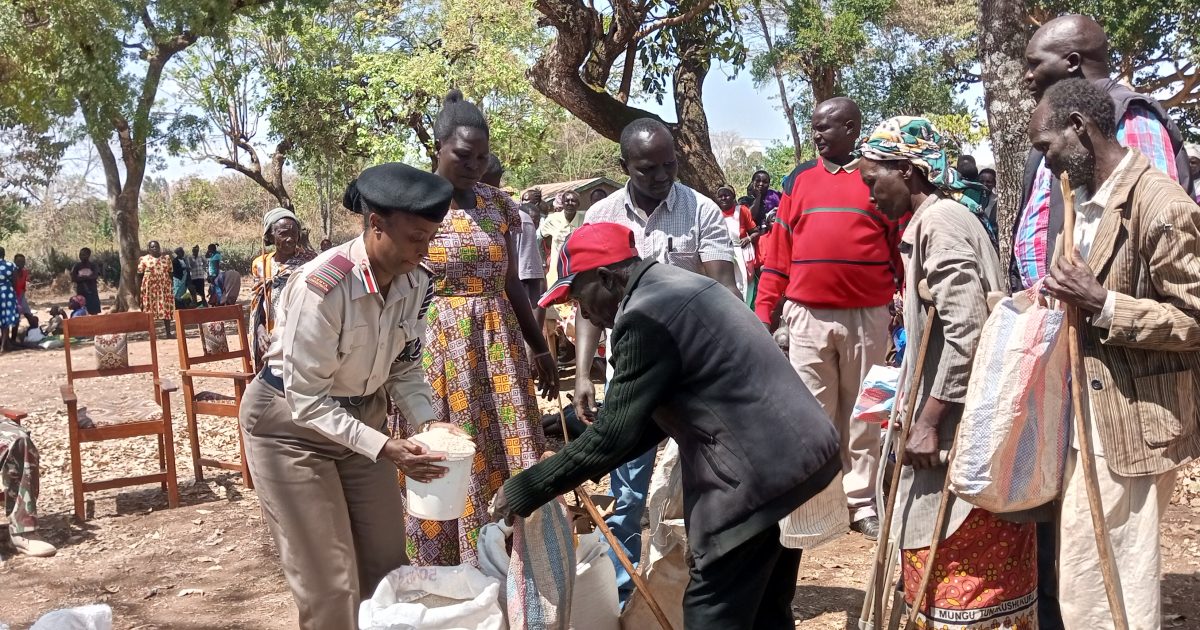
Food distribution has steadily emerged as one of the most critical pillars sustaining free schooling in West Pokot, a county where learning is often interrupted by hunger, poverty and the harsh realities of a fragile climate. While the government’s free primary and basic education policy removed tuition fees and opened school doors to thousands of children, experience on the ground shows that access alone is not enough. For many learners in this arid and semi-arid region, the presence or absence of a daily meal determines whether they attend school, remain in class and ultimately benefit from education.
West Pokot has long battled recurrent droughts that erode household food security and push families to the brink. In such circumstances, education easily becomes secondary to survival. Children are withdrawn from school to herd livestock, assist with household chores or search for food, while others attend classes on empty stomachs, unable to concentrate or participate meaningfully. It is within this context that food distribution to schools has become more than a welfare intervention; it has become a core strategy for sustaining free schooling.
Through joint efforts involving the national government, the county administration and development partners, food supplies are distributed to vulnerable schools across the county. These supplies, often cereals and basic foodstuffs, are used to prepare meals that ensure learners receive at least one reliable serving during the school day. In many cases, this meal is the most dependable source of food a child receives, particularly during prolonged dry spells when household stocks are depleted.
The impact of the school feeding programme is visible in enrolment patterns. Schools that benefit from regular food supplies consistently record higher enrolment, especially in early childhood centres and lower primary classes. Parents are more willing to send their children to school when they are assured the child will be fed. For families struggling to provide even a single meal a day, the school feeding programme becomes a powerful incentive that reinforces the value of education and restores trust in public schooling.
Retention has also improved markedly. Learners are less likely to drop out or miss school when food is available. Teachers report more consistent attendance, fewer cases of absenteeism and reduced dropout rates, particularly among vulnerable learners. The learning environment becomes more stable, enabling teachers to plan lessons with confidence and learners to progress without frequent interruptions.
ALSO READ:
No Books, No Labs, No Teachers: The tragedy of poorly planned transition to Senior School
Leadership and clear guidance have been central to sustaining these gains. West Pokot Sub-County Director of Education Amos Kibet has consistently offered counsel on how food distribution should be managed and protected to support free schooling effectively. His message to headteachers, parents and education stakeholders is clear: nutrition and learning are inseparable. A hungry child, he notes, cannot benefit fully from free education, regardless of how well designed the curriculum may be.
Kibet has urged school administrators to treat food supplies with the same seriousness as textbooks and learning materials. He has emphasised accountability, transparency and proper record-keeping to ensure that food reaches the intended beneficiaries. Mismanagement, wastage or diversion of food, he warns, undermines not only the feeding programme but the broader promise of free education. His guidance has prompted schools to strengthen systems for storage, preparation and distribution of meals, with oversight from boards of management and parents’ representatives.
The director has also highlighted the link between food distributions and improved learning outcomes. Well-fed learners are more attentive, energetic and engaged in classroom activities. Teachers observe better concentration, increased participation and calmer classrooms. Over time, these gains translate into improved academic performance and fewer behavioural challenges associated with hunger and fatigue.
Beyond the school gate, Kibet’s counsel extends to the wider community. He has called on parents and local leaders to support school feeding programmes by safeguarding school resources and encouraging regular attendance. Free education, he reminds stakeholders, is a shared responsibility. While the government provides policy direction and resources, communities must ensure that children attend school consistently and that support programmes are protected from neglect or misuse.
At the county level, food distribution aligns with broader development priorities. The West Pokot County Government has increasingly recognised that education cannot thrive in isolation from social protection measures. Budgetary allocations toward school feeding and nutrition programmes are designed to complement national initiatives, particularly in the most food-insecure zones. This coordinated approach reflects a growing appreciation that investment in children’s nutrition is an investment in human capital and long-term development.
ALSO READ:
Governor Barasa commissions state of the art ECDE centre in Mumias
The significance of food distribution goes beyond immediate educational benefits. It helps reduce child labour by keeping children in school, supports gender equity by encouraging the enrolment and retention of girls, and promotes social stability in communities affected by scarcity and competition over resources. For many learners, the school meal symbolises safety, routine and care, offering a sense of normalcy amid uncertainty.
Challenges nevertheless persist. Irregular supply, logistical constraints and rising enrolment continue to strain the programme. Climate change has intensified drought cycles, increasing the number of households that depend on school meals as a safety net. These realities underline the need for sustained funding, strong coordination and innovative approaches to ensure that food distribution remains reliable and responsive to changing needs.
The experience of West Pokot demonstrates that free schooling is not merely about removing fees, but about addressing the conditions that enable children to learn. Hunger remains one of the most formidable barriers to education in marginalised regions, and food distribution has proven to be among the most effective tools for overcoming it. When combined with strong leadership and consistent administrative counsel, such as that provided by Sub-County Director Amos Kibet, the programme becomes a powerful driver of access, equity and quality in education.
As Kenya continues to pursue inclusive education and equitable development, the lessons from West Pokot are instructive. Supporting free schooling requires a holistic approach that recognises the lived realities of learners. Food distribution, anchored in accountability and community support, bridges the gap between policy intentions and classroom realities. It ensures that the promise of free education is not defeated by hunger, but strengthened by care, commitment and collective responsibility.
By Hillary Muhalya
You can also follow our social media pages on Twitter: Education News KE and Facebook: Education News Newspaper for timely updates.
>>> Click here to stay up-to-date with trending regional stories
>>> Click here to read more informed opinions on the country’s education landscape