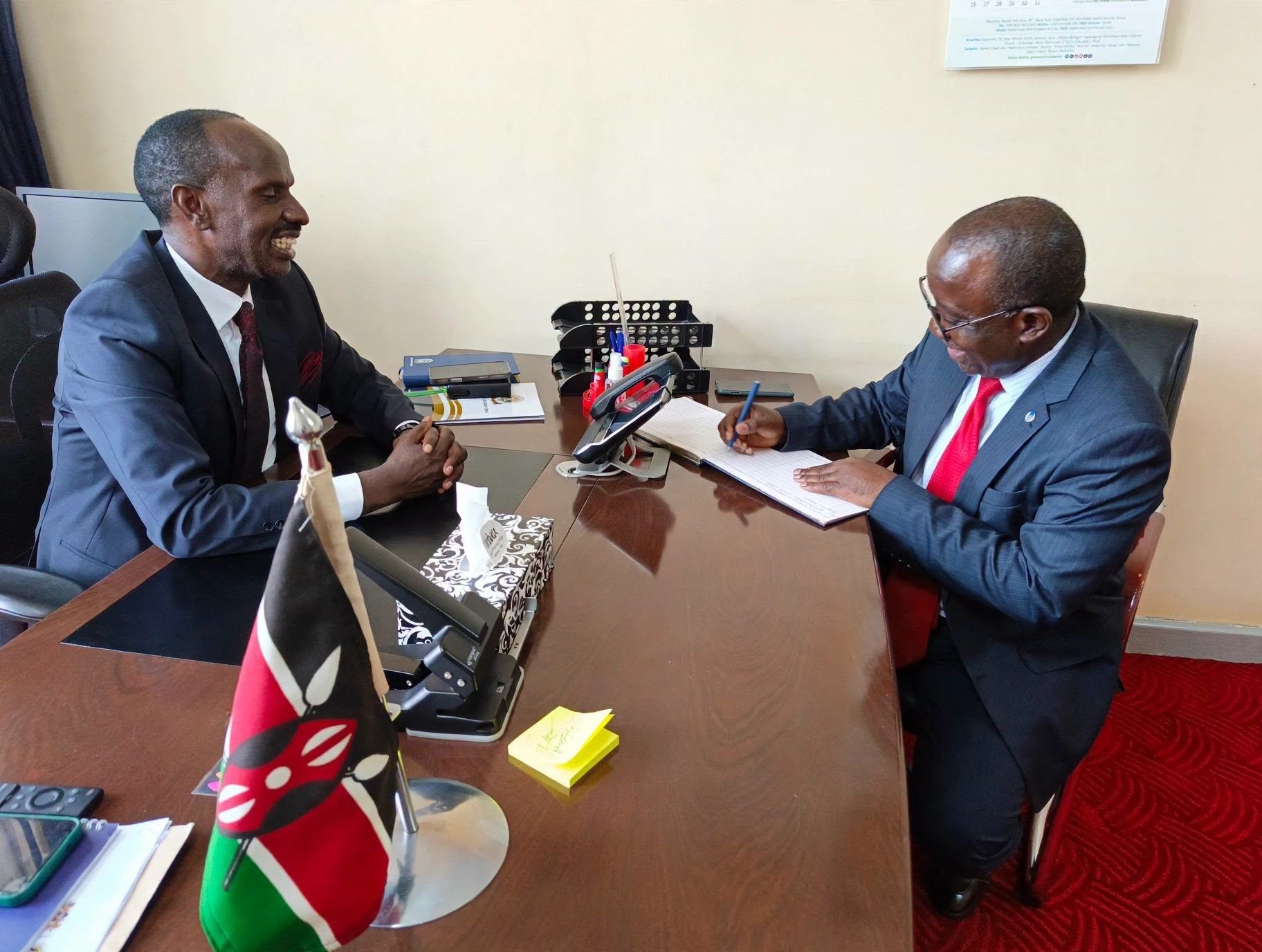
The Kenya National Union of Teachers (KNUT), has mounted pressure on the Teachers Service Commission (TSC) to review the unpopular promotion rules and revert to the old system, arguing that the current Career Progression Guidelines (CPGs) are failing the very professionals they were meant to serve.
This come amid reports that the government is considering reviving parts of the old scheme of service — the structured framework that once guided promotions, job grades, and professional advancement.
If implemented, this shift could restore predictability, fairness, and morale in a profession that forms the backbone of the nation’s future. Negotiations on best promotion methods with the Teachers Service Commission (TSC) and teachers’ unions are currently underway.
“Teachers across Kenya face similar challenges, and only through unity can we ensure that promotions are fair and careers are protected,” Martin Sembelo, West Pokot KNUT boss said, calling on educators to put aside divisions and focus on the common goal of professional recognition.
He also emphasised the need for fair transfers, arguing that teachers should be moved transparently and without favoritism, so that everyone has equal opportunity to serve and advance professionally.
“For decades, Kenya’s teaching career ladder has been predictable. Teachers moved from one grade to the next based on experience, qualifications, and performance. The scheme of service ensured that after every three years of service, teachers were elevated to the next grade, providing certainty, motivation, and a tangible reward for dedication.” He said
With this assurance, Sembelo added that teachers knew that diligence, competence, and time served would be recognised, making the profession structured and aspirational. “Under this system, teachers could focus on classroom excellence without worrying about arbitrary delays in promotion or transfers.”
ALSO READ:
Axis between teachers’ sacrifice and results outcome: A reality check for parents, educators
However in 2017, TSC replaced this system with the CPGs — an eleven-grade framework touted as modern, detailed, and performance-driven. In practice, it has done the opposite. Promotions are slow, stagnation is rampant, and many teachers find themselves trapped in limbo despite fulfilling their duties competently. The old system’s predictability, where after three years a teacher could count on elevation, has been lost, leaving a vacuum of frustration, demoralisation, and uncertainty.
Union leaders argue that the CPGs demoralise teachers, leaving them uncertain about their career paths. “Under the CPG, promotions are unpredictable, performance often goes unrewarded, and years of service count for very little,” a union representative told Parliament. The union insists that reverting to the scheme of service would restore fairness and clarity, giving teachers the professional recognition they deserve.
The leaders said that the debate is far from academic, noting that over the past decade, delays and irregularities in promotion interviews and transfers have frustrated thousands of educators. “Teachers who were once assured of career advancement under the old scheme now wait years to move from one job group to the next. Many teachers in remote counties have also reported unfair postings, with transfers often influenced by favoritism, connections, or tribal considerations, leaving them at a professional and personal disadvantage. This stagnation has left morale low and raised concerns about teacher retention, particularly in rural and marginalised counties.” They said
Sembelo emphasises that fair transfers are not just a matter of convenience; they are a fundamental aspect of teacher welfare. He added that teachers must be posted transparently and equitably to allow them to grow professionally while maintaining stability for their families.
“A teacher in West Pokot should have the same chance of serving and advancing as a teacher in Nairobi or Kisumu. Equity in transfers ensures fairness, professional growth, and confidence in the system,” he noted, adding that KNUT has made it clear that any revision of the Career Progression Guidelines must include measures for fair and merit-based transfers alongside predictable promotions.
The government has yet to officially announce a full return to the old system, but signals suggest it is listening. TSC has acknowledged the bottlenecks and promised to review the guidelines to make career progression fairer and more transparent. Hybrid models are on the table: combining the structure of the old scheme of service with the professional development and performance elements introduced by the CPGs. If well-implemented, such a system would ensure that teachers receive regular, predictable promotions while continuing to be rewarded for professional growth and classroom excellence.
Salary and allowance negotiations also play into this debate. The 2025–2029 Collective Bargaining Agreement (CBA) negotiated by KNUT, KUPPET, and KUSNET promises salary increases of up to 29.5% for the lowest-paid teachers, alongside better baggage allowances for transfers. Yet even with these gains, career progression and fair transfers remain the hot-button issues. Union negotiators insist that pay alone is not enough; teachers want promotions and postings that are predictable, merit-based, and transparent. The combination of delayed promotions and arbitrary transfers has left many teachers feeling undervalued, which risks impacting classroom performance and ultimately students’ learning outcomes.
ALSO READ:
The impact of stagnation and unfair transfers is visible in many counties. Experienced teachers often avoid rural postings, leaving schools in marginalised areas with less qualified staff. Students in these regions bear the consequences, facing overcrowded classrooms and reduced access to quality education. In contrast, predictable promotions and equitable transfers incentivise teachers to serve in challenging environments, ensuring talent distribution aligns with national educational needs.
KNUT’s advocacy extends beyond just pay and promotion. The union is calling for a comprehensive review of teacher welfare policies, highlighting the link between fair career progression, transfers, and professional dignity. The union’s petitions explicitly call on TSC to either revert to the old scheme of service or reform the current CPGs to incorporate the best elements of the previous system. “Teachers cannot continue to serve diligently while promotions and transfers remain a lottery,” KNUT officials have warned.
Unity among teachers is central to these efforts. Sembelo insists that tribal or regional divisions must not weaken the collective bargaining power of the profession. He stresses that teachers must see themselves as part of a single national workforce, advocating for policies that benefit all members equally. Only through unity can teachers ensure that the government enacts policies that restore fairness, protect careers, and reward dedication.
As negotiations continue in 2026, teachers across the country are watching closely. Any decision will not only determine the pace of promotions but also signal how much the government values education as a profession. A return to the scheme of service, even partially, combined with fair, transparent transfers, would be a clear message that teaching is respected, structured, and sustainable. It would reaffirm that after three years of service, teachers’ efforts are recognised, providing both motivation and professional stability.
The coming months could redefine what it means to be a teacher in Kenya. Will the government act decisively to restore fairness and predictability, or will teachers continue to navigate a system that has left them demoralised and uncertain? For the nation’s educators, the stakes could not be higher. A robust career progression framework, predictable promotions every three years, and fair transfers could restore confidence in the profession, improve teacher retention, and ensure quality education reaches every child across the country.
By Hillary Muhalya
You can also follow our social media pages on Twitter: Education News KE and Facebook: Education News Newspaper for timely updates.
>>> Click here to stay up-to-date with trending regional stories
>>> Click here to read more informed opinions on the country’s education landscape