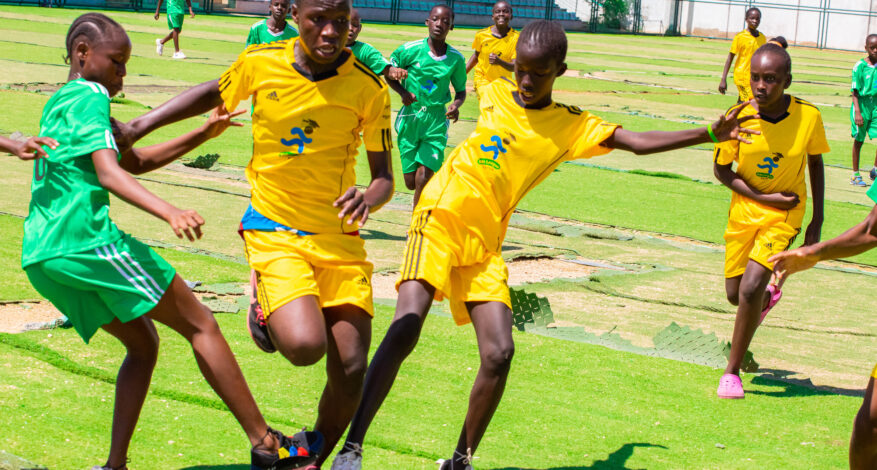
The Sports Science track under the Competency-Based Education (CBE) pathway is designed to professionalise talent, transform sport into a viable career, and ground athletic performance in science, data, health, and lifelong wellness. Unlike traditional school sports that focus mainly on competition and trophies, Sports Science treats physical activity as an academic, technical, and vocational discipline. For senior schools to implement this pathway credibly, they must invest in deliberate, specialised physical infrastructure that supports training, measurement, recovery, analysis, and safety. Without this infrastructure, Sports Science risks being reduced to ordinary games lessons rebranded under a new name, undermining both quality and equity.
At the core of Sports Science infrastructure is access to regulation-standard training and competition facilities. Senior schools must provide well-maintained playing fields suitable for multiple sports, including athletics tracks, football pitches, rugby fields, hockey grounds, and courts for basketball, volleyball, handball, tennis, and badminton where applicable. These facilities should meet basic safety and dimensional standards to allow learners to train under conditions comparable to those they will encounter at elite and professional levels. Proper drainage, turf management, marking, goalposts, and protective padding are essential, not cosmetic. Indoor sports halls are equally important, particularly for skill acquisition, strength training, and all-weather learning continuity.
Beyond fields and courts, Sports Science demands dedicated physical conditioning spaces. A well-equipped gymnasium or strength and conditioning centre is central to the pathway. This facility should include free weights, resistance machines, plyometric equipment, cardio machines, and functional training tools such as medicine balls, agility ladders, and resistance bands. The layout must allow supervised movement, correct posture, and injury prevention. Flooring should be shock-absorbent, ventilation adequate, and access controlled to ensure learner safety. This space is not a recreational gym but a learning laboratory where biomechanics, training principles, and performance progression are taught and observed.
ALSO READ:
Full list of public senior secondary schools released by MoE
Equally critical is a Sports Science laboratory or human performance lab. This space supports the academic backbone of the pathway by enabling learners to measure, analyse, and interpret physical performance. Equipment may include heart rate monitors, body composition analysers, VO₂ estimation tools, spirometers, flexibility and balance testing apparatus, reaction time systems, and basic motion analysis technology. Even where advanced equipment is limited, designated lab space allows learners to conduct experiments, record data, and apply theoretical knowledge in physiology, biomechanics, and kinesiology. The presence of such a lab distinguishes Sports Science as an academic discipline rather than extracurricular activity.
Injury management and athlete welfare infrastructure are non-negotiable. Senior schools must provide a physiotherapy and first aid room equipped for sports-related care. This includes treatment beds, ice and heat therapy equipment, taping supplies, braces, and basic rehabilitation tools. Recovery spaces, such as stretching zones or massage areas, support learning about post-exercise recovery, load management, and injury prevention. Changing rooms with lockers, showers, and sanitation facilities are essential, reinforcing dignity, hygiene, and professionalism. These spaces also allow learners to understand sports medicine, rehabilitation pathways, and ethical athlete care.
Sports Science is increasingly data-driven, making technology infrastructure a core requirement. Schools should establish analysis rooms equipped with computers, screens, and software for performance analysis, match review, and statistical tracking. Video recording equipment, including cameras and tripods, allows learners to analyse technique, tactics, and movement patterns. Reliable electricity and internet connectivity support research, virtual simulations, and exposure to global sports science practices. Without these digital spaces, learners cannot meaningfully engage with modern sports performance analysis or sports analytics careers.
Outdoor and specialised facilities also play a role depending on a school’s sports focus. Swimming pools, where available, support aquatics, rehabilitation, and endurance training. Altitude training spaces, cycling tracks, or fitness trails can enhance endurance sports learning. Even simple infrastructure such as marked fitness circuits, obstacle courses, and endurance routes supports experiential learning in conditioning and training adaptation. What matters is intentional design aligned to curriculum outcomes, not luxury.
ALSO READ:
MoE Outlines Official Procedure for Review of Grade 10 Senior School Placement
Equity is a central concern in Sports Science infrastructure. If only elite or well-funded schools can provide proper facilities, the pathway will deepen inequality rather than expand opportunity. Minimum national infrastructure standards are therefore essential to ensure that any senior school authorised to offer Sports Science can do so with credibility. Partnerships with community stadiums, county sports facilities, universities, and training centres can complement school infrastructure, but they should enhance—not replace—on-site learning spaces. Learners should not have to travel long distances or depend on privilege to access core facilities.
Ultimately, Sports Science infrastructure transforms sport from talent discovery to talent development and career preparation. It allows learners to understand their bodies, train intelligently, prevent injury, analyse performance, and explore careers as coaches, trainers, physiotherapists, analysts, sports managers, and researchers.
In the context of CBE, infrastructure is pedagogy. It communicates whether sport is valued as serious knowledge or treated as leisure. Senior schools that invest deliberately in Sports Science facilities affirm that athletic talent is intellectual capital and that excellence on the field deserves the same structural support as excellence in the laboratory. Without such infrastructure, the Sports Science pathway cannot fulfil its promise of quality, relevance, and equity in education.
By Ashford Kimani
Ashford teaches English and Literature in Gatundu North and serves as Dean of Studies.
You can also follow our social media pages on Twitter: Education News KE and Facebook: Education News Newspaper for timely updates.
>>> Click here to stay up-to-date with trending regional stories
>>> Click here to read more informed opinions on the country’s education landscape
>>> Click here to stay ahead with the latest national news.