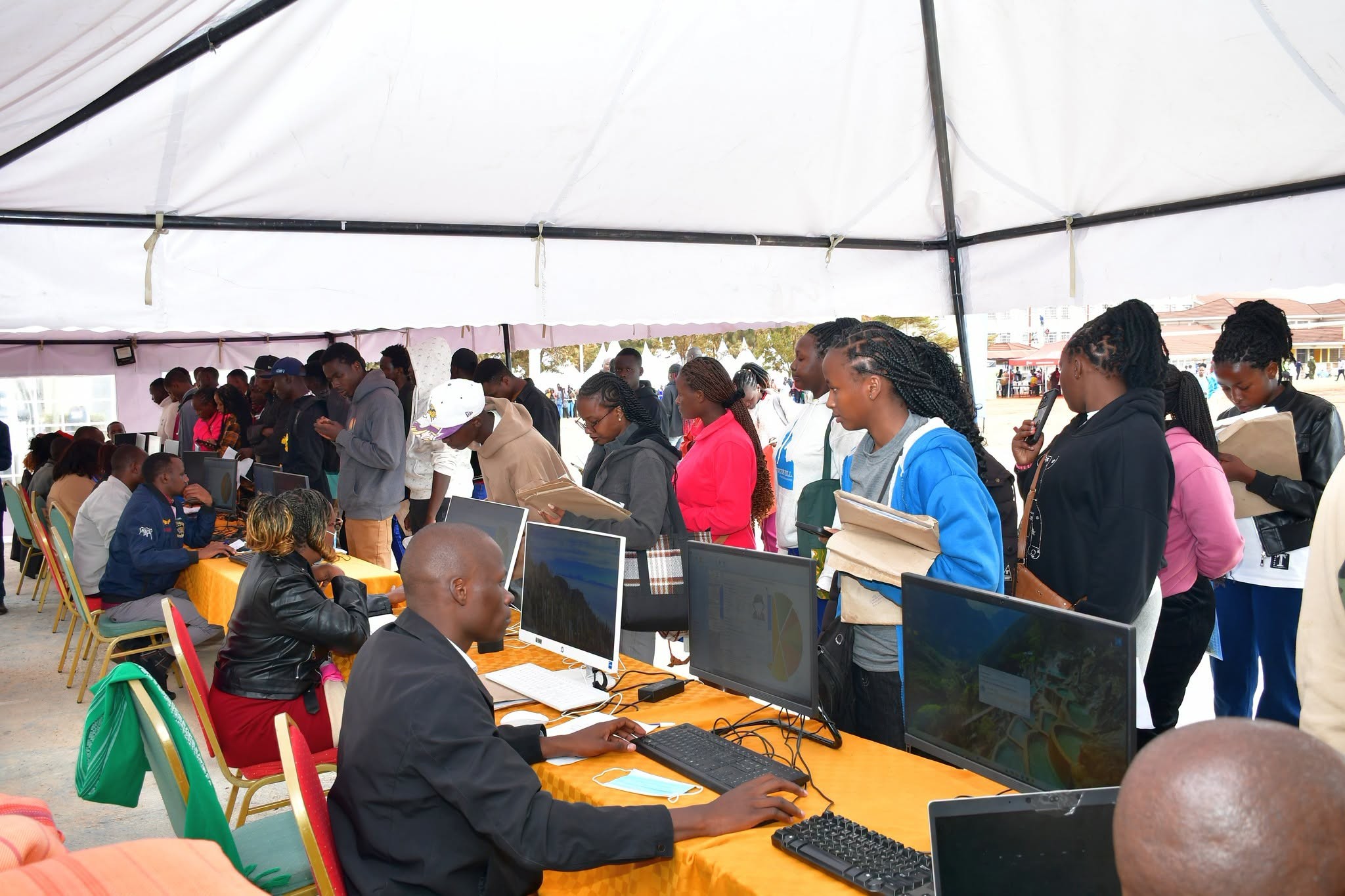
As the conversation around Senior School placement continues, an important but often uncomfortable question has emerged: what about private schools with excellent infrastructure, facilities, and well-developed Grade 10 Senior School ecosystems? Who will vouch for these institutions, many of which are equally competitive and, in some cases, capable of rivalling government C1 national schools? This question deserves sober reflection, not emotional dismissal, because it exposes a long-standing contradiction in Kenya’s education discourse.
There is no dispute that a significant proportion of learners transitioning to public C1 national schools are products of private junior schools. These learners have been nurtured, mentored, and academically prepared within private education ecosystems that parents trusted for years. Private schools invested heavily in teaching staff, learning resources, assessment systems, co-curricular development, and learner support. They built strong academic cultures, often from kindergarten through junior secondary, and consistently delivered strong outcomes. It is, therefore, intellectually dishonest to celebrate the output while dismissing the system that produced it.
Private Senior Schools with excellent infrastructure are not theoretical constructs; they exist across the country. Many have modern laboratories, well-equipped libraries, ICT integration, boarding facilities, small class sizes, robust learner welfare systems, and deliberate career guidance structures aligned to the Competency-Based Education framework. Some have invested ahead of policy, anticipating Senior School requirements long before the transition. In terms of physical environment, safety, and learning ecosystems, several of these schools meet—and sometimes exceed—standards found in long-established national schools.
Yet, despite this reality, private Senior Schools continue to struggle with perception and policy recognition. The prevailing narrative subtly suggests that excellence is the preserve of public C1 schools. At the same time, private institutions are seen either as commercial ventures or as second-tier alternatives for those who “missed out.” This perception is not only outdated but also counterproductive. It ignores the role private education has played in sustaining access, quality, and innovation in Kenya’s education sector for decades.
The question of who will vouch for private Senior Schools exposes a deeper systemic issue. Unlike public national schools, which benefit from historical branding, government endorsement, and guaranteed capitation, private schools must constantly prove their legitimacy. They are inspected, regulated, and expected to meet national standards, yet they operate without the symbolic validation that placement through government systems confers. When learners are centrally placed almost exclusively into public C1 schools, it sends an implicit message that private Senior Schools are peripheral, regardless of their quality.
This is particularly ironic given that the Competency-Based Education framework emphasises diversity of pathways, personalisation, and learner fit. If CBE is truly about matching learners to environments where they can thrive, then private Senior Schools with strong ecosystems should not be sidelined. They offer legitimate alternatives for families seeking continuity, stability, and specific educational philosophies. In many cases, learners who have spent their entire academic lives in private institutions adapt more seamlessly to private Senior Schools than to large, highly competitive public national schools.
READ ALSO:
TSC reshuffles principals in Nandi County ahead of CBE Senior School rollout
Another uncomfortable truth is that public C1 schools, impressive as they are, are not limitless in capacity. Their prestige has created enormous pressure, intense competition, and unrealistic expectations. Not every learner placed there will flourish. Some will struggle with scale, culture shock, or reduced individual attention.
Private Senior Schools, by contrast, often provide more personalised environments that can support both academic excellence and holistic development. To pretend that one model fits all learners is to misunderstand education itself.
Private schools also play a critical role in innovation. Freed from some bureaucratic constraints, they often pilot new teaching methodologies, assessment approaches, and learner support systems that later inform broader practice. Under CBE, where pedagogy matters as much as content, this flexibility is a strength, not a weakness. Dismissing private Senior Schools deprives the system of valuable partners in delivering quality education.
The issue, therefore, is not competition between public and private schools, but coherence within the national education ecosystem. Kenya does not need to choose between them; it needs both. Public C1 schools symbolise national unity, equity, and tradition. Private Senior Schools represent diversity, responsiveness, and innovation. When properly recognised and integrated, they complement rather than threaten each other.
Parents, too, must interrogate their own contradictions. It is inconsistent to entrust a child’s foundational years to private schools, celebrate their success in national assessments, and then suddenly regard private Senior Schools as inferior. Such thinking reduces education to a single moment of placement rather than a continuum of growth. If a private school has demonstrably prepared a learner well, it should not be disqualified from continuing that journey simply because of perception.
Ultimately, vouching for private Senior Schools requires honesty from policymakers, educators, and parents alike. Quality should be recognised where it exists, regardless of ownership. Placement frameworks should evolve to acknowledge excellence across both public and private institutions, guided by standards, outcomes, and learner welfare rather than historical prestige alone.
As Kenya navigates this delicate transition into full CBE implementation, the conversation must mature. The future of Senior School education cannot be built on old binaries of public versus private. It must be built on trust, evidence, and a shared commitment to learners. Private Senior Schools with strong infrastructure and ecosystems are not outsiders; they are already shaping the learners who fill public C1 classrooms. Recognising their place in the system is not a concession—it is an affirmation of educational reality.
By Ashford Kimani
Ashford teaches English and Literature in Gatundu North Sub-county and serves as Dean of Studies.
You can also follow our social media pages on Twitter: Education News KE and Facebook: Education News Newspaper for timely updates.
>>> Click here to stay up-to-date with trending regional stories
>>> Click here to read more informed opinions on the country’s education landscape
>>> Click here to stay ahead with the latest national news.