When many Kenyans in formal employment approach retirement, uncertainty often replaces excitement as questions about income, purpose and stability begin to dominate their thoughts.
But for former Chogoria Boys High School Principal, Nkonge Mbwiria, the transition to life after work came with confidence, not fear.
Mbwiria, who retired in December 2022 after decades in the teaching profession, says careful planning, disciplined saving and early investment made his exit from public service smooth.
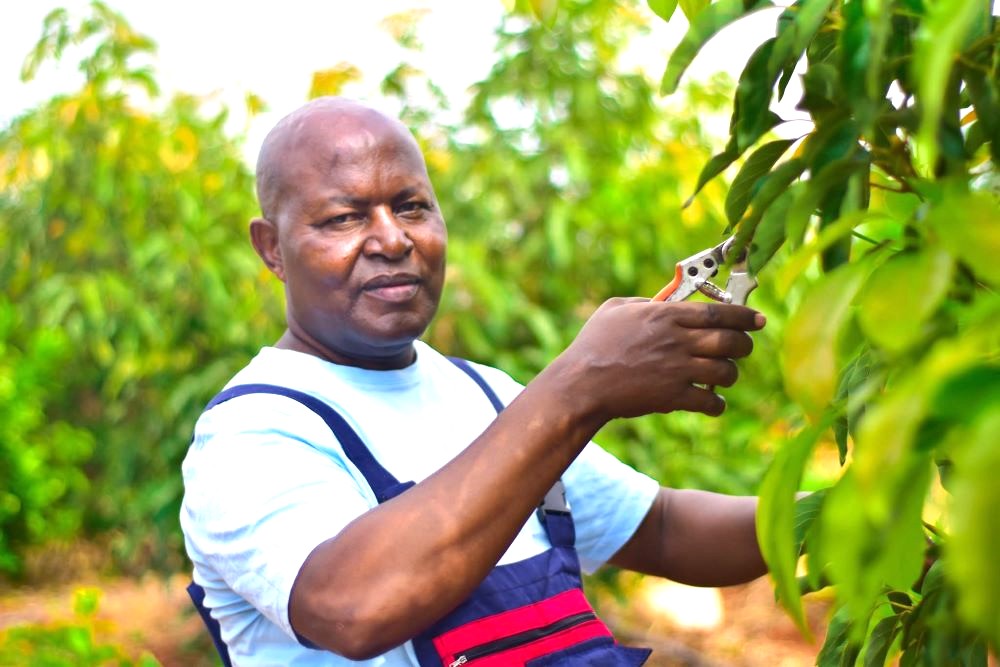
At his Yururu home in South Imenti, Meru County, the retired educator enjoys a busy but fulfilling routine running thriving agribusiness projects.
“Life in retirement can be stressful if you don’t plan,” he says. “Many people leave employment without any solid source of income and end up regretting lost opportunities.”
Mbwiria began preparing for retirement soon after he joined the profession in 1988.
While teaching at St. Mary’s Girls’ Igoji, the school allocated teachers small pieces of land.
He teamed up with a colleague to start a dairy unit, supplying milk to local households while providing for his young family.
His interest in farming only grew over time.
READ ALSO:
Retiring Education Director launches inspirational book on resilience
He reinvested his savings to expand the dairy enterprise, at one point keeping 60 animals before scaling down to 15 to diversify into crop farming.
“When my retirement benefits were delayed at the Teachers Service Commission, I survived by selling cows to pay school fees,” he recalls.
Today, Mbwiria owns thousands of fruit trees spread across different farms in Igoji, Abogeta and Central Imenti.
His agricultural portfolio includes:
7,000 coffee bushes, 1,800 citrus trees, 3,000 plantain stems and 300 avocado trees.
He admits he lost most of his initial avocado crop due to inadequate knowledge, a mistake that pushed him to hire professional agronomists to support his citrus and avocado ventures.
Plantain farming, he says, has become one of his most lucrative projects.
“The market for plantains is strong. They fetch about Sh 80 per kilogram, which is much better than the price of ordinary bananas. Avocados are also a good source of income,” he notes.
The retired principal employs eight permanent workers and occasionally hires casual labourers for harvesting, weeding and other tasks.
Besides farming, he has also invested in real estate in Nkubu and Igoji.
Mbwiria credits his success to strict saving habits and financial discipline.
Over the years, he relied heavily on Mwalimu Sacco, growing his loan capacity from Sh1,000 in the 1980s to as high as Sh15 million to expand his projects.
“Without savings and loans from Mwalimu Sacco, I would never have managed to put my children through school,” he says.
His daughter is now a lawyer, while his son is training to become a pilot.
With the sun setting on his teaching career, Mbwiria now finds joy in farm life, mixing manure, tending his cows, and checking his crops daily.
He says retirement does not have to mean boredom, poverty or sitting idle in shopping centres sharing old stories.
“If anything, I am busier now than when I was managing a school,” he says with pride. “The key is to plan early, save consistently and invest in ventures that will sustain you long after employment.”
By John Majau