The Kenya Union of Special Needs Education Teachers (KUSNET) has asked the government through the Ministry of Education to release the capitation for 20 Special Needs Education (SNE) schools that missed out government funding before schools reopen in January next year.
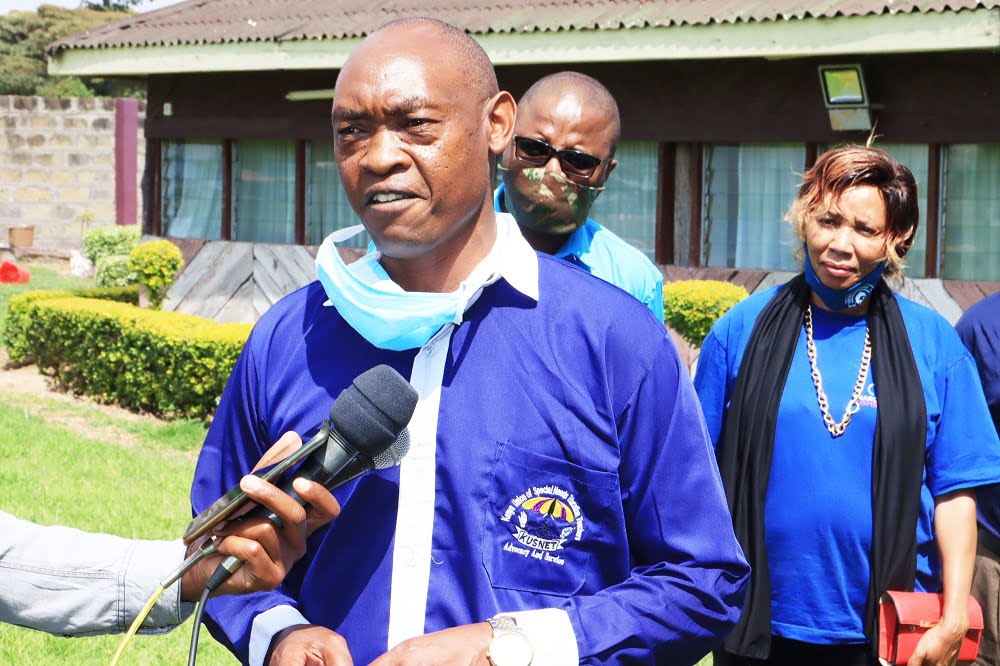
KUSNET Secretary General James Torome told Education News in an interview on December 02, 2025 that the 20 SNE schools didn’t receive any capitation for second and third term, a move that made the school Principals and Headteachers of the affected special schools to operate under a strenuous environment.
He added that the said capitation should be released jointly and be dispatched to the affected SNE school account as one bunch consisting of capitation for second and third term and the same be released timely to enable the school heads to plan adequately for reopening in January 2026.
“There are around 20 Special Needs Schools that never received even a single cent and we are asking the Ministry of Education to consider these schools that were left out as they prepare to release the final bunch of capitation to schools. These affected schools should receive capitation for both second and third term at once as one bunch before reopening. The same should be released in time for Principals and Headteachers to prepare for the opening of the first term come January next year,” said Torome.
ALSO READ:
First lady Rachel Ruto hosts Kilifi 4K Club learners for agricultural study tour in Uasin Gishu
Under the Free Primary Education (FPE) Programme, the government allocates Ksh1,420 per student. Junior school learners receive Ksh15,042 each, while secondary school students under the Free Day Secondary Education (FDSE) programme are allocated Ksh22,244 per learner, although this figure has in the recent past reduced to approximately Ksh15,000.
For SNE learners, the government pays a subsidy of Ksh53, 807 annually per learner which comprise of Ksh19, 053 per leaner for boarding equipment and stores and a top up grant of Ksh12, 510 per leaner to cater for assistive devices and any additional personnel needed.
This capitation is released to schools in three phases of 50 per cent allocation in term one, 30 per cent in term two, and 20 per cent in term three.
By Roy Hezron
You can also follow our social media pages on Twitter: Education News KE and Facebook: Education News Newspaper for timely updates.
>>> Click here to stay up-to-date with trending regional stories
>>> Click here to read more informed opinions on the country’s education landscape