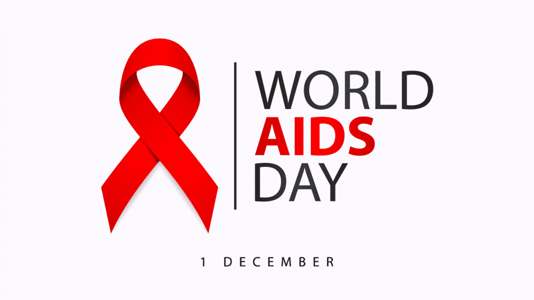
As Kenya marks World AIDS Day, a heavy cloud hangs over the nation. Beneath the commemorations and official messages lies a silent and escalating tragedy among our youth. Fresh data released by the National Syndemic Diseases Control Council (NSDCC) has flagged a worrying surge in HIV infections among adolescents and young adults aged 15 to 24—an age bracket expected to carry Kenya into its next chapter of growth, innovation, and leadership.
The statistics are sobering. According to the latest NSDCC county analysis, youth aged 15–24 now account for nearly 42% of all new HIV infections in Kenya. Counties in the Lake Region remain the epicentre of the crisis: Homa Bay leads with a prevalence of 20.7%, followed closely by Kisumu at 16.3%, Siaya at 15.3%, and Migori at 13%. These four counties alone contribute over 30% of new youth infections. But the scourge is no longer confined to traditionally high-burden regions. Nairobi’s youth prevalence has climbed to 6.1%, Nakuru is rising at 4.4%, while emerging hotspots like Turkana, West Pokot, Baringo, and other formerly low-prevalence counties are now recording noticeable spikes.
What makes this crisis even more tragic is the demographic at its centre. Most of the young people reflected in these statistics are school-going and college-going learners—students who should be focusing on studies, talents, and growth, not battling the risks of a lifelong infection. Secondary schools, TVETs, universities, and mid-level colleges have quietly become vulnerable spaces where peer influence, secrecy, experimentation, and inadequate sexual education collide. Social media-driven pressures, campus relationships, and poor mentorship structures have created fertile ground for risky behaviour. The fact that HIV is tightening its grip on learners is a national red flag, demanding that institutions of learning become safe spaces of awareness, protection, and guided decision-making.
The tragedy deepens when we ask the hard question: Why are the numbers escalating?
NSDCC experts point to a convergence of behavioural, social, and economic factors. Early sexual debut, unprotected encounters, alcohol and drug use, and the glamorisation of risky lifestyles on social platforms have rewritten how young people understand relationships and vulnerability. Transactional sex—especially among struggling young women whose families face economic hardship—has become an unspoken crisis. Older partners with higher viral loads exploit financial and emotional gaps, drawing girls into deadly exchanges disguised as support or affection.
At the same time, stigma remains one of the most poisonous accelerators of HIV spread. Many youths fear being seen at testing centres or collecting medication. Silence becomes a hiding place, and in that silence, the virus thrives. For boys and young men, cultural expectations discourage open conversations about sex or health, leaving them to navigate adulthood blindly and dangerously.
These escalating numbers are more than figures on a chart—they are indicators of a society losing the moral, social, and communal scaffolding that once guided young people safely into adulthood. When students, the country’s future workforce and leadership pool, are the primary victims of a preventable epidemic, it is the nation’s future that stands compromised.
READ ALSO:
Relief for thirsty West Pokot families as MP launches lifeline borehole in remote village
The answer lies in behaviour change, a call that health authorities have repeated with increasing urgency. Behaviour change is not a slogan; it is a comprehensive transformation of how we engage with our youth. It requires age-appropriate, comprehensive sexuality education in schools; youth-friendly and confidential services in hospitals; strong mentorship programmes; and nationwide destigmatisation initiatives that make it normal—not shameful—to seek help. Young people must be reached in their spaces: on social media, in lecture halls, at churches, in community groups, and through peer educators who understand their realities.
As the world commemorates AIDS Day, Kenya stands at a decisive moment. The escalating youth infections are a national siren—a warning that inaction will wipe out decades of progress. Tragedy may be in the air, but it need not be our destiny. With renewed commitment, honest dialogue, and targeted interventions, Kenya can still protect its young generation from an epidemic that should have been relegated to history.
Kenya’s youth cannot continue to stand on the front lines of an epidemic that should, by now, be firmly under control. Policymakers must urgently rise to the moment. This means fully funding youth-focused HIV prevention programmes, integrating compulsory comprehensive sexuality education into the national curriculum, enforcing stricter protections against the exploitation of minors, and expanding youth-friendly health services across all counties—especially in rural areas where stigma remains high.
The NSDCC’s data should not gather dust in government files; it should drive immediate legislative action, budgetary allocations, and nationwide campaigns that speak directly to learners in secondary schools, TVETs, and universities. County governments must also step up, using devolved health functions to tailor interventions to local realities.
If Kenya is to protect its next generation, policymakers must stop treating HIV as a health-sector issue alone. It is a social, economic, and educational threat that demands whole-of-government and whole-of-society action. The time to intervene is now—before more promising young lives slip through the cracks of neglect.
World AIDS Day must therefore be more than symbolic. It must be a turning point. Because every learner infected is not just a statistic—it is a dream disrupted, a future weakened, and a country diminished.
By Hillary Muhalya
You can also follow our social media pages on Twitter: Education News KE and Facebook: Education News Newspaper for timely updates.
>>> Click here to stay up-to-date with trending regional stories
>>> Click here to read more informed opinions on the country’s education landscape